OthereducationHigher Education
Redefine Access to the Arts With the MA in Art Education
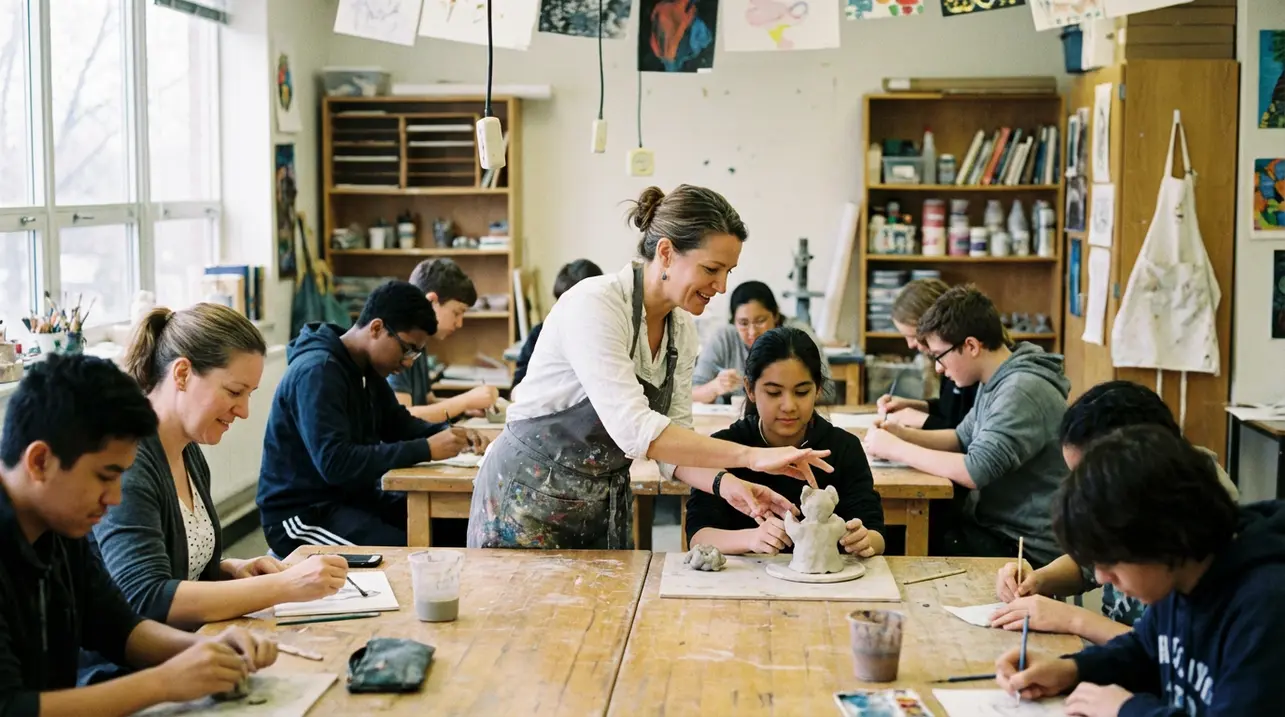
Picture the house lights dimming, the hush that falls before the overture begins—that’s the moment of potential, the breath before creation. Now, imagine a program designed not just to fill seats in that theater, but to fling open the stage door itself, inviting a whole new generation to step into the spotlight of arts education.The announcement of a tuition-free Master of Arts in Art Education isn't merely an academic bulletin; it’s a dramatic shift in the script for how we cultivate creativity in our communities. For too long, the path to becoming an art educator has been a solo performance with a daunting financial score, often limiting the cast to those who can afford the ticket.This initiative rewrites that opening number. By removing the formidable barrier of tuition, it auditions a far more diverse ensemble—the passionate painter from a working-class neighborhood, the community muralist who’s never considered a formal degree, the recent graduate burning to teach but buried under debt.Their backgrounds become their strength, bringing a richer, more authentic repertoire into classrooms and studios. This isn't just training for a job; it's a rigorous conservatory for cultural stewardship.The curriculum likely acts as a kind of director, guiding students through the core techniques of pedagogy—lesson planning, developmental psychology, classroom management—while simultaneously deepening their own studio practice. The true dress rehearsal, however, happens beyond the university walls.Placements in public schools transform lecture halls into active sets, where theory meets the beautiful, chaotic reality of a third-grade ceramics class. Internships at museums teach students how to curate not just exhibitions, but experiences, making a Renaissance painting resonate with a teenager on a school trip.Collaborations with community arts organizations are perhaps the most vital act, where students learn to orchestrate programs in homeless shelters, senior centers, and public parks, proving that art is not a luxury but a fundamental language of human connection. The potential impact of this graduating class is a production with a long and influential run.In underfunded public schools, where art programs are often the first cut, these well-prepared, debt-free educators become tireless advocates, designing curricula that integrate with STEM subjects or tell the untold stories of their community’s history. In museums, they become the bridge between the curated collection and the public, designing interactive tours and workshops that demystify the ‘ivory tower’ and foster genuine engagement.And in the grassroots realm of community organizations, they are the producers and facilitators, empowering residents to tell their own stories through murals, theater, or digital media, strengthening social fabric stitch by creative stitch. Historically, great waves of cultural access have often followed the removal of such barriers—think of the WPA projects during the Great Depression, which put artists to work and brought art into public spaces, or the community arts movement of the 1960s and 70s.
#University of Arkansas
#art education
#tuition-free program
#teacher training
#community arts
#featured