

Othertravel & tourismSustainable Tourism
Nepal Ends Failed Mount Everest Waste Deposit Incentive Program
RA
Rachel Adams
5 months ago7 min read
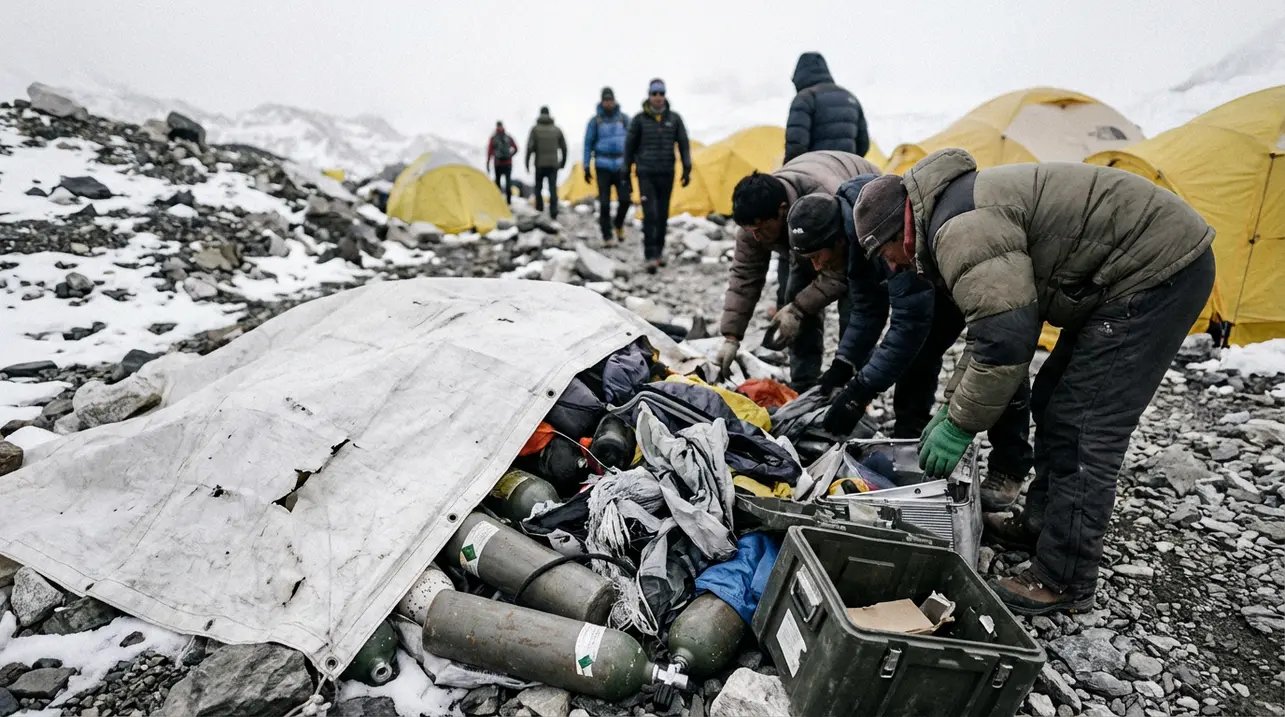
The lofty, often romanticized ideals of high-altitude adventure have once again collided with the gritty reality of human impact, as Nepal’s government officially scraps a well-intentioned but ultimately failed program designed to tackle Mount Everest’s escalating waste crisis. The initiative, which required climbers to pay a $4,000 refundable deposit upon securing their permit—money they would only get back if they descended with at least 8 kilograms (about 17.6 pounds) of trash—has been terminated after proving largely ineffective. This isn't just a bureaucratic footnote; it's a stark symbol of the profound disconnect between our reverence for the planet's most majestic places and our inability to protect them from our own consumption.The scheme, launched with fanfare, was a direct response to the mountain becoming a 'world’s highest landfill,' a grim title earned over decades of expeditions leaving behind everything from spent oxygen cylinders and shredded tents to human excrement and the haunting remains of fatal attempts. Yet, the financial incentive, amounting to a $500-per-kilo bounty, failed to move the needle significantly.The reasons are a complex ecosystem of their own: logistical nightmares in the 'death zone' above 8,000 meters where survival trumps cleanup, a lack of robust verification mechanisms, and a guiding industry often operating on thin margins where forfeiting a deposit became just another cost of business. The failure echoes beyond the Khumbu Icefall.It speaks to a broader, global pattern where market-based solutions meet their limit when confronting extreme environments and human psychology. We see it in carbon credits that don't reduce emissions and in plastic recycling schemes that drown in their own volume.On Everest, the incentive was simply too easy to game or ignore, especially for exhausted climbers whose sole focus is a safe return. The mountain’s ecology, already strained by rapid glacial melt amplified by climate change, now bears the additional toxic burden of microplastics and other pollutants seeping from frozen waste dumps.Local Sherpa communities, who bear the brunt of cleanup efforts through dangerous 'ice doctor' and porter roles, have long advocated for more systemic, pre-emptive measures rather than post-climb financial carrots. Expert commentators in environmental policy suggest this failed experiment should pivot strategy from reactive deposits to proactive, regulated supply-chain management—mandating what comes up must be tracked and accounted for, with stringent penalties for outfitters, not just individual climbers.The consequences of inaction are dire: the degradation of a sacred landscape, contamination of water sources for downstream communities, and the tarnishing of the expedition experience itself. Historically, Everest has been a bellwether for humanity's relationship with wilderness, from the first heroic ascents to the modern-era traffic jams on the Hillary Step.This latest chapter underscores that true stewardship requires more than economic nudges; it demands enforceable regulation, international cooperation, and a fundamental shift in climbing culture from conquest to custody. As the ice recedes, it reveals not just ancient rock but the enduring refuse of our ambition, a challenge that now demands a response as monumental as the mountain itself.
#Mount Everest
#Nepal
#climbing waste
#environmental policy
#deposit scheme
#Himalayas
#featured
Stay Informed. Act Smarter.
Get weekly highlights, major headlines, and expert insights — then put your knowledge to work in our live prediction markets.
Related News






2 months ago
Outpoll Weekly Recap: Other (April 20 – 26, 2026)

2 months ago
Outpoll Weekly Recap: Other (April 13 – 19, 2026)

2 months ago
Why ‘others have it harder’ is a form of empathy bypassing

2 months ago
Outpoll Weekly Recap: Other (March 30 – April 5, 2026)

2 months ago
Outpoll Weekly Recap: Other (March 23 – 29, 2026)

3 months ago
Outpoll Weekly Recap: Other (March 16 – 22, 2026)

3 months ago
Washington State Passes Millionaires Tax as Model for Others

3 months ago
Outpoll Weekly Recap: Other (March 9 – 15, 2026)
3 months ago
Telura Emerges with €4M Seed to De-Risk Deep Geothermal, as Europe's Subsurface Energy Race Intensifies

3 months ago
Outpoll Weekly Recap: Other (March 2 – 8, 2026)
Comments
It's quiet here...Start the conversation by leaving the first comment.