

OthereducationSchool Reforms
Latin America Faces Major Education Shift Due to Declining Student Numbers
AN
Anna Wright
6 months ago7 min read
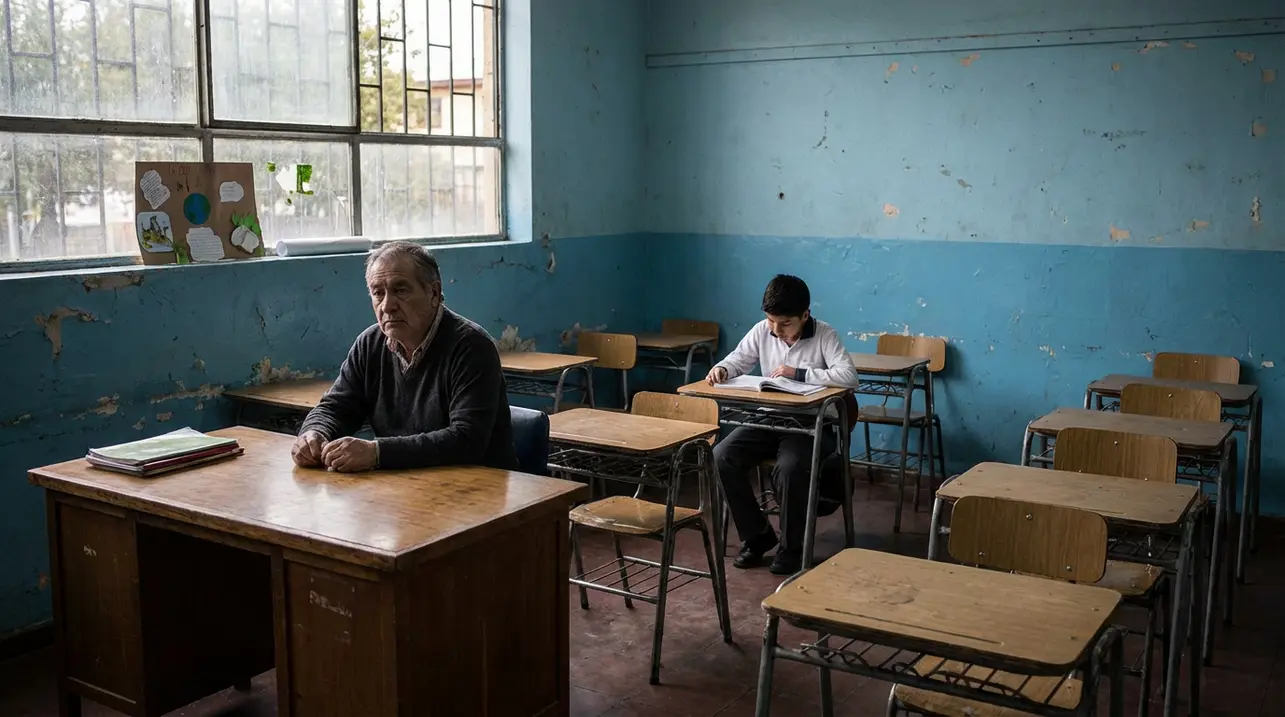
A seismic demographic shift is quietly unfolding across Latin America, one that promises to fundamentally reshape the very architecture of its education systems. According to a stark report from UNESCO, the region will see a staggering 11.5 million fewer children and adolescents of school age by 2030 compared to just a decade prior. This isn't merely a statistical blip; it's a structural transformation with profound implications for social policy, economic planning, and, most critically, for the future of equity in societies from Mexico to Argentina.The decline, driven by falling fertility rates that have been trending downward for decades, presents a paradoxical challenge. On one hand, it offers a potential golden opportunity: fewer students could mean more resources per pupil, a chance to finally address chronic issues of underfunding, overcrowded classrooms, and the stark quality gap between private and public institutions.Imagine redirecting funds towards better teacher training, modernizing dilapidated school infrastructure, and integrating long-negated digital tools. Yet, the historical precedent in the region suggests a more troubling path.Budgets in Latin America have often been quick to contract in response to shrinking enrollments, leading to teacher layoffs, school closures in rural and marginalized urban areas, and a consolidation that disproportionately harms the most vulnerable. The risk is that this demographic transition, instead of being a lever for improvement, becomes an excuse for further austerity, deepening existing inequalities.As a feminist writer focused on social policies, I see the human dimension here as paramount. This isn't just about managing empty desks; it's about redefining the purpose of education for a generation.Will governments use this moment to pivot towards a more holistic, inclusive model that prioritizes socio-emotional learning, digital literacy, and critical thinking—skills desperately needed for uncertain futures? Or will they double down on rigid, outdated curricula? The voices of teachers' unions, indigenous communities, and educational activists must be central to this conversation, as they are the ones who understand the on-the-ground realities of exclusion. Furthermore, the shift necessitates a parallel revolution in early childhood education and adult learning, creating a lifelong learning ecosystem.The ghost of past failures in educational reform looms large; this demographic window is a test of political will and visionary leadership. The choices made in the coming years will determine whether Latin America builds a more just and dynamic knowledge society or entrenches a two-tier system where quality education becomes an even scarcer commodity for the poor. The UNESCO data is a warning and an invitation; the region's leaders must decide which it will be.
#UNESCO
#demographic shift
#student enrollment
#Latin America
#education policy
#structural transformation
#featured
Stay Informed. Act Smarter.
Get weekly highlights, major headlines, and expert insights — then put your knowledge to work in our live prediction markets.
Related News






1 month ago
Outpoll Weekly Recap: Other (April 20 – 26, 2026)

2 months ago
Outpoll Weekly Recap: Other (April 13 – 19, 2026)

2 months ago
Why ‘others have it harder’ is a form of empathy bypassing

2 months ago
Outpoll Weekly Recap: Other (March 30 – April 5, 2026)

2 months ago
Outpoll Weekly Recap: Other (March 23 – 29, 2026)

3 months ago
Outpoll Weekly Recap: Other (March 16 – 22, 2026)

3 months ago
Washington State Passes Millionaires Tax as Model for Others

3 months ago
Outpoll Weekly Recap: Other (March 9 – 15, 2026)
3 months ago
Telura Emerges with €4M Seed to De-Risk Deep Geothermal, as Europe's Subsurface Energy Race Intensifies

3 months ago
Outpoll Weekly Recap: Other (March 2 – 8, 2026)
Comments
MI
midnight_ponderer5mo ago
can't sleep and just read this... it's wild how they always find a way to turn something that could be good into another cut, feels like we've seen this movie before