

Otherreal estateCommercial Property
Hong Kong university buys office space in government education hub push.
ET
Ethan Brown
6 months ago7 min read
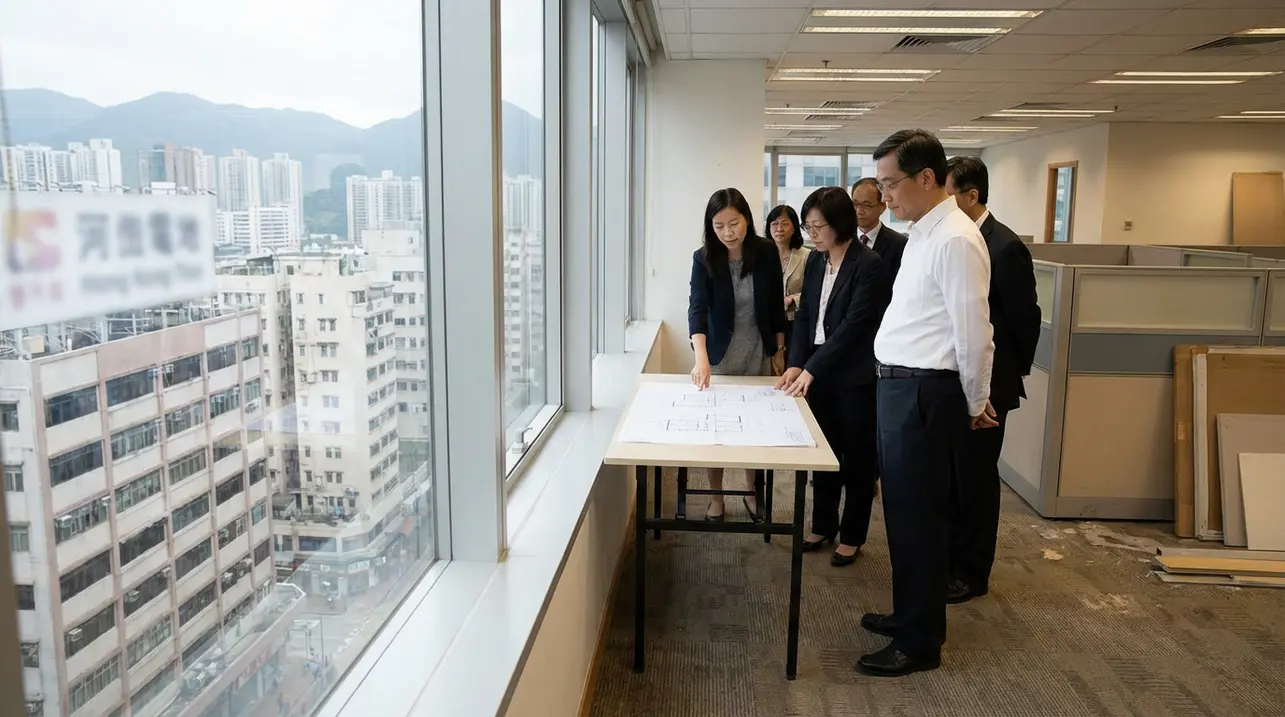
In a move that speaks volumes about the evolving landscape of higher education and institutional finance, Hong Kong’s Hang Seng University has just dropped HK$90 million—that’s roughly US$11. 6 million—to snap up prime office real estate.The acquisition isn't just a property deal; it's a strategic play in a much larger game, one where universities are starting to think and act more like savvy startups or fintech firms managing their balance sheets for growth. The purchase covers 16 office units totaling 19,139 square feet on the 11th floor of Metropole Square in Sha Tin, New Territories, plus four parking spaces, bought from the listed company Alco Holdings.This transaction is far from an isolated event. It’s the latest and perhaps one of the most concrete signals of Hong Kong’s aggressive government-led push to cement its status as a global education hub, a vision that requires not just academic excellence but serious capital deployment and asset management.Think of it like a personal finance principle scaled up to an institutional level: you invest in assets that support your core mission and generate long-term value, rather than letting capital sit idle. For years, the narrative around university funding globally has been one of tightening belts and rising tuition, but here we see a pivot towards proactive asset acquisition.Hong Kong’s strategy mirrors what we see in successful startups: secure the physical and intellectual infrastructure needed to scale. The city isn’t just offering scholarships; it’s creating an entire ecosystem, and for universities like Hang Seng, buying commercial space is akin to a tech startup leasing a bigger office to attract top talent—it’s a growth hack.The broader context is Hong Kong’s intense regional competition with rivals like Singapore, which has long positioned itself as Asia’s education destination. By incentivizing schools to expand their physical footprint, the Hong Kong government is effectively using real estate as a tool for capacity building and prestige enhancement.This isn't merely about having more classrooms; it’s about creating integrated hubs for research, administration, and innovation that can attract international students and faculty. From a financial perspective, this acquisition is a fascinating case study.Universities are traditionally seen as non-profits, but their endowment and property decisions are increasingly driven by sophisticated, almost corporate-style financial planning. Purchasing property in a commercial building like Metropole Square could be a hedge against inflation, a source of potential rental income from unused portions, or a strategic asset that appreciates while serving operational needs.It’s a lesson in asset diversification that would make any personal finance coach nod in approval. The seller, Alco Holdings, a company known for consumer electronics manufacturing, divesting this real estate, also tells a story of portfolio rebalancing in a shifting economic climate.Expert commentary would likely highlight the risks and opportunities. On one hand, tying up significant capital in real estate could expose the university to property market fluctuations.On the other, it provides stability, control, and a tangible asset that supports long-term strategic autonomy. The possible consequences are multifaceted.For students, it could mean better facilities and a more robust institution. For the local Sha Tin area, it signals continued development and the anchoring of knowledge-based businesses.For other universities, it sets a precedent, potentially triggering a wave of similar acquisitions as schools jockey for position in the new hub landscape. This is where the narrative transcends a simple news bulletin.It’s about the financialization of education infrastructure, a trend where institutions must be both academies and astute investors. The move by Hang Seng University is a bold step off the balance sheet and into the competitive arena, demonstrating that in today’s world, even centers of learning must master the art of the deal to secure their future.
#Hang Seng University
#Hong Kong
#property acquisition
#Metropole Square
#commercial real estate
#education hub
#featured
Stay Informed. Act Smarter.
Get weekly highlights, major headlines, and expert insights — then put your knowledge to work in our live prediction markets.
Related News






1 month ago
Outpoll Weekly Recap: Other (April 20 – 26, 2026)

2 months ago
Outpoll Weekly Recap: Other (April 13 – 19, 2026)

2 months ago
Why ‘others have it harder’ is a form of empathy bypassing

2 months ago
Outpoll Weekly Recap: Other (March 30 – April 5, 2026)

2 months ago
Outpoll Weekly Recap: Other (March 23 – 29, 2026)

3 months ago
Outpoll Weekly Recap: Other (March 16 – 22, 2026)

3 months ago
Washington State Passes Millionaires Tax as Model for Others

3 months ago
Outpoll Weekly Recap: Other (March 9 – 15, 2026)

3 months ago
Telura Emerges with €4M Seed to De-Risk Deep Geothermal, as Europe's Subsurface Energy Race Intensifies

3 months ago
Outpoll Weekly Recap: Other (March 2 – 8, 2026)
Comments
It's quiet here...Start the conversation by leaving the first comment.