

Germany Braces for New Temperature Highs as Climate Change Intensifies European Heatwaves
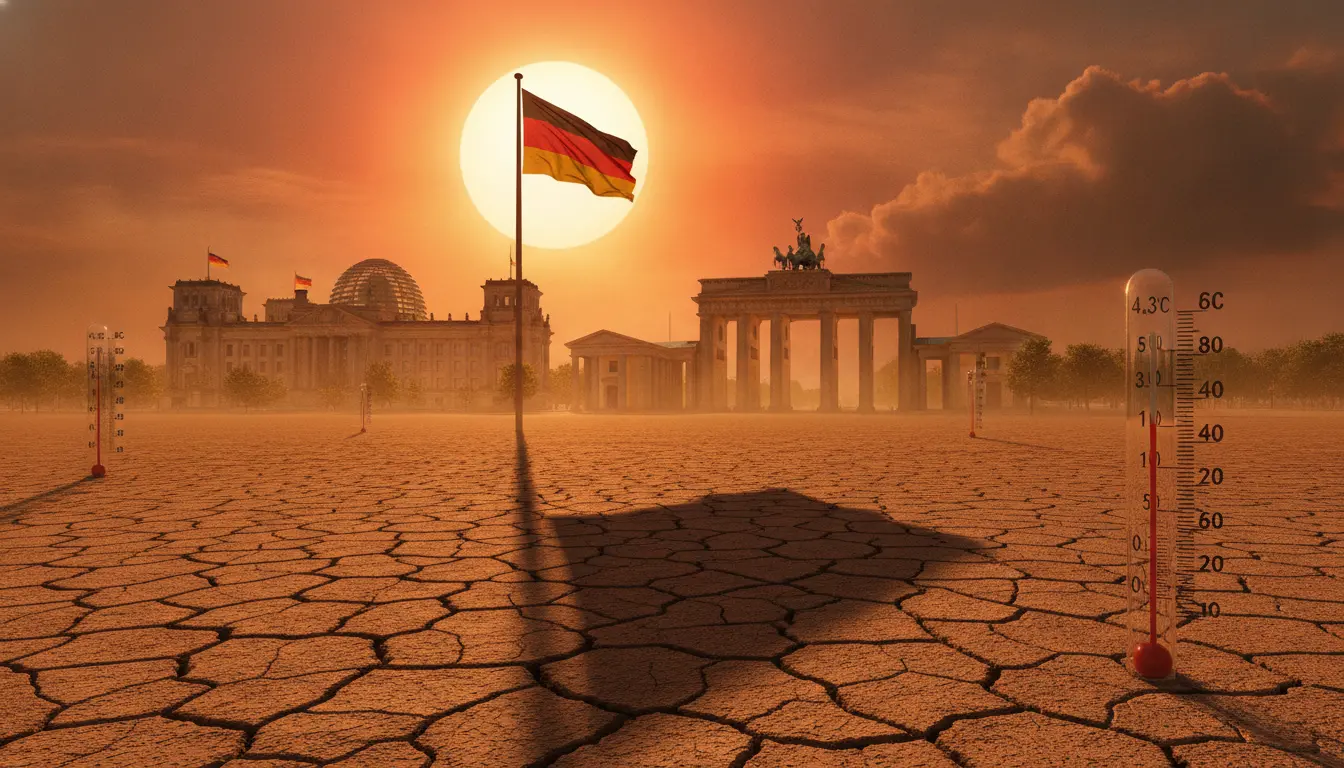
Germany’s all-time temperature record of 41.2°C (106.2°F), a searing high set just a few years ago, is looking increasingly fragile as climate scientists warn that the intensifying frequency of extreme heat events across Europe makes breaking this milestone a matter of when, not if. The record, registered in Lingen, Lower Saxony, during the blistering continent-wide heatwave of July 2019, stands as a stark benchmark of a rapidly warming climate. Now, with each successive summer bringing new waves of oppressive heat, meteorologists and government agencies are preparing for a future where such records are not anomalies but recurring features of the German climate.
The 2019 event that etched Lingen into the history books was not an isolated incident. It was part of a sweeping heatwave that shattered national records in the United Kingdom, Belgium, and the Netherlands, signaling a systemic shift in Europe's weather patterns. In Germany, the record fell twice in two days, underscoring the intensity of the heat dome that had settled over the region. This event served as a wake-up call, demonstrating that even a temperate country like Germany was highly vulnerable to the kind of extreme temperatures previously associated with Southern Europe or the Middle East. Experts at the German Weather Service (DWD) have since noted that the statistical probability of such events has dramatically increased due to human-induced global warming.
Scientific consensus links this trend directly to climate change. Attribution studies, which analyze the likelihood of specific weather events occurring with and without anthropogenic warming, have consistently found that modern heatwaves are significantly more severe and more probable than they would be in a pre-industrial climate. The underlying mechanisms involve alterations in atmospheric circulation, such as a more frequently meandering jet stream, which can trap hot air masses over a region for extended periods. The Potsdam Institute for Climate Impact Research (PIK), one of Germany’s leading climate science institutions, has published extensive research indicating that Central Europe is a particular hotspot for warming trends, with summer temperatures rising at a rate faster than the global average.
The implications of shattering the 41.2°C record extend far beyond a mere statistic. Extreme heat poses a severe threat to public health, particularly for vulnerable populations such as the elderly and those with pre-existing medical conditions. It places immense strain on critical infrastructure, from buckling railway lines and overheated power grids to dwindling water levels in major rivers like the Rhine, which disrupts vital shipping routes. Germany’s agricultural sector also faces profound challenges, with prolonged heat and drought conditions leading to crop failures and threatening food security. Furthermore, the dry conditions dramatically elevate the risk of devastating wildfires, as seen in recent years in regions like Brandenburg.
In response, German authorities at both the federal and state levels are grappling with the dual challenge of mitigation and adaptation. While the country's ambitious "Energiewende" (energy transition) aims to curb emissions by shifting to renewable energy sources, the immediate reality requires robust adaptation strategies. Cities are at the forefront of this effort, developing heat action plans that include public cooling centers, planting more trees to increase urban canopy, and designing buildings and public spaces with better ventilation and heat-resistant materials. The national conversation is increasingly focused on building resilience to a climate that is already irrevocably changed, recognizing that past temperature norms are no longer a reliable guide for the future.
Looking ahead, climate models project a continued upward trajectory for summer temperatures in Germany. While it is impossible to predict the exact year the current record will fall, the scientific community is in broad agreement that it is an inevitability. Each passing year of insufficient global action on emissions loads the dice further, making record-shattering heatwaves more likely. The 41.2°C mark is therefore not just a record to be broken but a critical warning sign of the urgent need for accelerated climate action and a sobering preview of the new normal Germany must prepare for.
Stay Informed. Act Smarter.
Get weekly highlights, major headlines, and expert insights — then put your knowledge to work in our live prediction markets.
Related News

Nintendo Prepares for Major Switch 2 Game Reveals at September 2026 Direct Event

Iceland Poised for Referendum on Launching European Union Membership Negotiations

ADP Employment Report Crucial for Gauging Private Sector Momentum

Swiss Voters Set to Reject Stricter Neutrality, Early Poll Shows

United Arab Emirates Imposes Indefinite Trade Embargo on Iran Amid Missile Attack Allegations