

OthereducationEdTech Innovations
El Salvador Partners with Elon Musk’s Grok in AI-Powered Education for 1M Students
DA
Daniel Reed
6 months ago7 min read
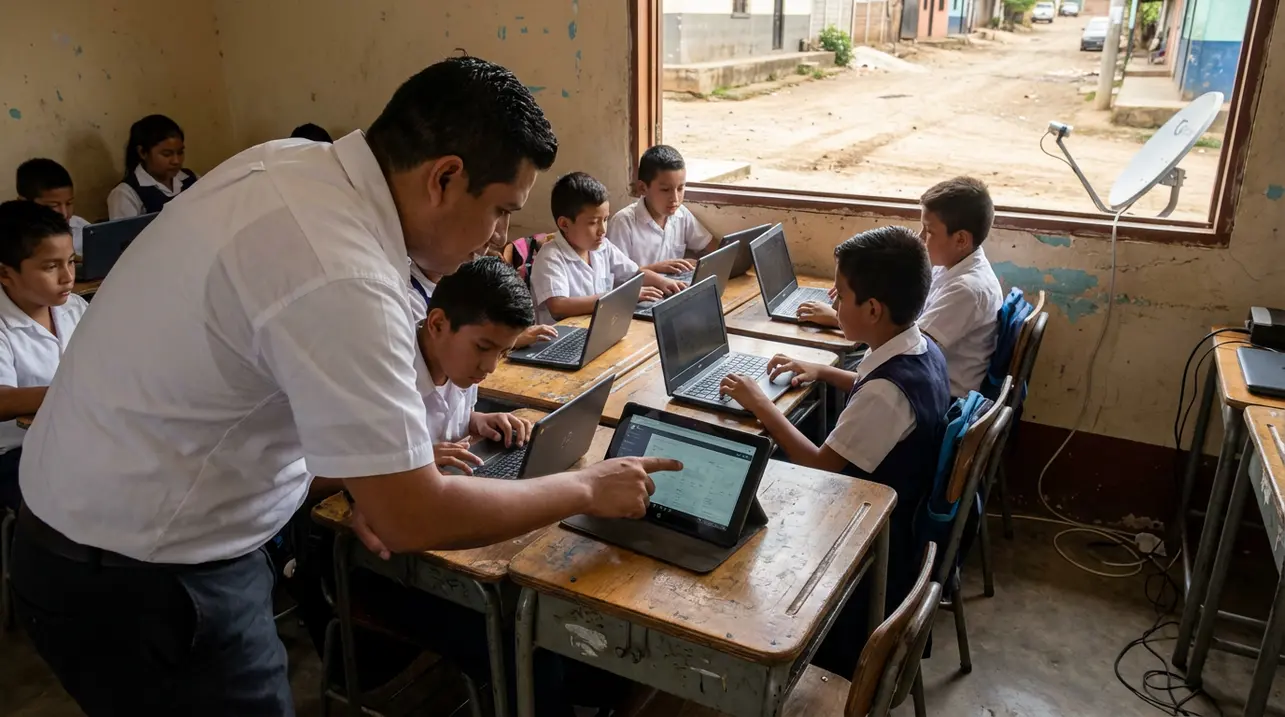
El Salvador’s recent announcement of a partnership with Elon Musk’s xAI, specifically its Grok model, to power an AI-driven education platform for one million students is a bold and fascinating gambit in the global race to integrate frontier technology into national infrastructure. This isn't merely a procurement deal; it's a strategic alignment between a nation betting its future on technological sovereignty and a company whose founder has long championed the transformative power of artificial intelligence.The initiative, dubbed 'My Education,' aims to provide personalized tutoring and administrative support, a move that could, in theory, democratize high-quality education in a country where access has historically been uneven. However, beneath the headline-grabbing collaboration lies a complex web of technical challenges, ethical considerations, and geopolitical implications that warrant a deeper, more analytical dive.From a technical standpoint, deploying a large language model like Grok at this scale for educational purposes is a monumental task. The core promise of personalized, adaptive learning hinges on the model's ability to understand nuanced student queries, provide accurate and pedagogically sound explanations, and avoid the hallucinations and biases that still plague even the most advanced AI systems.Grok, known for its real-time data access and a certain irreverent tone, will need to be meticulously fine-tuned and constrained for an educational context—a process requiring significant investment in prompt engineering, content vetting, and continuous oversight by Salvadoran educators. The success of this project will depend less on Grok's raw capabilities and more on the quality of the implementation framework built around it, including teacher training, curriculum integration, and robust digital infrastructure to reach students across the country, particularly in rural areas.Historically, El Salvador has positioned itself as a crypto-innovator under President Nayib Bukele, and this AI pivot feels like a logical, if ambitious, extension of that techno-nationalist vision. The government is essentially conducting a large-scale, real-world experiment in public-sector AI adoption, bypassing traditional educational technology vendors in favor of a direct partnership with a cutting-edge, albeit controversial, AI lab.This move carries significant risk. The dependency on a single, proprietary model from a private company raises questions about long-term sustainability, data sovereignty, and vendor lock-in.Student interactions, performance data, and potentially sensitive information will flow through xAI's systems, necessitating ironclad data privacy agreements that must withstand both technical and political scrutiny. Furthermore, the ethical dimension cannot be overstated.Embedding an AI with a specific 'personality' and worldview, however configured for education, into the minds of a million young learners is an act of profound cultural influence. It necessitates transparent oversight committees involving local pedagogues, child development experts, and ethicists to audit the model's outputs for cultural appropriateness, ideological neutrality, and alignment with El Salvador's educational goals.The potential consequences are bifurcated: on one hand, this could catalyze a dramatic leap in educational outcomes, fostering a generation of digitally-native, critically-thinking students and positioning El Salvador as a Central American tech hub. On the other, it could exacerbate digital divides if implementation is uneven, create over-reliance on AI for fundamental cognitive tasks, or expose the nation's youth to unforeseen algorithmic biases.Expert commentary in the AI policy sphere is likely mixed. Optimists will hail it as a visionary use of AI for public good, a template for other developing nations.Skeptics will warn of the perils of deploying beta-stage technology in such a sensitive domain without extensive, longitudinal studies. The partnership also reflects a broader trend of nation-states seeking direct alliances with tech giants, blurring the lines between public policy and corporate product roadmaps.In the final analysis, El Salvador's gamble is as much about education as it is about signaling—a declaration that it intends to shape its future not through incremental reform, but through strategic, high-stakes technological adoption. The world will be watching closely, as the outcomes will provide invaluable, real-world data on the feasibility, benefits, and pitfalls of integrating advanced generative AI into a national education system.
#featured
#El Salvador
#Grok
#AI education
#student technology
#government partnership
#EdTech innovation
Stay Informed. Act Smarter.
Get weekly highlights, major headlines, and expert insights — then put your knowledge to work in our live prediction markets.
Related News






1 month ago
Outpoll Weekly Recap: Other (April 20 – 26, 2026)

2 months ago
Outpoll Weekly Recap: Other (April 13 – 19, 2026)

2 months ago
Why ‘others have it harder’ is a form of empathy bypassing

2 months ago
Outpoll Weekly Recap: Other (March 30 – April 5, 2026)

2 months ago
Outpoll Weekly Recap: Other (March 23 – 29, 2026)

3 months ago
Outpoll Weekly Recap: Other (March 16 – 22, 2026)

3 months ago
Washington State Passes Millionaires Tax as Model for Others

3 months ago
Outpoll Weekly Recap: Other (March 9 – 15, 2026)
3 months ago
Telura Emerges with €4M Seed to De-Risk Deep Geothermal, as Europe's Subsurface Energy Race Intensifies

3 months ago
Outpoll Weekly Recap: Other (March 2 – 8, 2026)
Comments
It's quiet here...Start the conversation by leaving the first comment.