OthereducationEdTech Innovations
Education Summit Warns Technology Outpacing Human Learning in Classrooms
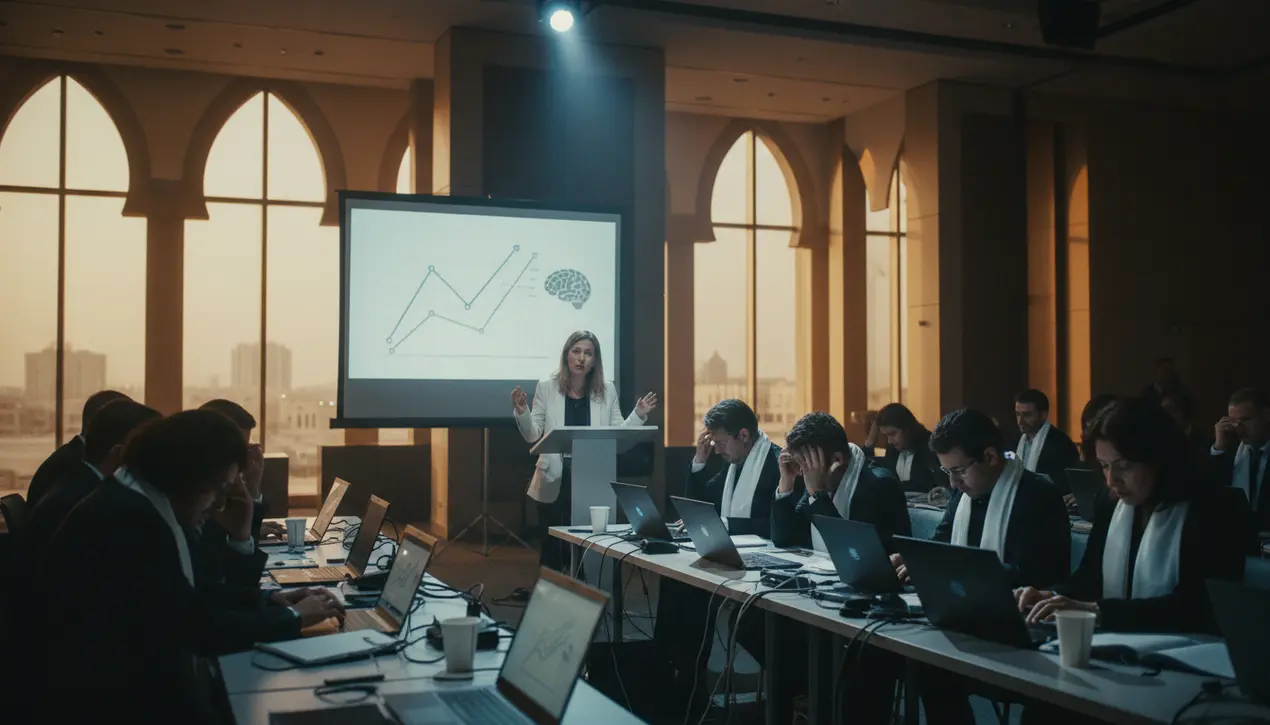
The stark warning emanating from the recent education summit in Doha carries the chilling resonance of a science fiction prophecy made real: our global education systems are being fundamentally outpaced by the relentless march of technology, creating classrooms that are transforming at a velocity that schools simply cannot match. This isn't merely an administrative headache; it's a civilizational challenge on par with the industrial revolution, forcing us to confront whether our centuries-old model of pedagogy can survive the cognitive age.The core of the crisis lies in the exponential growth curve of artificial intelligence and machine learning, which operates on a timescale alien to the incremental, often politically bogged-down, processes of educational reform. While a national curriculum might take a decade to debate and implement, a new AI model can render its core assumptions obsolete in a matter of months.We are, in essence, trying to fill a vessel that is not only leaking but actively reshaping itself as we pour. This dynamic evokes Isaac Asimov's foundational laws of robotics, not in their literal application, but in their spirit of pre-emptively governing intelligent systems we create.We have failed to establish a 'Zeroth Law' for education—a primary directive that the system must adapt to serve humanity's long-term cognitive and ethical development, rather than forcing humanity to contort itself to fit an archaic framework. The delegates in Doha rightly fear a future where the tool becomes the tutor, and the human educator is reduced to a classroom monitor, struggling to manage students who are either left behind by the digital divide or are leveraging AI to achieve results they don't fundamentally understand.The ethical quandaries are profound. Do we integrate AI as a personalized learning assistant, tailoring education to each child's neural pathway, or does that risk creating a generation of 'black box' learners who can produce correct answers without the critical thinking journey required to get there? The policy language surrounding this is still in its infancy, vacillating between reckless enthusiasm and reactionary fear.Some nations are racing to wire every classroom with the latest tablets and VR headsets, a potentially costly and superficial solution that addresses the symptom (access to tech) but not the disease (the structure of learning itself). Others, paralyzed by bureaucracy or a lack of funding, are watching the chasm widen from the sidelines.The consequence of inaction is a world bifurcated not just by wealth, but by cognitive capacity—a small, tech-augmented elite capable of steering the future, and a vast majority educated for a world that no longer exists. The opportunity, however, is equally monumental.This pressure could force a long-overdue renaissance in how we define intelligence and success, moving away from standardized testing and towards fostering uniquely human skills like creativity, empathy, complex problem-solving, and ethical reasoning—the very areas where AI, for now, remains a tool rather than a master. The summit in Doha should be heard not as a funeral dirge for traditional education, but as a final, urgent call to begin drafting a new social contract for learning, one that harmonizes silicon with soul.
#featured
#education technology
#global summit
#Doha
#learning systems
#digital transformation
#human learning