OthereducationEdTech Innovations
Education Summit Warns Against Technology Outpacing Learning.
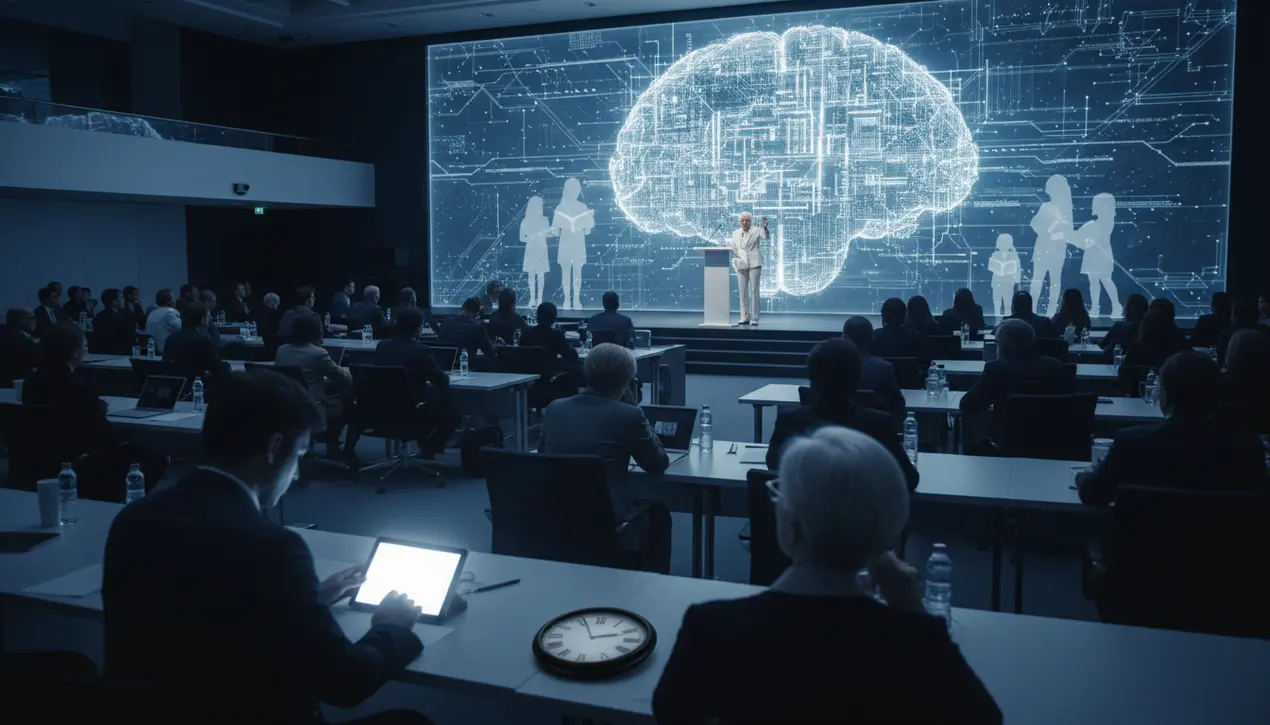
The urgent warning emanating from the recent education summit in Doha carries the chilling resonance of a science fiction prophecy made real, echoing the very ethical dilemmas that visionaries like Isaac Asimov once pondered. Global education systems, the assembled leaders cautioned, are being fundamentally outpaced by the relentless march of technology, creating a chasm between the dynamic, AI-driven world and the static, often archaic, structures of our classrooms.This isn't merely about schools struggling to afford the latest gadgets; it's a deeper, systemic failure where the very architecture of learning—the curriculum, the pedagogical methods, the teacher-training pipelines—remains rooted in an industrial-age model while the tools of cognition and creation evolve at an exponential rate. We are witnessing a scenario where a teenager can leverage a large language model to compose a university-level essay, yet their school may still be assessing them on rote memorization of facts that their smartphone can recall instantly.This dissonance creates a profound risk, not just of a skills gap, but of a complete societal schism, where a small, technologically-fluent elite pulls further away from a majority educated for a world that no longer exists. The policy implications are staggering.Do we rush to integrate AI tutors into every classroom, potentially outsourcing the human connection that is vital to development? Or do we retreat, imposing bans on technology to preserve traditional learning, a move that would undoubtedly leave students ill-prepared for the future? The path forward demands a balanced, thoughtful approach, one that Asimov's laws of robotics indirectly inspire: our technological tools must serve humanity's broadest educational goals, not subvert them. This requires a global Marshall Plan for educator development, a radical overhaul of national curricula to emphasize critical thinking, ethics, and adaptability over static knowledge, and robust international frameworks to govern the use of AI in educational settings. The leaders in Doha are correct to sound the alarm; the classroom is changing faster than our institutions can cope, and the consequence of inaction is a future where technology doesn't empower learning, but instead, dictates and diminishes it.
#education summit
#technology in classrooms
#human learning
#global education systems
#featured
#Doha
#education policy