Otherauto & mobilityElectric Vehicles
Auto chip shortage forces Honda production pause in Japan and China
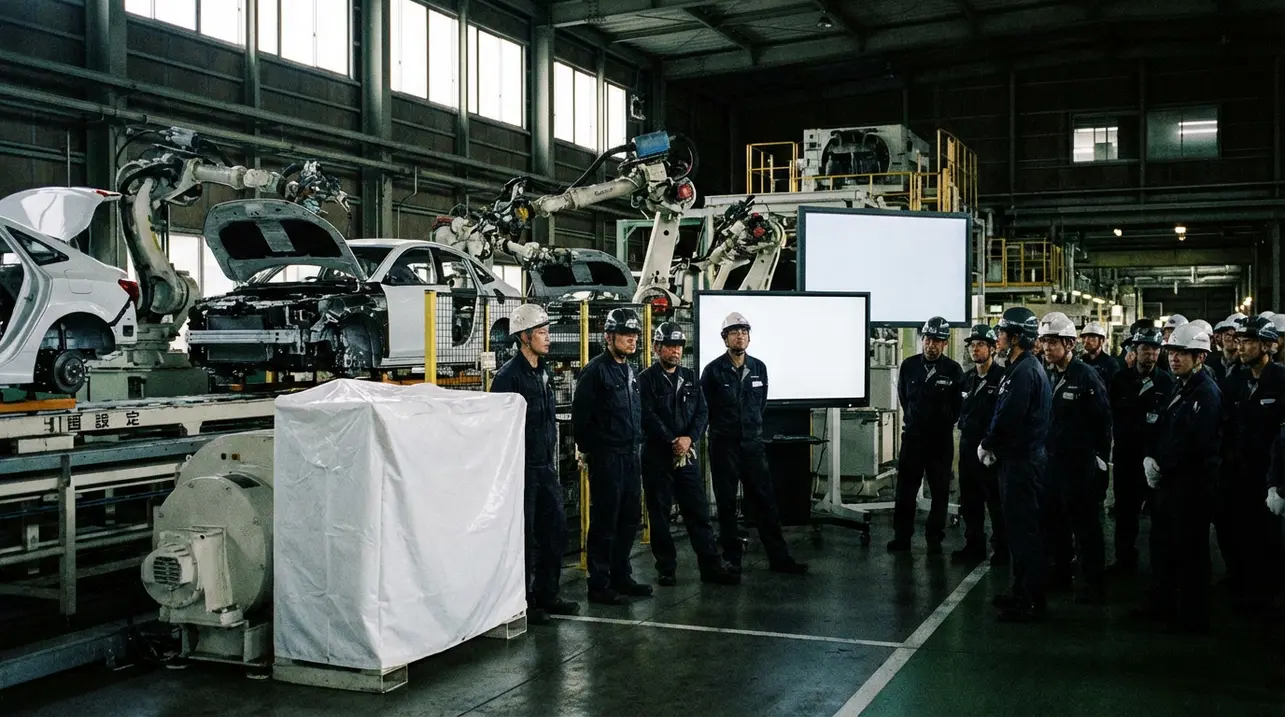
The global automotive supply chain, a system perpetually balanced on a knife's edge, has been rattled once again. Honda's announcement of production halts in Japan on January 5-6 and across its three Guangqi Honda plants in China from December 29 to January 2 is not merely another logistical hiccup; it is a stark signal flare illuminating a deep-seated vulnerability.This latest disruption, stemming from a persistent semiconductor shortage, traces its origins not to a natural disaster or a pandemic-era factory fire, but to a calculated geopolitical gambit in the Netherlands—a proxy conflict that has exposed how unprepared global industries remain for political shockwaves. The core of the crisis lies with Nexperia, a Chinese-owned chipmaker based in the Netherlands that specializes in the unglamorous but utterly essential low-end chips that power everything from car windows to braking systems.In October, bowing to pressure from the Trump administration, the Dutch government seized control of the company, citing 'serious governance shortcomings' and concerns that its Chinese majority owner, Wingtech, would siphon key technology out of Europe. However, subsequent reporting by the *New York Times* revealed Dutch authorities had known of these alleged plans since 2019, casting the intervention less as a sudden regulatory necessity and more as a strategic move in the broader US-China tech war.China's retaliation was swift and targeted: a blockade on exports of Nexperia-made chips, a move that instantly throttled a critical artery for automakers worldwide. While a tentative détempt was reached following 'constructive talks,' with the Netherlands suspending its intervention and China relaxing—though not removing—export restrictions via exemptions, the damage was done.The supply chain, already fragile, had suffered a systemic shock from which it has failed to recover. This episode underscores a critical failure in corporate risk modeling.For years, automakers have focused their contingency planning on operational risks—fires, floods, labor disputes. As Ambrose Conroy, CEO of Seraph Consulting, bluntly told *Reuters*, 'No one [in the auto industry] prepared for geopolitical disruption.And they're still not prepared. ' Honda's own optimistic forecast in late autumn, anticipating a return to normalcy by November, now reads as a testament to this miscalculation.The consequences ripple outward. These production pauses will inevitably lead to reduced vehicle inventories, potential price increases for consumers, and lost revenue for Honda and its network of suppliers.More broadly, it forces a harsh reassessment of 'just-in-time' manufacturing principles in an era where supply chains are weaponized. The Nexperia case is a blueprint: a relatively minor player in a small European nation can become the epicenter of a global industrial quake, demonstrating that in today's fragmented world, a chip shortage is no longer just a supply issue—it is a direct function of diplomatic tension and national security posturing.For risk analysts, this is a canonical case study in cascading failure. The initial political decision in The Hague created a technological bottleneck in China, which manifested as an industrial production crisis in Japan, ultimately impacting consumers and markets globally.The uneasy resolution has not restored confidence; it has merely created a brittle, politically contingent truce. Until corporations and governments develop more resilient, diversified, and geopolitically-aware sourcing strategies—moving beyond mere inventory buffers to true strategic redundancy—the auto industry, and others like it, will remain hostage to the next flashpoint, wherever it may arise.
#Honda
#production halt
#chip shortage
#supply chain
#geopolitical disruption
#Japan
#China
#Nexperia
#auto industry
#hottest news