- News
- Finance
- US Labor Market Projected to Cool Significantly as Job Openings May Dip Below 7.5 Million by Mid-2026
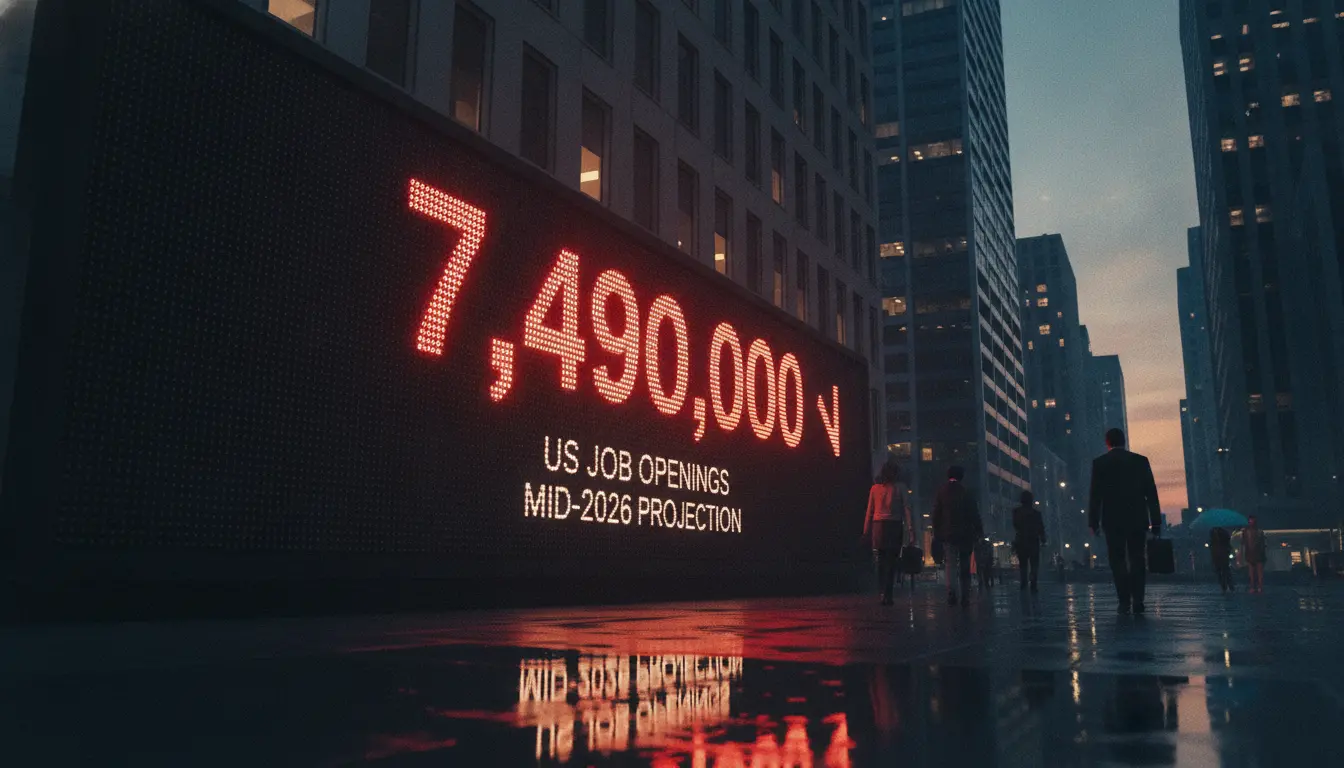
US Labor Market Projected to Cool Significantly as Job Openings May Dip Below 7.5 Million by Mid-2026
The United States labor market, a cornerstone of the nation’s post-pandemic economic recovery, is anticipated to undergo a significant rebalancing, with projections indicating that job openings could fall below 7.5 million by July 2026. This potential shift, if realized, would mark a notable departure from the historically tight conditions observed in recent years, signaling a more moderate pace of economic activity and a potential easing of inflationary pressures. The Job Openings and Labor Turnover Survey (JOLTS) report, a key barometer of labor demand and fluidity, remains central to these forecasts, offering critical insights into the supply-demand dynamics shaping the employment landscape.
Since its inception, the JOLTS report from the Bureau of Labor Statistics has provided invaluable data on job vacancies, hires, separations (quits, layoffs, and discharges), and overall labor market churn. Following the sharp contractions of the early pandemic, the US economy experienced an unprecedented surge in job openings, peaking at over 12 million in March 2022. This period, often characterized by the “Great Resignation,” saw employers grappling with acute labor shortages, driving up wages and contributing to inflationary pressures. The high ratio of job openings to unemployed persons underscored the intense competition for talent and the bargaining power wielded by workers. However, this trend has gradually begun to reverse, with openings consistently declining from their peak, albeit remaining elevated by historical standards.
Several factors underpin the projection for a further cooling of the labor market towards the mid-point of the decade. Chief among these is the sustained monetary policy tightening by the Federal Reserve. Through a series of aggressive interest rate hikes, the Fed has aimed to temper aggregate demand, thereby slowing economic growth and reducing the impetus for businesses to expand their workforces at a rapid clip. Higher borrowing costs for businesses can lead to a more cautious approach to hiring and expansion, directly impacting the number of available positions. Moreover, as global supply chains stabilize and productivity potentially improves, the need for additional labor to meet production demands might naturally diminish. The evolving technological landscape, including advancements in automation and artificial intelligence, also holds the potential to reshape job requirements and reduce demand for certain types of labor over the longer term.
Economists and policymakers are closely monitoring these trends for their implications on the broader economy. A decline in job openings below the 7.5 million threshold by July 2026 would likely be interpreted as a sign of a more normalized and sustainable labor market, potentially easing the upward pressure on wages that has contributed to persistent inflation. For businesses, this could mean a reduction in recruitment difficulties and a greater availability of skilled workers, though it could also reflect slower sales growth. For workers, while the extreme bargaining power of the immediate post-pandemic era might wane, a more balanced market could still offer ample opportunities without the intense competition, provided the economy avoids a significant downturn.
However, the path to a rebalanced labor market is fraught with uncertainty. While a gradual softening is generally seen as desirable for achieving a “soft landing” – where inflation returns to target without a severe recession – a too-rapid decline in job openings could signal an impending economic contraction. A sharp increase in layoffs or a significant reduction in hiring intentions could quickly translate into higher unemployment, eroding consumer confidence and spending. The precise interplay between monetary policy, business investment, technological adoption, and worker participation will ultimately determine the trajectory of job openings and the overall health of the US economy in the coming years. The 7.5 million mark serves as a critical analytical point for stakeholders assessing the future state of American employment.
Looking ahead, the JOLTS report will continue to serve as an essential indicator for the Federal Reserve as it calibrates monetary policy, aiming to strike a delicate balance between price stability and maximum sustainable employment. The evolution of the labor market towards 2026 will provide crucial evidence of whether the economy can successfully navigate the current period of adjustment without experiencing undue hardship. The projected cooling in job openings reflects a widespread anticipation among analysts that the extraordinary dynamics of recent years are giving way to a more subdued, albeit potentially more stable, employment environment.
Stay Informed. Act Smarter.
Get weekly highlights, major headlines, and expert insights — then put your knowledge to work in our live prediction markets.
Related News

Meta Platforms Q2 2026 Advertising Revenue Under Scrutiny Amid Reality Labs Push

Will Anthropic face new formal US government sanctions or significant operating restrictions by December 31, 2026?

DOJ Intensifies Antitrust Scrutiny on Big Tech, Pondering Breakup Lawsuits Against Amazon, Apple, Microsoft

Mifel Tennis Open 2026 Men's Singles Final Set for August 1 in Los Cabos

Reports Indicate China Has Supplied Iran with Advanced Air Defense Systems, Raising Regional Tensions