
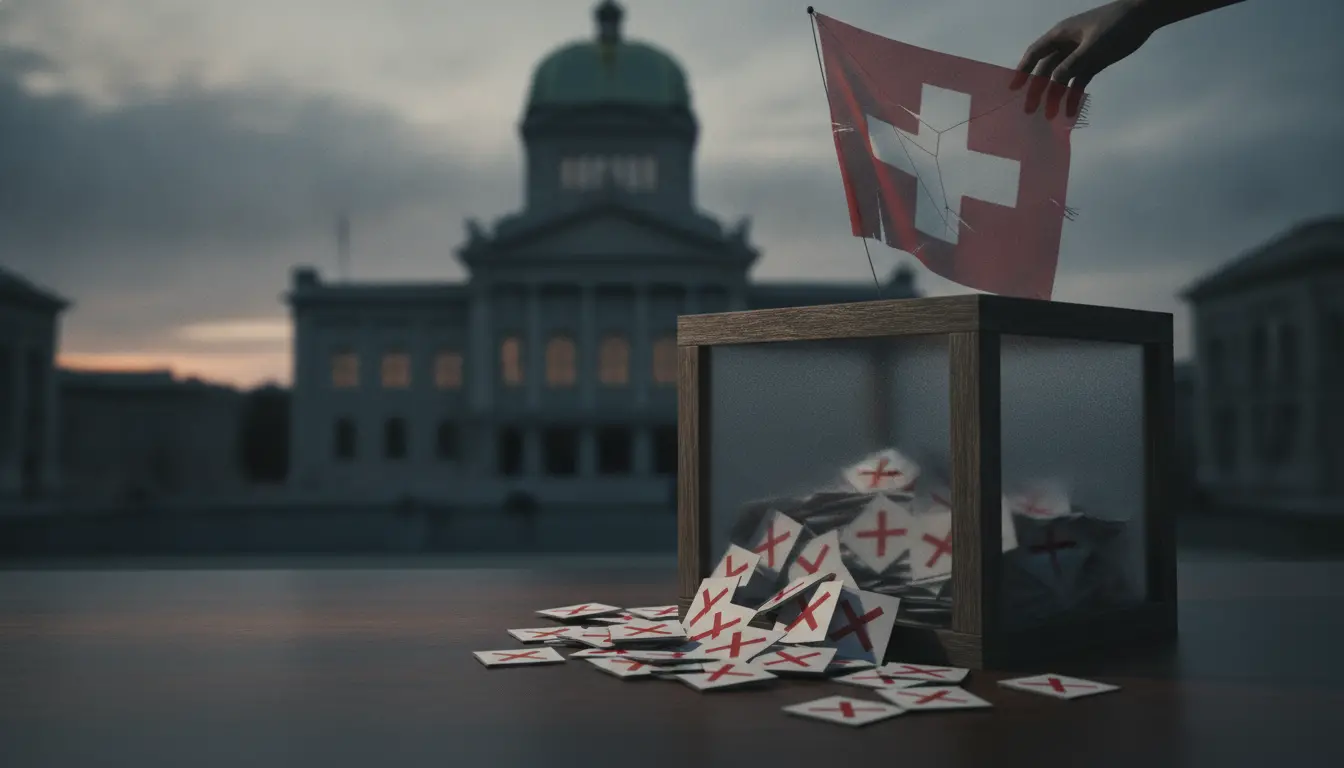
Swiss Voters Set to Reject Stricter Neutrality, Early Poll Shows
Early polling data suggests Swiss voters are poised to reject an initiative aimed at strengthening the country's revered tradition of neutrality, a decision that carries significant implications for its foreign policy, particularly regarding ongoing sanctions against Russia. The outcome, if confirmed in the upcoming referendum, would signal a continued embrace of a more flexible interpretation of neutrality, allowing Switzerland to align with international efforts on issues like economic sanctions, even as it maintains its long-standing military non-alignment.
Switzerland's neutrality is a cornerstone of its national identity, a doctrine formally recognized at the Congress of Vienna in 1815. For over two centuries, this principle has guided the Alpine nation's foreign policy, preventing its involvement in armed conflicts and fostering its role as a humanitarian hub and a neutral mediator. Traditionally, Swiss neutrality has been characterized by strict non-partisanship in conflicts between other states, abstention from military alliances, and a commitment to international law. However, in the modern geopolitical landscape, where economic interdependence and global challenges often blur traditional lines, the precise application of this historical tenet has become a subject of intense domestic debate.
The push for a stricter form of neutrality gained traction primarily from conservative and nationalist factions within Switzerland. Proponents of the initiative argue that the current government's approach, particularly its decision to mirror European Union sanctions against Russia following the invasion of Ukraine, constitutes a departure from genuine neutrality. They contend that participating in economic sanctions compromises Switzerland's impartiality and could undermine its unique position as a neutral intermediary and host for international organizations. The initiative sought to enshrine a more absolute interpretation of neutrality in the constitution, potentially limiting the government's ability to impose any non-UN mandated sanctions or engage in certain forms of international cooperation.
Conversely, those who advocate for a more adaptable neutrality argue that absolute non-alignment in the face of egregious international law violations, such as the invasion of Ukraine, is morally untenable and practically isolating. They maintain that Switzerland can uphold its military neutrality while still participating in international efforts to condemn and pressure aggressor states through non-military means, such as economic sanctions. This perspective emphasizes that a pragmatic, engaged neutrality allows Switzerland to remain a responsible member of the international community, safeguarding its values and long-term interests while adapting to complex global dynamics. Critics of stricter neutrality warn that such a move could ostracize Switzerland from key international partners, diminish its influence, and even expose it to secondary sanctions from allies.
The recent early poll, indicating a rejection of the stricter neutrality proposal, suggests that the arguments for a more flexible and engaged stance are resonating with the Swiss electorate. This outcome would empower the Swiss government to continue its current policy of adopting most, though not all, of the EU's sanctions against Russia. Since the full-scale invasion of Ukraine, Switzerland has walked a diplomatic tightrope, condemning the aggression while asserting its neutrality. Its decision to align with EU sanctions, a departure from its historical reluctance to impose such measures unilaterally, was a significant policy shift, balancing its humanitarian tradition with its responsibilities as an international financial center and a democratic state.
Should the poll results hold true in the final vote, it would likely solidify Switzerland's current foreign policy trajectory, characterized by a nuanced application of neutrality that permits engagement on certain fronts without compromising its core non-military stance. This would allow Bern to maintain closer ties with its European neighbors and other Western democracies, crucial for its economic stability and diplomatic influence. The ongoing debate, however, underscores a broader national conversation about what neutrality truly means in the 21st century, and how Switzerland can best navigate a fractured global order while preserving its distinct identity and values.
Stay Informed. Act Smarter.
Get weekly highlights, major headlines, and expert insights — then put your knowledge to work in our live prediction markets.
Related News
Iceland Poised for Referendum on Launching European Union Membership Negotiations

United Arab Emirates Imposes Indefinite Trade Embargo on Iran Amid Missile Attack Allegations

Nintendo Prepares for Major Switch 2 Game Reveals at September 2026 Direct Event

ADP Employment Report Crucial for Gauging Private Sector Momentum
Stokes and Atkinson withdrawn from county games