

- News
- Finance
- Path to Sub-4% US 10-Year Treasury Yield by August 2026 Hinges on Inflation and Fed Policy
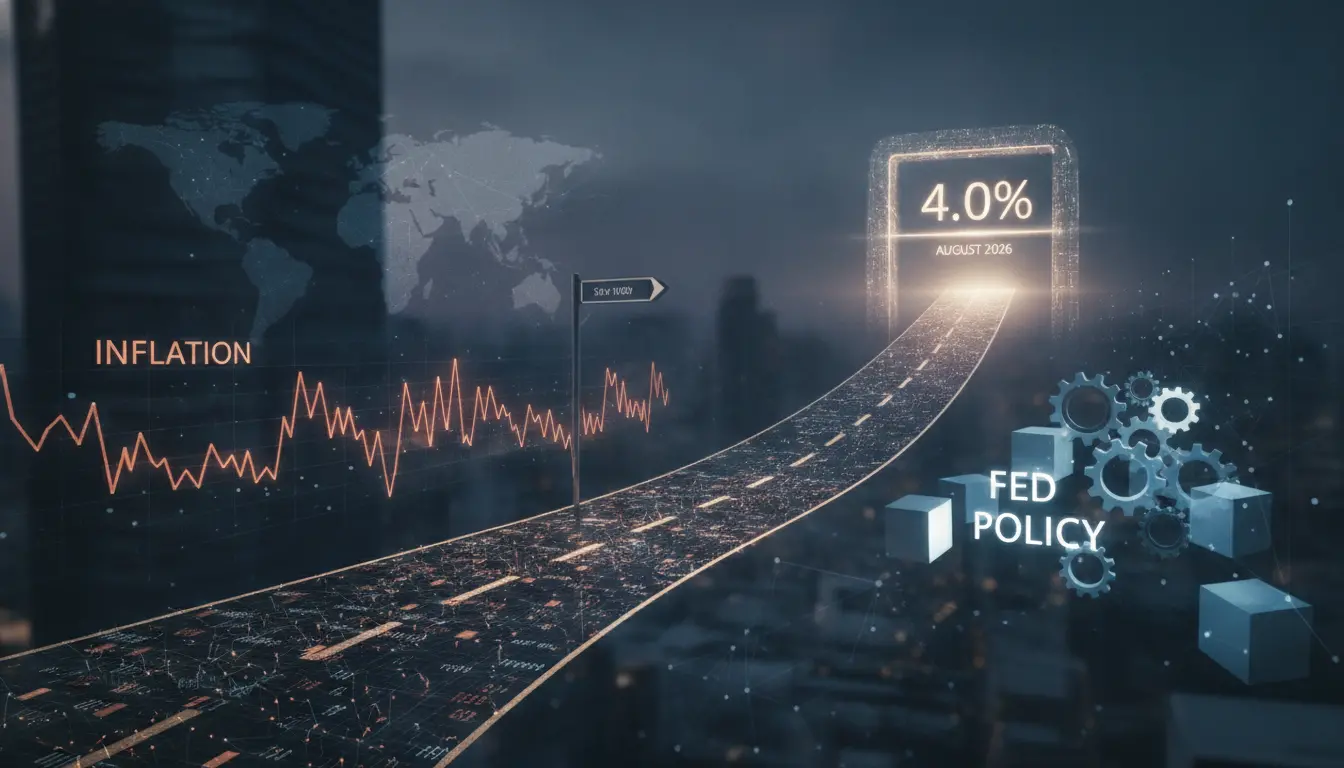
Path to Sub-4% US 10-Year Treasury Yield by August 2026 Hinges on Inflation and Fed Policy
The trajectory of the US 10-year Treasury yield is increasingly under scrutiny by economists and investors, with a particular focus on whether it could consistently dip below the 4.0% threshold by August 2026. This forward-looking assessment is deeply intertwined with expectations for inflation, the future path of Federal Reserve monetary policy, and the underlying health of the American economy. While recent years have seen significant volatility driven by aggressive rate hikes and persistent inflation concerns, the long-term outlook requires navigating a complex interplay of disinflationary forces, potential economic slowdowns, and the Fed's eventual pivot to easing.
Historically, the 10-year Treasury yield serves as a critical benchmark for borrowing costs across the economy, influencing everything from mortgage rates to corporate debt. Its movements reflect market participants' collective view on future economic growth and inflation over the next decade. Following a period where yields surged as the Federal Reserve aggressively tightened monetary policy to combat multi-decade high inflation, the market has begun to price in a more moderate inflation environment and anticipates eventual rate cuts. However, the exact timing and magnitude of these shifts remain highly uncertain, with a wide divergence of views on how quickly inflation will return to the Fed's 2% target and whether the economy can achieve a "soft landing" or faces a more pronounced downturn.
Crucial to the prospects of a sub-4.0% yield by August 2026 is the persistent deceleration of inflation. Should core inflation metrics continue their downward trend, driven by easing supply chain pressures, moderating demand, and stable energy prices, it would likely empower the Federal Reserve to embark on a series of interest rate cuts. Such a move would aim to prevent an overly restrictive monetary stance from stifling economic growth, but the pace of these cuts will be carefully calibrated. Should inflation prove stickier than anticipated, or experience renewed upward pressure, the Fed might be compelled to maintain higher rates for longer, thereby keeping the 10-year yield elevated. Conversely, a significant economic contraction or a full-blown recession could force the Fed's hand, leading to more aggressive easing and a rapid decline in yields as investors flock to safer assets.
Beyond domestic factors, global economic conditions will also play a role. Slower growth in major economies, geopolitical events, or shifts in central bank policies elsewhere could influence capital flows and demand for US Treasuries. A weaker global growth outlook, for instance, might increase the attractiveness of the relatively safe and liquid US bond market, putting downward pressure on yields. Furthermore, the structural elements of the US economy, including productivity growth, labor market dynamics, and fiscal policy decisions regarding government debt, will shape the long-term equilibrium for interest rates. The sheer volume of government debt issuance, for instance, could act as a counterweight to disinflationary pressures, potentially supporting higher yields.
Analysts are currently split on the likelihood of the 10-year yield consistently falling below 4.0% within the specified timeframe. Those anticipating such a scenario often point to a sustained period of disinflation leading to multiple Fed rate cuts, alongside a potential slowdown in economic activity that dampens long-term growth expectations. They argue that the structural disinflationary forces prevalent before the pandemic could reassert themselves. On the other hand, skeptics highlight the risks of persistent wage growth, potential fiscal expansion, and the possibility that the "neutral rate" of interest—the rate at which monetary policy is neither expansionary nor contractionary—may have permanently shifted higher, making a return to pre-pandemic low yield environments less likely. The consensus suggests a delicate balancing act for the Federal Reserve, aiming to achieve both price stability and maximum employment without derailing economic expansion.
Ultimately, the path for the US 10-year Treasury yield through mid-2026 remains subject to an evolving economic landscape. The interplay of inflation data, the Federal Reserve's response, and broader economic performance will dictate whether the benchmark yield settles into a lower range. Investors and policymakers will be closely monitoring incoming economic indicators, parsing central bank communications, and adjusting their expectations as the complex forces shaping the future of interest rates unfold.
Stay Informed. Act Smarter.
Get weekly highlights, major headlines, and expert insights — then put your knowledge to work in our live prediction markets.
Related News

Economic Indicators Suggest US Consumer Confidence Could Dip Below 100 by August 2026

Eurozone's Path to 2% Inflation Target by 2026 Fraught with Economic Headwinds

Bundesliga Golden Boot Race Heats Up With Kane, Openda, and Boniface Poised for 2026/27 Challenge

Brazil 3-0 Haiti LIVE: World Cup 2026

Concertgoer Dies After Apparent Fall at Madison Square Garden