

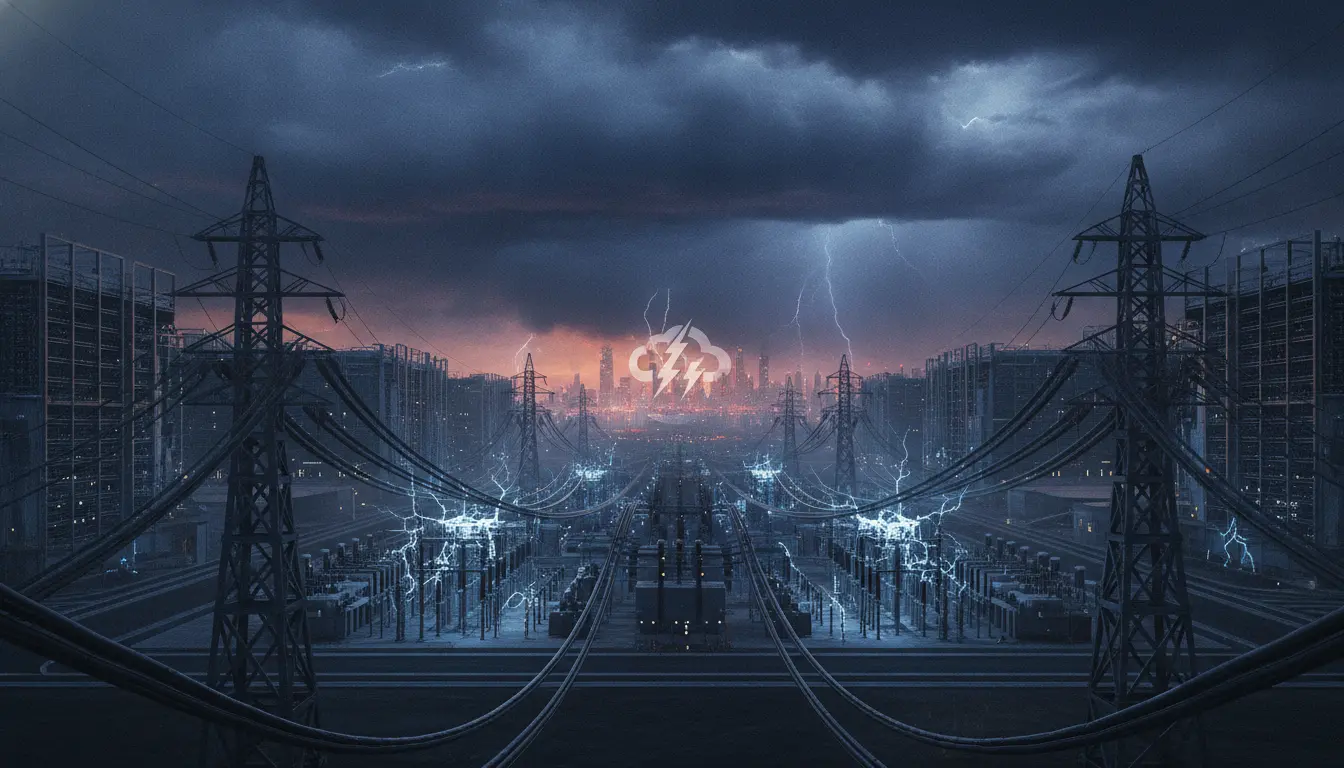
Major Cloud Providers Face Power Grid Headwinds Threatening AI Data Center Expansion
A critical bottleneck is emerging in the global race for artificial intelligence dominance: the availability of sufficient electrical power. Major cloud providers, including Amazon Web Services (AWS), Microsoft Azure, and Google Cloud, are confronting unprecedented challenges in securing the energy needed to fuel their rapidly expanding AI data centers, raising concerns about potential delays in vital infrastructure buildouts through 2026. The insatiable demand for generative AI and other advanced computing applications is driving a massive surge in data center construction, but the underlying energy infrastructure is struggling to keep pace, presenting a significant hurdle to the industry's ambitious growth projections.
For years, data centers have been steadily increasing their energy consumption, but the advent of sophisticated AI models has dramatically escalated these requirements. Training and running large language models (LLMs) and other complex AI algorithms demand vast arrays of high-performance GPUs, each consuming significantly more power than traditional CPUs. A single, large-scale AI data center can now require hundreds of megawatts of electricity, comparable to the energy consumption of a small city. This exponential increase is putting immense strain on existing power grids, many of which were not designed to handle such concentrated and rapidly growing loads, particularly in regions favored for data center development due to connectivity and cooling availability.
The challenge extends beyond mere supply; it encompasses the entire energy ecosystem. Acquiring land, obtaining permits for new substations, upgrading transmission lines, and securing long-term power purchase agreements are complex, time-consuming endeavors. Utilities, often bound by regulatory processes and lengthy construction timelines, struggle to accelerate infrastructure development at the speed demanded by hyperscale cloud providers. Furthermore, the industry’s push towards sustainability means a preference for renewable energy sources, which, while abundant in potential, often face their own set of grid integration and intermittency challenges. The competition for clean energy is intensifying, creating an additional layer of complexity and cost for companies committed to net-zero targets.
While AWS, Microsoft, and Google have collectively pledged tens of billions of dollars to expand their global cloud infrastructure, a significant portion of which is dedicated to AI, the looming power crunch threatens to undermine these investments. Companies are exploring various strategies to mitigate the risks, including pioneering advanced cooling technologies, optimizing hardware for greater energy efficiency, and actively investing in renewable energy projects directly. Some are even reportedly considering unconventional solutions, such as small modular reactors (SMRs) or microgrids, to establish more independent and resilient power sources for their future facilities. However, these are long-term solutions, and the immediate future remains precarious.
The implications of widespread delays would be far-reaching, impacting not only the tech giants themselves but also the broader economy. Slower AI infrastructure buildouts could translate to increased costs for AI services, hindering innovation across industries that rely on cloud-based AI tools, from healthcare and finance to manufacturing and logistics. It could also slow the pace of AI research and development, potentially affecting a nation's competitive edge in the global technology landscape. The ability to deploy and scale AI compute resources effectively is becoming as critical as access to talent and capital in shaping future economic growth and technological leadership.
Industry analysts are closely monitoring the situation, recognizing that the current trajectory of AI development is deeply intertwined with the capacity of global energy grids. The coming years will require unprecedented collaboration between technology firms, utility providers, and government regulators to streamline processes, accelerate grid modernization, and ensure a stable, sustainable energy supply. Without a concerted effort to address these fundamental power constraints, the ambitious vision for a pervasive AI-driven future risks facing significant, prolonged slowdowns, potentially recalibrating expectations for the pace of technological transformation worldwide.
Stay Informed. Act Smarter.
Get weekly highlights, major headlines, and expert insights — then put your knowledge to work in our live prediction markets.
Related News

Cloud Hyperscalers Intensify AI Infrastructure Race with Plans for Megascale Accelerator Data Centers

Leading AI Labs Intensify Proprietary Chip Development Drive

Major AI Companies Intensify Race to Unveil Next-Generation Flagship Language Models

Tech Giants Escalate High-Stakes Race for Next-Generation AI Models

Global Tech Giants Accelerate Development of Next-Generation Flagship AI Models
Nvidia's Meteoric Ascent Positions It to Challenge Apple for World's Most Valuable Company Title

The Race for AI Supremacy: Tech Giants Accelerate Timelines for Next-Generation Language Models

AI Race Accelerates as Tech Giants Push for Next-Generation Flagship Models

Amazon and Google Intensify Focus on AI Chip Market, Eyeing External Sales for Custom Processors

Global AI Leaders Vie to Unveil Next-Generation Large Language Models