

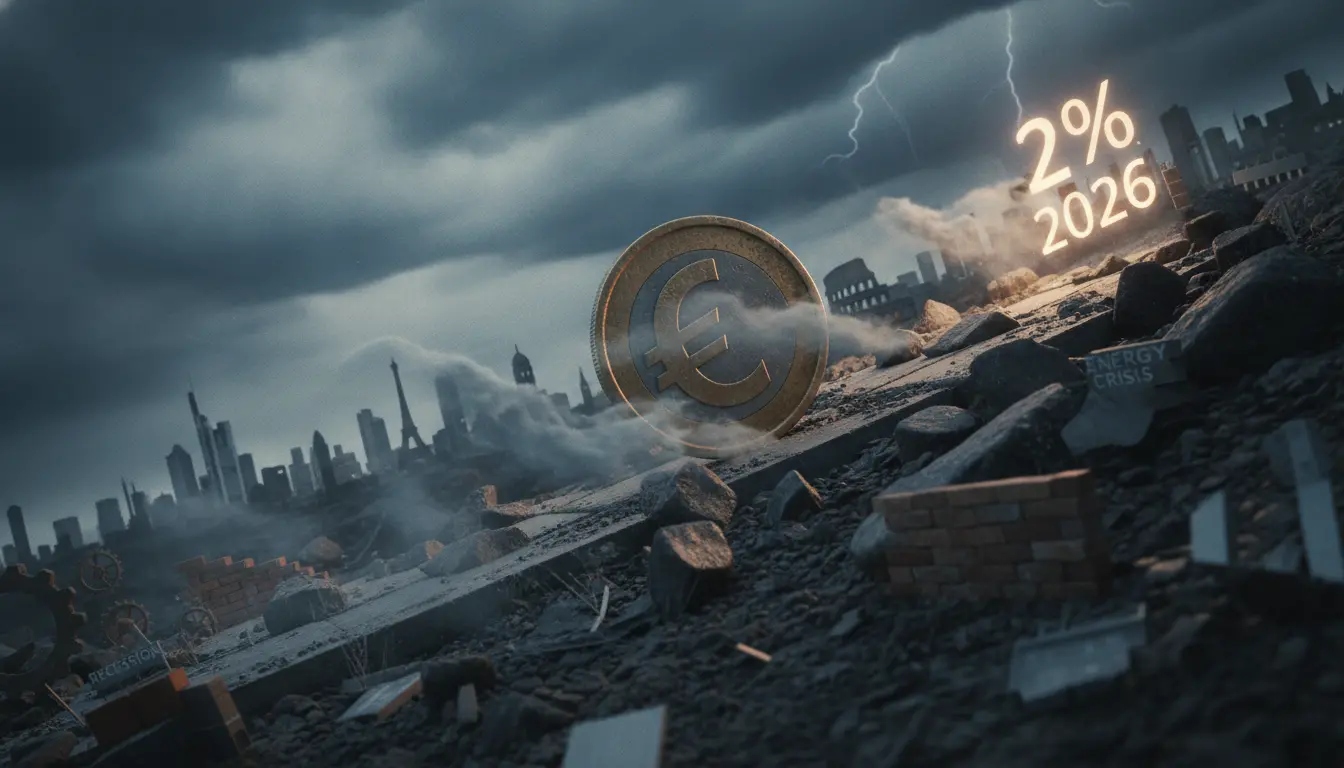
Eurozone's Path to 2% Inflation Target by 2026 Fraught with Economic Headwinds
FRANKFURT – The European Central Bank's arduous battle to tame inflation is entering a protracted new phase, with policymakers and economists increasingly uncertain whether the coveted 2% target can be sustainably reached by the end of 2026. While the headline inflation rate has fallen significantly from its double-digit peak, a combination of stubborn domestic price pressures, resilient wage growth, and mounting geopolitical risks is complicating the final, most challenging stretch of the journey back to price stability for the 20-nation currency bloc.
This prolonged struggle follows an unprecedented economic shock. The post-pandemic recovery, coupled with severe energy price spikes following Russia's invasion of Ukraine, sent the Harmonised Index of Consumer Prices (HICP) soaring to levels not seen in a generation. In response, the ECB abandoned its long-standing era of negative interest rates, embarking on its most aggressive monetary tightening cycle in history. Between July 2022 and September 2023, the central bank raised its key deposit rate from -0.5% to a record 4.0%, a powerful economic maneuver designed to cool demand and anchor inflation expectations. While this swift action successfully broke the back of the initial inflationary surge, the focus has now shifted to the persistent underlying price pressures that threaten to keep inflation elevated for longer.
At the heart of the ECB's current dilemma is the resilience of the services sector and the labor market. Unlike goods inflation, which has cooled as supply chains have normalized, services inflation remains stubbornly high. This is largely driven by robust wage growth, as workers across the Eurozone seek to claw back purchasing power lost during the peak of the crisis. Unemployment has remained at historic lows, giving unions and employees significant bargaining power. Policymakers in Frankfurt are closely watching these wage negotiations, aware that a sustained wage-price spiral would make returning to the 2% target nearly impossible without inflicting more significant pain on the economy.
ECB President Christine Lagarde and her colleagues on the Governing Council are now navigating a delicate balancing act. They have paused their rate-hiking campaign but have consistently pushed back against calls for premature rate cuts, stressing that policy must remain restrictive for a considerable period. The central bank's mantra is one of data-dependency, meaning future decisions will hinge on incoming figures for inflation, wage growth, and overall economic activity. The fear is twofold: easing policy too soon could allow inflation to become entrenched, while keeping rates too high for too long could choke off the bloc's fragile economic growth and tip it into a damaging recession. This so-called “last mile” of disinflation is widely regarded by economists as the most difficult to traverse.
The Eurozone's inflation trajectory is not determined in a vacuum. A host of external factors could easily derail the ECB's carefully laid plans over the next two years. Renewed volatility in global energy markets, stemming from conflicts in the Middle East or further disruptions to supply, remains a significant threat. Furthermore, the economic health of key trading partners, particularly the United States and China, will have a profound impact. A sharper-than-expected slowdown in these major economies could dampen external demand and help cool European inflation, but it would also weigh heavily on the Eurozone's own growth prospects.
Looking ahead to the December 2026 benchmark, the outlook is shrouded in uncertainty. Economic forecasts from major institutions like the IMF and the European Commission project a gradual decline in inflation, but they are subject to significant revisions. Beyond the immediate cyclical factors, structural shifts such as the costly green transition, demographic changes impacting labor supply, and a potential reordering of global supply chains could all exert medium-term upward pressure on prices. Consequently, while the acute phase of the inflation crisis may be over, the path to achieving and maintaining the 2% target is a long-term challenge that will test the resolve and foresight of European policymakers for years to come.
Stay Informed. Act Smarter.
Get weekly highlights, major headlines, and expert insights — then put your knowledge to work in our live prediction markets.
Related News
Path to Sub-4% US 10-Year Treasury Yield by August 2026 Hinges on Inflation and Fed Policy

Economic Indicators Suggest US Consumer Confidence Could Dip Below 100 by August 2026

Bundesliga Golden Boot Race Heats Up With Kane, Openda, and Boniface Poised for 2026/27 Challenge

Brazil 3-0 Haiti LIVE: World Cup 2026

Concertgoer Dies After Apparent Fall at Madison Square Garden