Entertainmenttheatre & artsArt Exhibitions
Uncovering the Hidden Meaning in Whistler's Mother Portrait
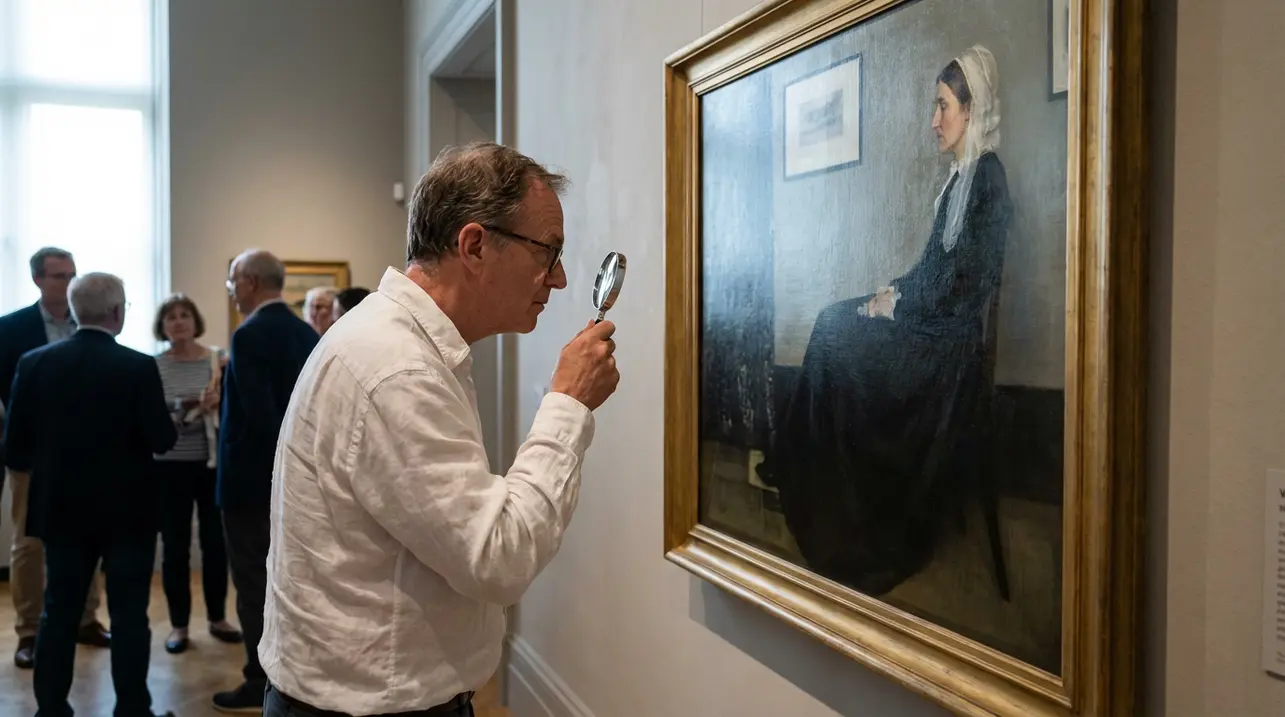
The iconic severity of ‘Whistler’s Mother’—officially titled ‘Arrangement in Grey and Black No. 1’—has long captivated audiences, but to understand the portrait’s ascent to masterpiece status, one must look beyond the dour expression of Anna McNeill Whistler and into the meticulous, revolutionary composition her son crafted.Painted in 1871, James McNeill Whistler’s work was a deliberate affront to the sentimental, narrative-driven Victorian portraiture of his time; he wasn’t merely painting his mother, he was orchestrating a visual symphony of shape and tone. The subject’s rigid profile, anchored against a stark grey wall, and the careful placement of the framed etching and floral curtain aren’t domestic details but formal elements in a study of harmony and restraint, a philosophy Whistler championed under the banner of ‘Art for Art’s Sake.’ This was a radical departure, aligning more with the emerging Aesthetic Movement than with traditional family homage, which explains the initial mixed reception at the Royal Academy of Arts—critics found it puzzling, even unfinished, before the Paris Salon’s embrace recast it as a symbol of universal maternal dignity. The hidden details truly unlock its meaning: the black dress melting into the shadowed floor creates an abstract, geometric form, while the slight lift of her feet on a footstool, often interpreted as a sign of her patient posing, also serves to elevate the shape of her dress into a perfect rectangle, balancing the squares and rectangles of the picture frames and wall paneling.Whistler’s fastidious control extends to the emotional temperature; the absence of a traditional smile or direct gaze isn’t a reflection of his mother’s character—by accounts a resilient and devout woman who managed family crises—but a conscious rejection of melodrama, forcing the viewer to engage with form rather than story. The painting’s subsequent journey into global iconography, from its acquisition by the French state to its status as an American cultural meme during the Great Depression, speaks to its chameleonic ability to absorb meaning, whether as a bastion of family values or a avant-garde manifesto.Expert commentary, such as that from Dr. Margaret MacDonald, underscores how Whistler’s correspondence reveals his anguish over the public’s misreading of the work as merely a portrait, rather than his intended pure arrangement. The consequence of this legacy is a dual existence: it is both one of the most recognizable paintings in the Western canon and one of the most profoundly misunderstood, a quiet revolution framed in grey and black that continues to challenge how we distinguish between subject and form, sentiment and art.
#art history
#Whistler's Mother
#painting analysis
#hidden details
#masterpiece
#featured
#portrait
#James McNeill Whistler
#symbolism