Entertainmenttheatre & artsArt Exhibitions
Uncovering Hidden Details in Whistler's Mother Portrait
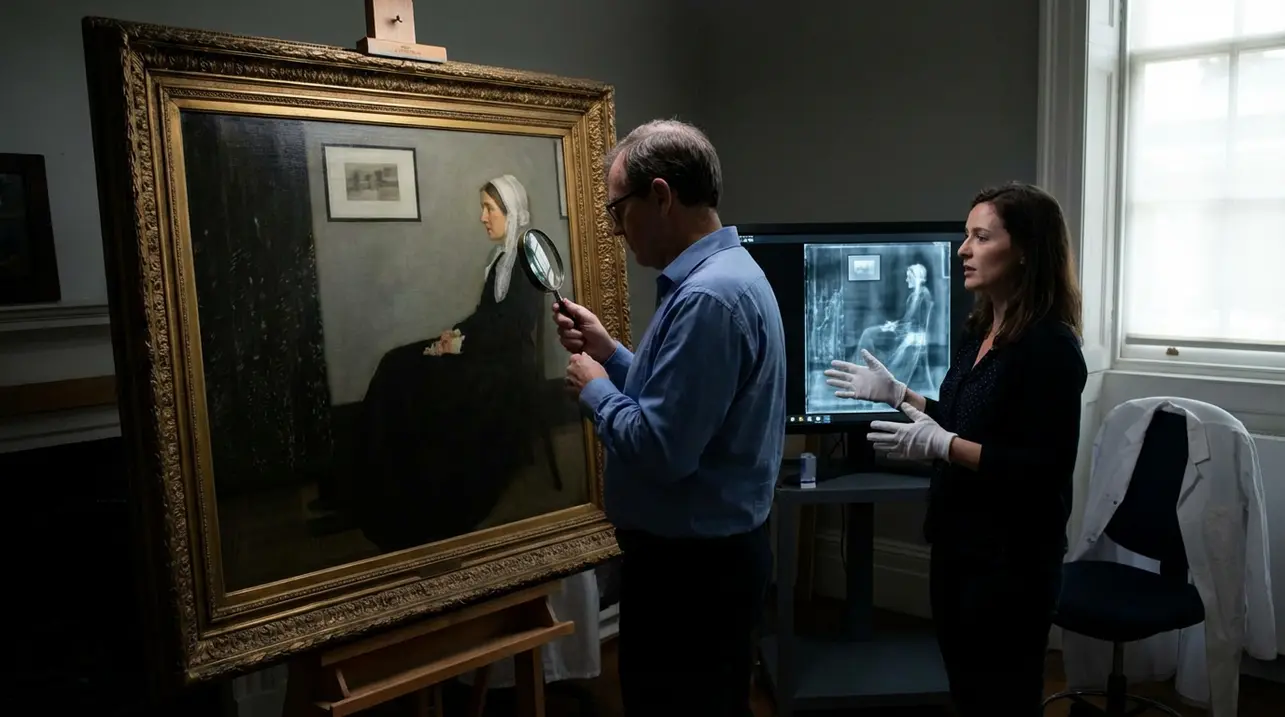
The stern, seated figure in James Abbott McNeill Whistler’s ‘Arrangement in Grey and Black No. 1’—universally known as ‘Whistler’s Mother’—is an icon of quietude, yet the painting’s journey to masterpiece status is a drama worthy of a prestige biopic.To understand its meaning, we must look beyond the surface of grey and black, peeling back layers of artistic rebellion, Victorian social codes, and a profound, if complicated, maternal bond. The portrait, painted in 1871, features Anna McNeill Whistler, who, at 67, was a formidable presence in the artist’s life.Contrary to the dour austerity she projects, historical accounts suggest Anna was a deeply religious, strong-willed woman who managed family finances through hardship and whose initial reluctance to sit stemmed from the physical strain of holding a pose, not a lack of affection. Whistler’s original model failed to appear, and Anna stepped in, but the composition was never intended as a simple maternal tribute.Whistler, a leading proponent of the Aesthetic Movement, was obsessed with harmony of color, form, and line—art for art’s sake. The title ‘Arrangement’ is the first clue; he was composing shapes, not just capturing a likeness.The hidden details are the lexicon of this composition. Observe the carefully aligned rectangles: the canvas on the wall, the footstool, the framed etching.They create a rigid geometry that anchors the figure, a study in verticals and horizontals. The curtain is not merely a decorative element but a formal device, its patterned floral motif providing the only intricate detail in a sea of subdued tones, leading the eye and breaking the monotony.The placement of her feet on the footstool, a detail often overlooked, was a practical solution for an elderly sitter but also contributes to the painting’s foundational stability. The meaning unlocks when we see this not as a portrait of a specific mother, but as Whistler’s manifesto on pure art.He was deliberately rejecting the narrative, sentimental art favored by the Victorian establishment. He presented his mother not as a warm, nurturing figure but as a monumental form, a study in dignity and restraint.The public and critics of the time were baffled; when it was first exhibited at the Royal Academy in London in 1872, it was largely ignored. Its path to global adoration was circuitous.Its acquisition by the French state in 1891, after it was famously rejected by the Royal Academy and found acclaim in Paris, was a pivotal moment, a posthumous vindication for Whistler. During the Great Depression, the image was co-opted by the American government in a campaign promoting family values and steadfastness, transforming it from an aesthetic ‘Arrangement’ into a universal symbol of maternal sacrifice and resilience—an interpretation Whistler might have scoffed at.
#art history
#Whistler's Mother
#painting analysis
#hidden details
#masterpiece
#featured
#portrait
#symbolism