EntertainmentmoviesNew Releases
How 50 Cent Acquired His Biggest Hits from Other Rappers
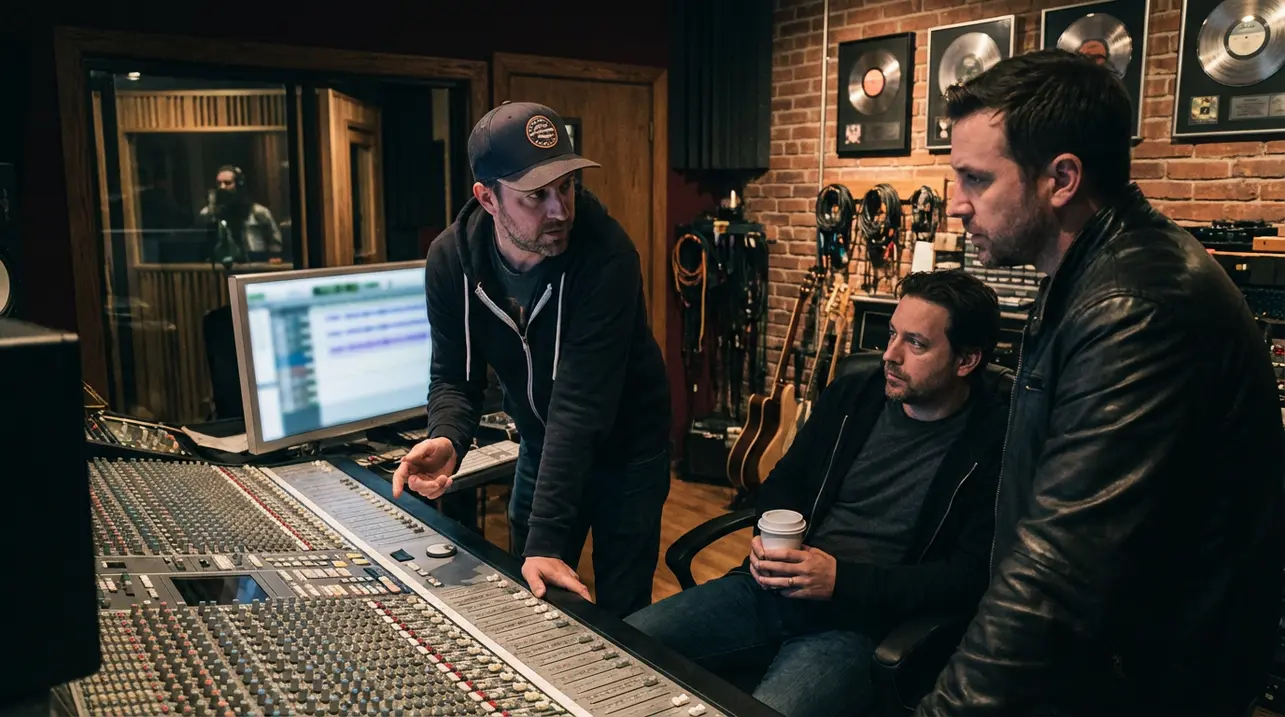
The story of how 50 Cent’s signature anthems, 'In Da Club' and 'Candy Shop,' landed in his lap instead of with other heavyweight artists is one of those delicious bits of hip-hop lore that feels like a perfectly curated B-side—a narrative of near-misses and strategic hustle that reshaped an entire era of rap. It’s a tale less about pure creation and more about the sharp-eared curation and competitive instinct that defines the genre's greatest players.Let's drop the needle on 'In Da Club' first. The track, which would become a multi-platinum, culture-defining monster with nearly two billion streams on Spotify alone, was originally crafted by the legendary Dr.Dre and his production team for D12, Eminem's ferocious Detroit collective. The beat, with that iconic, minimalist stomp and whistle, was reportedly in the chamber for the group's 'Devil's Night' follow-up.But when 50 Cent, then the blistering new protégé in the Shady/Aftermath orbit, heard the instrumental, he immediately recognized its seismic potential. The lore goes that he essentially claimed it on the spot, understanding its crossover appeal in a way that perhaps aligned more with his own street-savvy yet pop-ready persona than with D12's more chaotic, group-oriented style.This wasn't just a beat swap; it was a declaration of intent. 50, fresh from the mixtape wars and the survival of a near-fatal shooting, was building a debut album, 'Get Rich or Die Tryin',' that needed a coronation hymn.'In Da Club,' with its celebratory yet menacing energy, was exactly that—a victory lap from a man who hadn't yet officially won. Its ascension to ubiquity in early 2003, fueled by Dre's Midas touch and 50's charismatic, everyman-gangster flow, didn't just make 50 a superstar; it temporarily re-centered mainstream hip-hop around a single, undeniable hook.Now, flip the record over to 'Candy Shop. ' This 2005 smash from the 'The Massacre' album, produced by Scott Storch at the peak of his chart-dominating powers, followed a eerily similar path.The lush, synth-driven track, dripping with risqué metaphor, was initially intended for none other than the Bronx don, Fat Joe. At the time, Fat Joe was riding high with the Terror Squad and 'Lean Back,' a certified street anthem.'Candy Shop,' however, was a different beast—a polished, flirtatious club record. The story, as relayed by Storch himself, suggests that when 50 got wind of the track, he again moved with decisive speed, leveraging his industry position and perhaps a keener sense of the evolving mainstream palate to secure it for himself.The result was another global chart-topper, further cementing 50's transformation from gritty mixtape phenom into a versatile hitmaker capable of dominating both the streets and the pop charts. The broader context here is crucial.This wasn't mere luck; it was a calculated modus operandi. The early 2000s hip-hop landscape was a brutal, hit-driven arms race, and 50 Cent, managed by the shrewd Chris Lighty, operated like a special forces unit within it.He had an uncanny ability to identify a winning instrumental and pair it with an undeniable, often repetitive, hook—a formula Dre perfected. Snatching these beats from established acts like D12 and Fat Joe wasn't just about acquiring a song; it was a power play.It signaled his top-tier status within the industry's inner sanctum, demonstrating that for a moment, his pull was greater. It also highlights the producer's pivotal, often under-sung role.Dr. Dre and Scott Storch were architects of sound, and their creations were highly coveted commodities.That they ultimately funneled these particular weapons to 50 speaks volumes about their belief in his vessel—his voice, his image, his moment. The consequences of these two acquisitions are woven into music history.'In Da Club' arguably became the defining rap song of the decade's first half, a track so potent it now serves as a nostalgic shorthand for an entire era. 'Candy Shop' solidified 50's pop dominance and showcased his range.For D12 and Fat Joe, the 'what if' remains a fascinating footnote. Would 'In Da Club' have had the same singular, culture-crushing impact as a D12 posse cut? Could Fat Joe have spun 'Candy Shop' into a similar crossover triumph? We'll never know. But that's the magic of these industry legends—they remind us that hip-hop's timeline is built not just on what was released, but on the alternate realities that were narrowly avoided, all hinging on a beat, a meeting, and the relentless instinct of an artist like 50 Cent, who knew a hit when he heard one, even if it was meant for someone else's album.
#editorial picks news
#50 Cent
#In Da Club
#Candy Shop
#D12
#Fat Joe
#hip hop
#music history
#hit songs
#behind the scenes