Entertainmenttheatre & artsArt Exhibitions
Hidden Details in Whistler's Mother Reveal Its Meaning
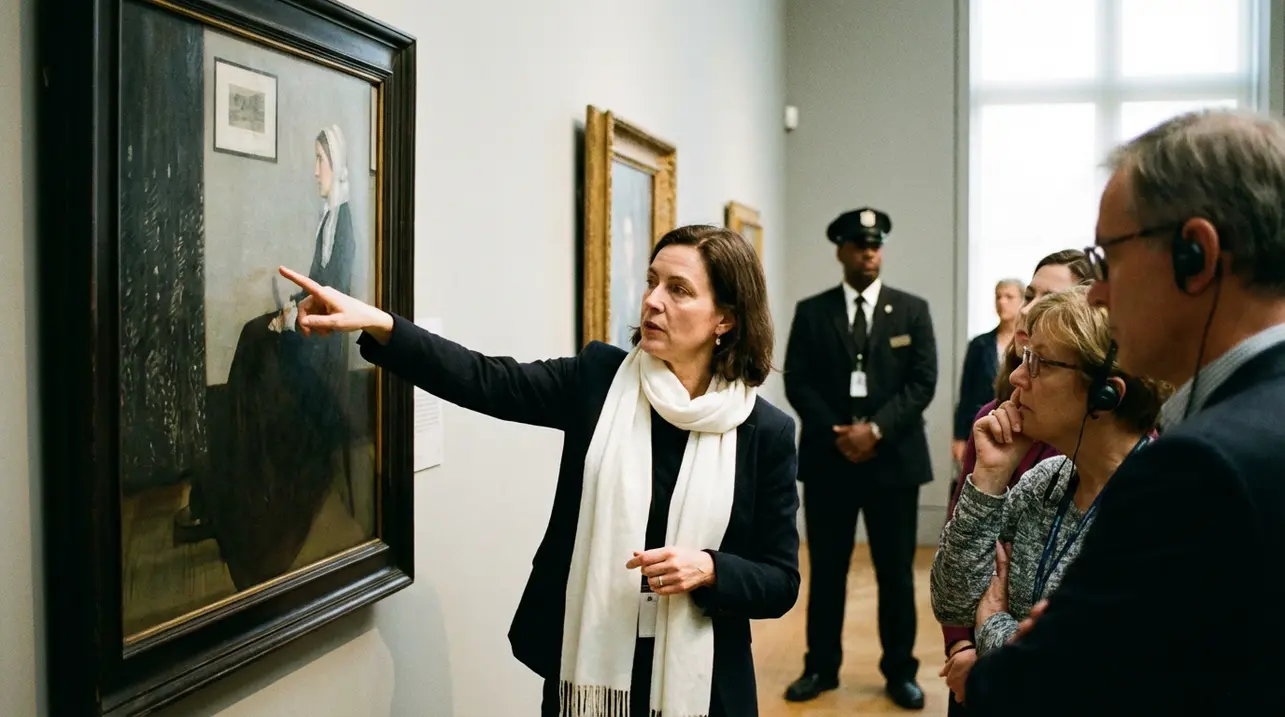
The severe, stoic visage of Anna McNeill Whistler, immortalized by her son James Abbott McNeill Whistler in the 1871 painting officially titled ‘Arrangement in Grey and Black No. 1,’ has transcended its canvas to become a global icon of motherhood, a status so entrenched it obscures the radical, deeply personal artistry at its core.To unlock its true meaning, one must move beyond the popular mythology and scrutinize the hidden details Whistler embedded within his ‘arrangement,’ a term he preferred over ‘portrait’ to emphasize the work’s formal, aesthetic ambitions over mere representation. The composition is a masterclass in restrained tension; his mother is depicted in profile, clad in mourning black, seated against a grey wall punctuated by a meticulously rendered Japanese print and a stark, white curtain.This was not a casual domestic snapshot but a deliberate construction, a harmony of shapes and tones where the rigid verticals of the curtain rod and picture frame contrast with the soft curves of the chair and his mother’s cap, creating a visual symphony of balance and austerity. Whistler’s mother was, by many accounts, a formidable and devout woman, and her son captures not just her likeness but her essence—a lifetime of Calvinist discipline and quiet resilience etched into her posture, her hands resting on a handkerchief, a symbol of domesticity and perhaps unspoken emotion.The painting’s journey to masterpiece status is itself a tale of shifting cultural tastes; initially rejected by the Royal Academy in London, it was later acquired by the French state and now resides in the Musée d’Orsay, its ascent mirroring the broader acceptance of American artists in Europe and the growing appreciation for Aestheticism, which prized ‘art for art’s sake. ’ Art historians like Margaret F.MacDonald have noted that the painting’s power derives from this very duality—it is both an intimate family document and a bold, abstract experiment. The sparse interior, the limited palette, the flattening of space all point to Whistler’s fascination with Japanese woodblock prints, then a revolutionary influence in Western art, making the work a quiet manifesto against Victorian sentimentality.Furthermore, the curtain in the background is not merely drapery; it acts as a framing device, pulling the viewer’s eye inward and emphasizing the painting’s artificial, composed nature, a reminder that we are looking at an arrangement, not a window. The portrait’s iconic status was cemented during the Great Depression, when it was used in a U.S. government campaign to promote maternal sacrifice, a patriotic interpretation Whistler himself would have likely scorned. Today, ‘Whistler’s Mother’ endures because it invites perpetual re-reading—is it a tribute, a formal exercise, a psychological study, or a cultural relic? Its genius lies in its silence; it offers no easy answers, only a profound, grey-and-black harmony that continues to resonate, compelling us to look past the symbol and see the severe, beautiful, and complex artistry beneath.
#featured
#Whistler's Mother
#art analysis
#painting details
#art history
#masterpiece
#portrait
#Anna McNeill Whistler