Entertainmenttheatre & artsArt Exhibitions
Hidden Details and Meaning in Whistler's Mother
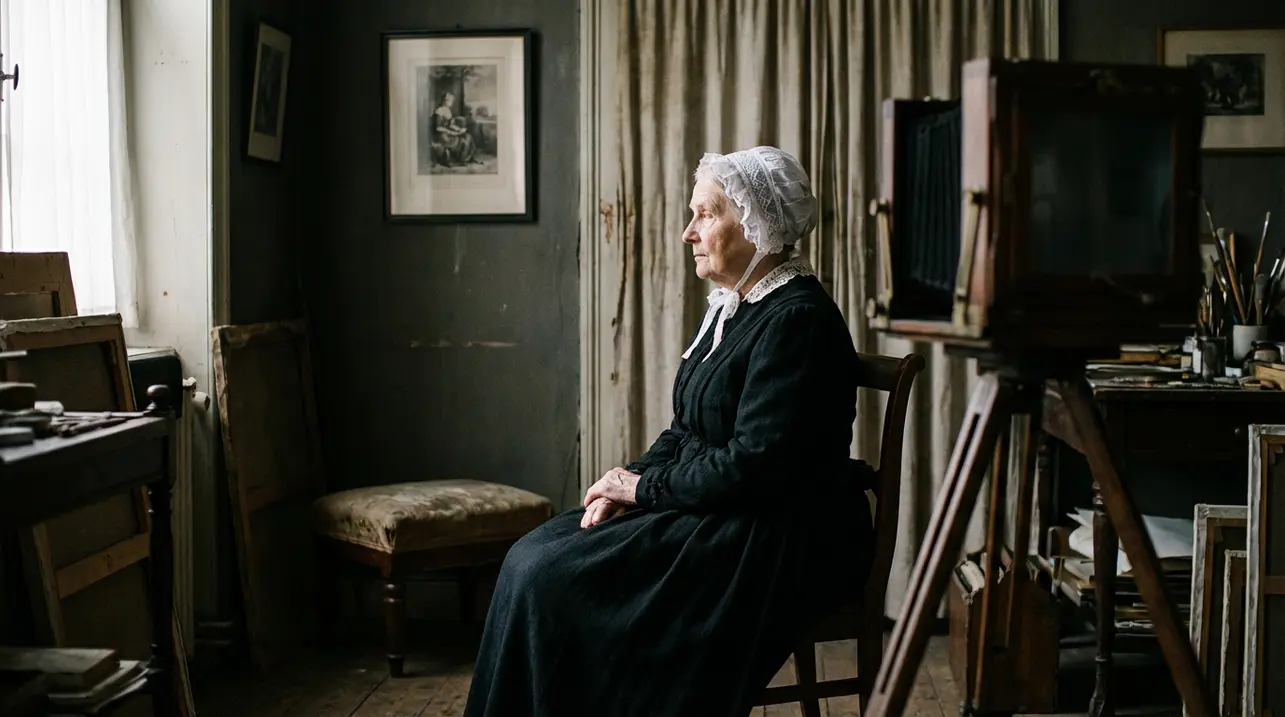
The severe, seated profile of Anna McNeill Whistler, immortalized by her son James Abbott McNeill Whistler in the 1871 painting officially titled ‘Arrangement in Grey and Black No. 1’, is an icon so ubiquitous it verges on parody, a shorthand for maternal austerity.Yet, to dismiss it as a simple portrait is to miss the intricate, rebellious artistry that cemented its status as an instant, if controversial, masterpiece. The hidden details are everything.Consider the context: Whistler, the American expatriate in London, was a leading proponent of ‘Art for Art’s Sake,’ a radical notion divorcing beauty from narrative or moral obligation. His mother was not the intended sitter; a model failed to appear, and the sixty-seven-year-old Anna, in mourning for her husband, reluctantly took the chair.What emerged was not a sentimental tribute but a rigorous exercise in composition. The dominant grays and blacks are a tonal symphony, the verticals of the curtain rod and picture frame on the wall echoing the stark line of her dress, creating a restrained harmony that Whistler prioritized over likeness.The small, lithographed sketch on the wall is often overlooked—it’s a Whistler etching of Black Lion Wharf, a subtle nod to his other work and a calculated visual anchor. Her feet rest on a footstool, not for comfort, but to prevent her dress from pooling, maintaining the painting’s crisp geometric structure.This was modernism in a bonnet. Contemporary critics were baffled; some derided its ‘unfinished’ quality and somber palette.But its power lies in this very tension—between the personal subject and the impersonal arrangement, between a mother and a series of shapes. It’s a painting about painting.Anna herself was reportedly perplexed, wishing her son had chosen a more cheerful subject. Yet, her enduring image, acquired by the Musée du Luxembourg in 1891 and later by the Musée d’Orsay, transcended art circles to become a global cultural totem, used in everything from wartime propaganda to postal stamps, its meaning endlessly reinterpreted.The genius of ‘Whistler’s Mother’ is that it withstands both rigorous formal analysis and populist mythologizing. It is a quiet revolution on canvas, a declaration that the poetry of form and color could be found in the quiet dignity of an aging woman in a rocking chair, provided the artist had the vision to see not just a mother, but an arrangement.
#art history
#Whistler's Mother
#painting analysis
#symbolism
#featured