

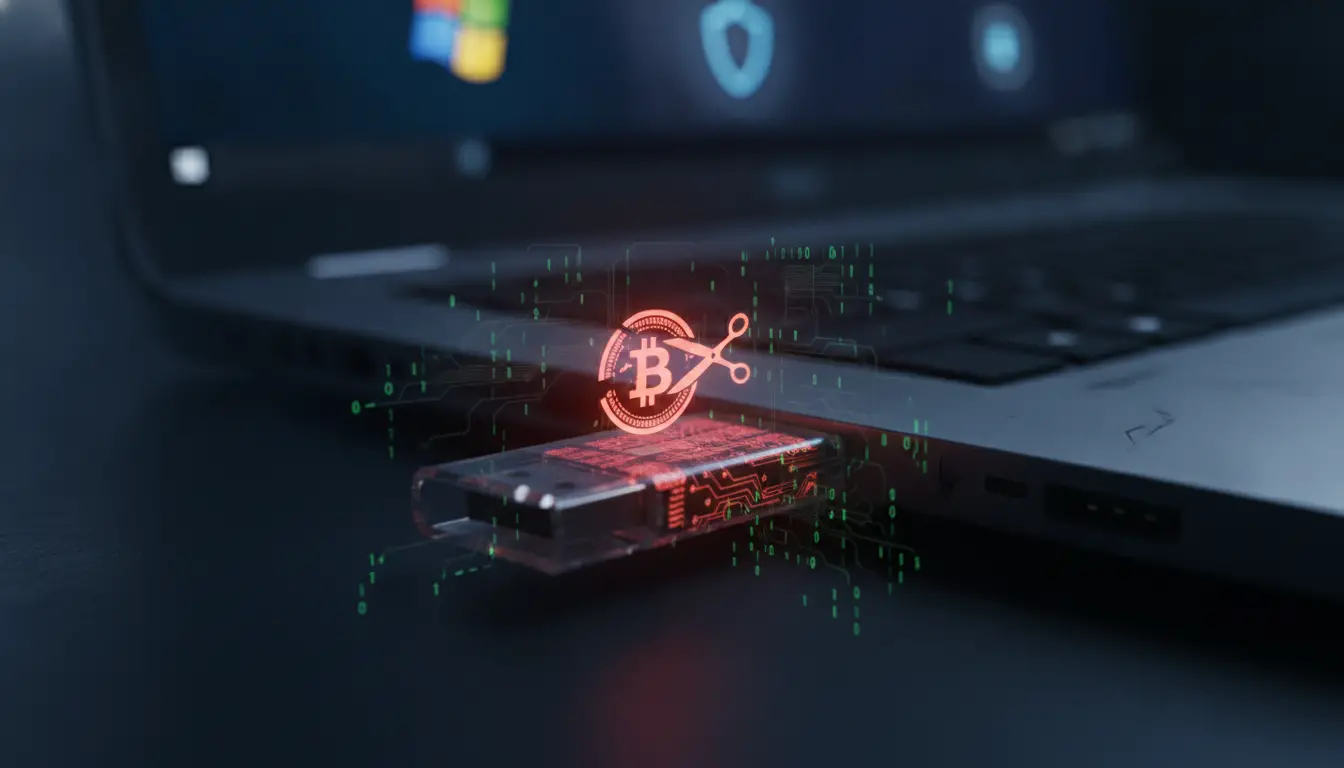
Microsoft warns users of 'Crypto Clipper' malware spread via USB drives
Microsoft's Threat Intelligence division has issued a stark warning to cryptocurrency users regarding a sophisticated new form of malware being distributed through a surprisingly old-school method: USB drives. Dubbed a 'Crypto Clipper,' the malicious software demonstrates a dangerous evolution in financially motivated cybercrime, combining the stealthy theft of digital assets with the capabilities of a persistent backdoor, giving attackers long-term control over compromised systems.
The attack vector, which leverages removable USB devices, represents a tactical resurgence of a method that had fallen out of favor but is proving effective once again. The initial infection occurs when an unsuspecting user inserts a tainted drive into their computer. The malware then executes, embedding itself into the system to await its moment. Its primary function is a classic clipboard hijacking attack tailored for the cryptocurrency world. When a user copies a long, complex cryptocurrency wallet address to paste into a transaction field, the malware silently intervenes. In a fraction of a second, it replaces the legitimate address in the computer’s clipboard with a different address belonging to the attacker. Because wallet addresses are lengthy, alphanumeric strings that are impossible to memorize, most users fail to notice the swap before confirming the transaction, irrevocably sending their funds to the cybercriminals.
What elevates this threat beyond a standard financial stealer is its secondary payload. According to Microsoft's analysis, the malware possesses the ability to execute remote commands, effectively “turning a financially motivated stealer into a lightweight backdoor.” This dual-functionality is a significant concern for security professionals. While the immediate goal may be to siphon cryptocurrency, the persistent access it grants attackers opens the door to far more devastating activities. An attacker could use this foothold to conduct surveillance, exfiltrate sensitive personal or corporate data, or even deploy additional, more destructive malware such as ransomware, locking the user out of their own files until a payment is made. This transforms a targeted theft into a comprehensive and lingering security breach.
Delving into the technical mechanics, Microsoft researchers noted that the malware achieves persistence by modifying critical system settings, ensuring it loads automatically every time the infected computer is started. This resilience makes it difficult for average users to detect and remove. Furthermore, to conceal its communications, the malware often utilizes anonymizing networks like Tor to connect with its command-and-control (C2) servers. This technique helps obscure the attackers' location and makes it more challenging for law enforcement and cybersecurity firms to track them down and dismantle their infrastructure. The combination of a low-tech entry point with sophisticated evasion and control techniques makes this a particularly insidious threat.
The reappearance of USB-based malware campaigns highlights a critical blind spot in modern security practices, which are often focused on network-based and phishing attacks. Malicious actors are increasingly exploiting the human element, relying on social engineering or simple curiosity to get users to plug in unknown devices. This latest campaign serves as a potent reminder that physical security is an inseparable component of digital safety. As organizations and individuals fortify their online defenses, attackers are circling back to proven methods that bypass firewalls and email filters entirely.
In response to the threat, Microsoft and other security experts urge users to exercise extreme caution with all removable media. The primary recommendation is to avoid inserting USB drives from unknown or untrusted sources. For organizations, implementing policies that restrict or scan the use of external devices is a critical step. For all users, ensuring that security software is up-to-date and that operating systems have the latest security patches is essential. When conducting cryptocurrency transactions, the most crucial advice is to meticulously double-check, and even triple-check, the wallet address in the destination field right before confirming the transfer, comparing it character-by-character with the intended source. In the world of irreversible transactions, that final moment of verification is the last line of defense.
Stay Informed. Act Smarter.
Get weekly highlights, major headlines, and expert insights — then put your knowledge to work in our live prediction markets.
Related News

Algorand plans ‘broad quantum resilience’ by 2027

Meta Intensifies AI Coding Ambitions with 'Muse Code' Agent, Targeting Public Developer Access

Sberbank Moves to Launch Crypto Trading Platform as Russia Embraces Digital Assets

European Capitals Brace for Potentially Record-Shattering July Heat in 2026

OpenAI's GPT-5 Launch Expected by 2026, Poised to Reshape AI Landscape

European Capitals Face Mounting Risk of Record-Breaking Heatwaves by Summer 2026

OpenAI Targets GPT-6 Release by 2026 as AI Race Intensifies

Two Dead, Five Wounded in Shooting at Seattle Center Food Festival; Manhunt Underway

NASA Deploys Robotic Mission to Avert Uncontrolled Telescope Re-entry

TSMC Advances N2P Chip Production, Setting Stage for Next-Gen AI and Mobile Innovation