

Politicsconflict & defenseMilitary Operations
The Silent Arms Race: Autonomous Submarine Drones Redefine Naval Power
OL
Oliver Scott
6 months ago7 min read
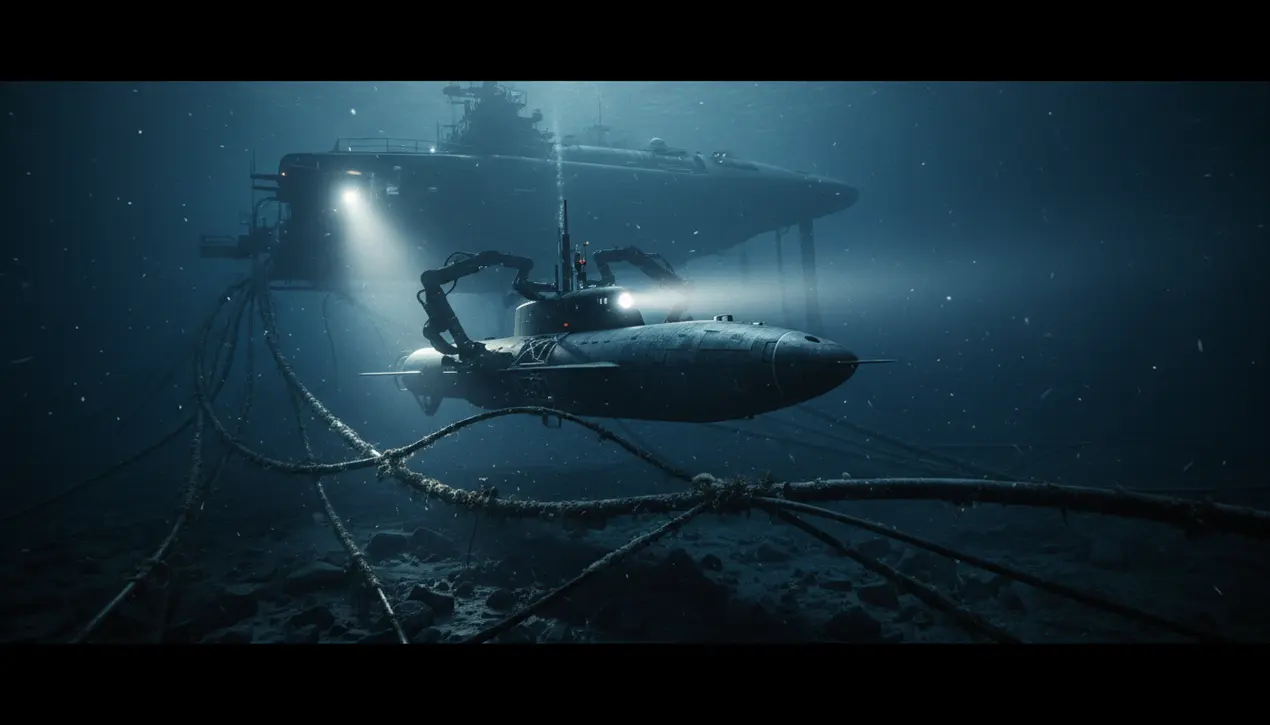
The deep ocean, once the exclusive theater of state-run navies, is now the frontline of a technological revolution. A new era of undersea warfare is dawning, driven by a fierce competition to develop and deploy autonomous submarine drones.This multi-billion-dollar arms race pits agile startups against defense giants, fundamentally reshaping global maritime strategy and introducing a new layer of geopolitical risk. The catalyst for this shift is the proven power of asymmetric warfare.Just as aerial drones have transformed battlefields, uncrewed underwater vehicles (UUVs) are poised to disrupt the traditional dominance of nuclear submarines, forcing a complete overhaul of naval doctrine. Nations are rapidly adapting.The UK's Royal Navy is spearheading a strategic pivot, planning a future fleet where UUVs are central to core missions. Their focus: hunting increasingly stealthy enemy submarines and, most critically, guarding the world's vulnerable subsea infrastructure.The security of the internet and global finance, which relies on a fragile network of seabed cables and pipelines, has become a primary naval objective. In the Indo-Pacific, Australia's monumental $1.7 billion investment in the 'Ghost Shark' drone program sends a clear strategic message. This initiative is a direct counter to China's expanding submarine force, a move deemed essential for preserving the regional balance of power and securing vital trade routes.Meanwhile, the U. S.Navy is leveraging its vast resources to pursue a multi-faceted UUV strategy. One project has already fielded a drone that can be launched from a submarine's torpedo tube, effectively transforming a single vessel into a mothership for a dispersed, intelligent network of sensors and weapons.The technological challenges are daunting. Engineers must conquer navigation and communication in an environment that blocks GPS and radio waves, develop power sources for missions lasting months, and create AI capable of independent, long-term operation.The companies that overcome these hurdles will not only secure lucrative contracts but will also set the standards for undersea engagement for decades to come. This rapid advancement, however, ushers in a host of perilous uncertainties.The risk of miscalculation in the abyss is severe; an unidentified drone near a critical cable could be misconstrued as an act of war, sparking an international crisis. Furthermore, the legal and ethical guidelines governing the use of armed autonomous systems underwater remain virtually nonexistent, creating a regulatory vacuum. As this silent, unmanned race accelerates, the world's oceans are being transformed into a new, ungoverned, and intensely contested frontier.
#lead focus news
#undersea drones
#autonomous submarines
#Royal Navy
#Ghost Shark
#undersea cables
#defense technology
Stay Informed. Act Smarter.
Get weekly highlights, major headlines, and expert insights — then put your knowledge to work in our live prediction markets.
Comments
It's quiet here...Start the conversation by leaving the first comment.