Vintage rotary telephone becomes hybrid music player and AI voice chat device.
SOSophia King7 months ago7 min read
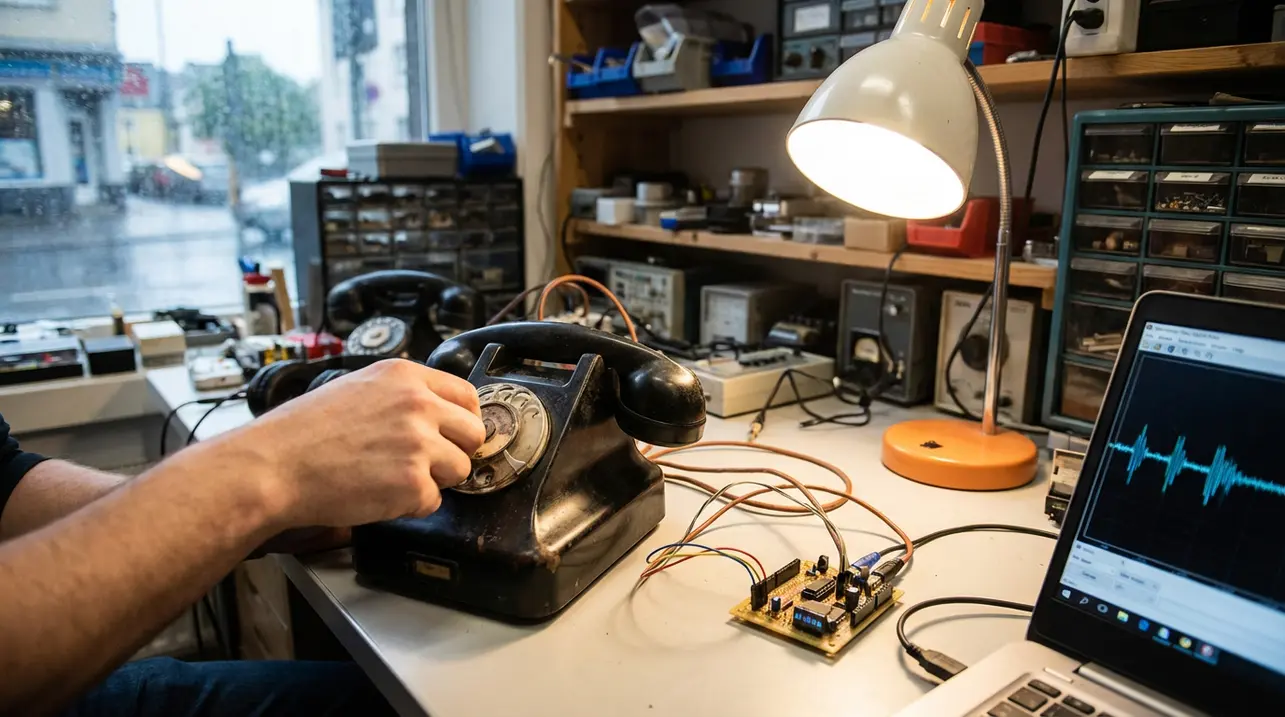
In a delightful collision of analog nostalgia and digital frontier, designer Nico Tangara has resurrected the classic rotary telephone, transforming it into a hybrid music player and AI voice chat companion. This isn't just a quirky art project; it’s a profound statement on user experience, where the tactile, deliberate ritual of spinning the rotary dial becomes the primary command interface for navigating streams of music and conversations with large language models.Imagine the satisfying *click-click-click* of the dial returning, each revolution not calling a number, but perhaps scrolling through a Spotify playlist or querying an AI about the weather. Tangara’s work speaks directly to a generation of creatives and tech enthusiasts who, while embracing tools like Midjourney and ChatGPT, often feel adrift in a sea of sterile, touchscreen interfaces that lack soul and physical feedback.It’s a hardware plugin for the imagination, a tangible bridge between the slow, intentional pace of the past and the instant, ephemeral nature of our current digital interactions. The project echoes the ethos of the modular synth community or the vinyl revival, where the process is as important as the outcome.By choosing the rotary phone—a universal symbol of connection from a bygone era—Tangara cleverly reframes our relationship with AI. Instead of a disembodied voice from a smart speaker, the interaction becomes a deliberate, almost ceremonial act.You don’t just shout a command into the void; you physically engage with an object, turning a wheel to initiate a dialogue. This has significant implications for UX design in the age of AI, suggesting that the future of human-computer interaction might not be purely voice or screen-based, but could involve a renaissance of tactile controls that make digital processes feel more real and less alienating.From a technical perspective, the device likely houses a Raspberry Pi or similar microcomputer, with the rotary dial repurposed as an encoder, its pulses translated into digital commands. The original handset, with its carbon microphone and receiver, could be integrated with a USB sound card, preserving that uniquely warm, slightly muffled telephone audio quality for both playing music and chatting—a sonic aesthetic choice as deliberate as any filter on an AI-generated image.This fusion creates a unique sonic palette, where lo-fi analog acoustics meet crystal-clear digital streams. While specific details on the AI integration are sparse, one can envision it running a localized model or connecting to an API, allowing for private, embodied conversations that feel more personal than interacting with a cloud service through a smartphone.The project sits at a fascinating crossroads, appealing to the DIY maker culture, the retro-tech aesthetic popular on platforms like TikTok, and serious discussions about AI ethics and embodiment. It asks a simple but powerful question: if our tools for accessing the most advanced technology feel familiar and human, does it change how we perceive and trust that technology? Tangara’s hybrid telephone is more than a gadget; it’s a prototype for a more humane digital future, where our interfaces have history, weight, and a satisfying mechanical click.
#featured
#rotary telephone
#AI voice chat
#hybrid music player
#vintage tech
#hardware innovation
#conversational AI
#designboom