AIchips & hardwareAI Accelerators
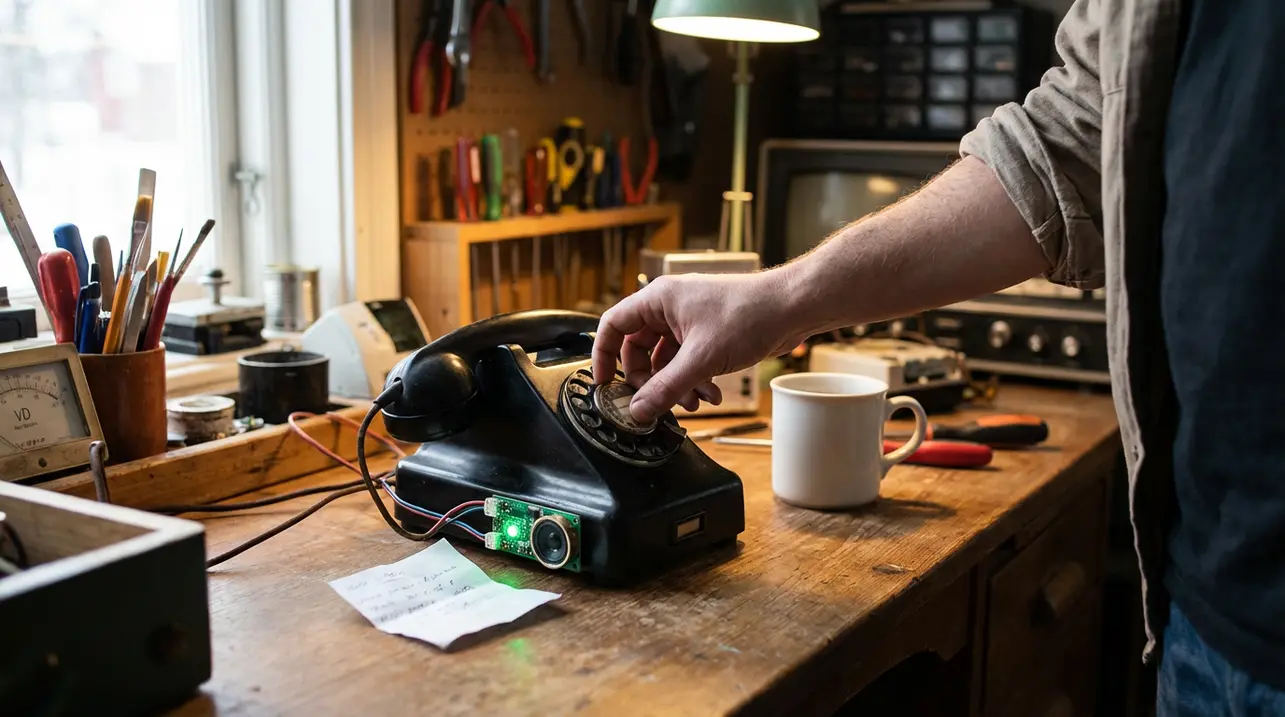
Vintage rotary telephone becomes AI music player and voice chat device.
In a world where sleek touchscreens and minimalist voice assistants dominate our interactions with technology, a project from creator Nico Tangara offers a delightfully tactile and nostalgic counterpoint. Tangara has masterfully transformed a vintage rotary telephone into a multifunctional analog-digital hybrid, a device where the satisfying, deliberate spin of the rotary dial remains the primary command interface for everything from playing music to engaging in AI-powered voice chats.This isn't just a quirky art piece; it's a profound statement on user experience, blending the tangible physicality of the past with the invisible intelligence of the future. For creatives and designers, this project resonates deeply—it’s about reclaiming the sensory joy of interaction that so much modern tech has sanded away.Imagine the process: you want to skip a track on your AI-curated playlist. Instead of a vague voice command or a sterile tap on glass, you physically dial a sequence, feeling the dial’s resistance and hearing the iconic whirring click as it returns.That physical action creates a moment of intention, a small ritual that transforms a mundane task into something more engaging and personal. It’s a UX principle often forgotten in the race for efficiency, reminding us that the tools we use should inspire, not just perform.Tangara’s work sits at a fascinating intersection, reminiscent of the early days of generative AI art tools like Midjourney, which opened digital creation to new, intuitive prompts. Here, the rotary dial itself becomes the prompt—a physical input that translates into digital outcomes, merging the aesthetic of mid-century industrial design with the fluid capabilities of large language models and music algorithms.The choice of a telephone, historically a device for connection, as the vessel for an AI chat function is particularly poetic. It reframes our relationship with conversational AI, moving it away from the disembodied, omnipresent assistant and grounding it in a specific, beloved object with its own history and character.This approach challenges the prevailing design language of tech giants, suggesting that the future of human-computer interaction might not be more seamless abstraction, but rather a thoughtful, artful hybridity. It asks whether our smart homes need to look like sterile showrooms, or if they can be populated with objects that carry emotional weight and tell a story.For artists and tinkerers, Tangara’s device is a beacon, demonstrating how open-source AI models and accessible hardware can be repurposed to create unique, personality-driven tech. It sparks the imagination: what other obsolete interfaces could be revived? Could a manual typewriter become a poetic AI co-writer, or an old analog mixer control a digital audio workstation with unparalleled hands-on feel? The project is less about the specific functions—music playback and voice chat are ubiquitous—and more about the *how*.
#featured
#rotary telephone
#AI voice chat
#hybrid music player
#vintage tech
#hardware innovation
#Nico Tangara