

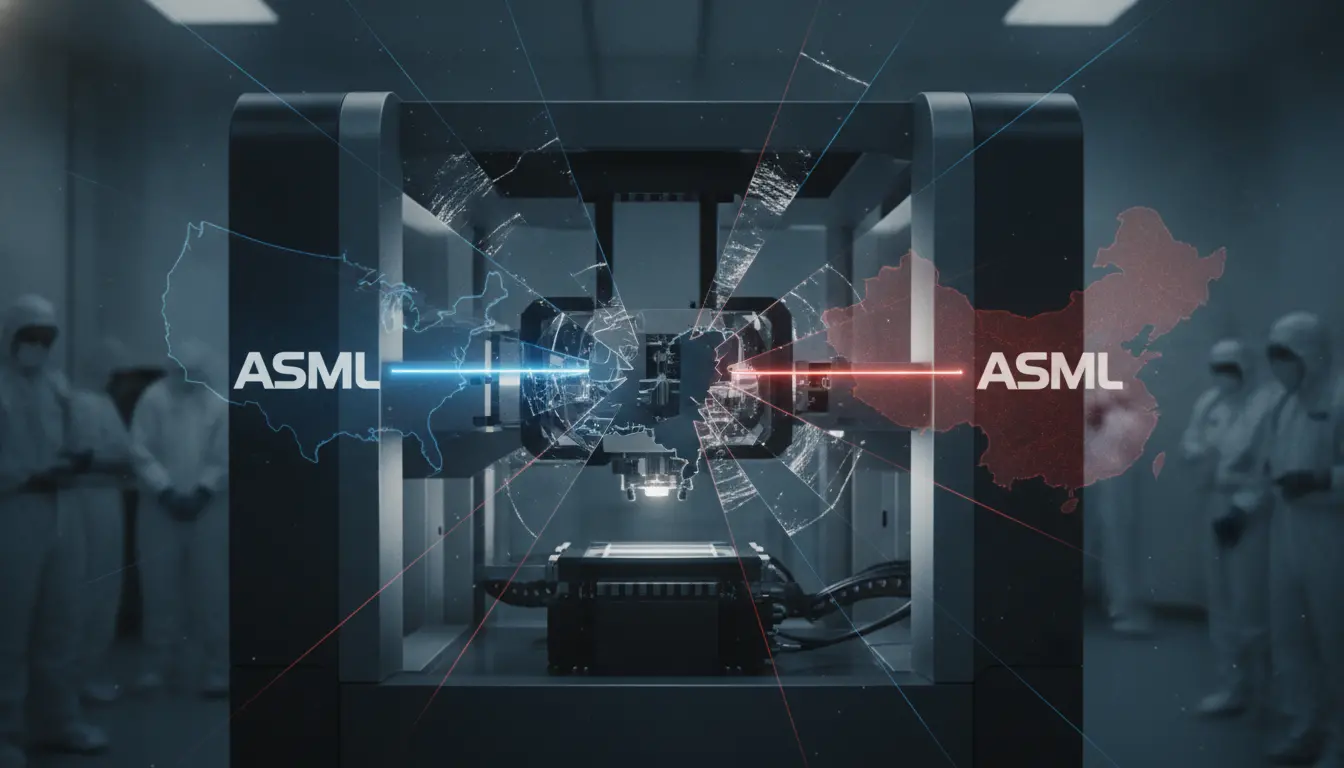
The US says ASML’s top chip tool may be in China. ASML says it isn’t
A quiet but significant diplomatic skirmish is unfolding between Washington and Beijing, with the Netherlands-based chip equipment giant ASML caught squarely in the crosshairs. The United States has voiced concerns that ASML's most advanced lithography tools — crucial for manufacturing leading-edge semiconductors — might have found their way into China, a claim ASML vigorously refutes. This dispute underscores the intense geopolitical pressures and intricate commercial realities defining the global technology landscape, particularly in the critical semiconductor sector.
The core of the American apprehension centers on the potential for China to gain access to sophisticated chip-making capabilities, which Washington views as a national security threat. The US has, for several years, orchestrated a concerted campaign to restrict China's access to advanced semiconductor technology, fearing its application in military advancements and artificial intelligence. This strategy has involved pressuring allies like the Netherlands and Japan to impose export controls on their domestic champions, notably ASML, the sole manufacturer of extreme ultraviolet (EUV) lithography machines, and a key producer of advanced deep ultraviolet (DUV) systems. These machines are indispensable for etching the intricate patterns onto silicon wafers that form modern microchips, with DUV technology still vital for many advanced processes short of the absolute bleeding edge.
ASML, a company of immense strategic importance, finds itself in a precarious position, balancing the demands of its largest markets against the imperatives of international diplomacy and national security. The company’s denial hinges on a powerful commercial logic: risking its export license to illicitly arm a Chinese customer would entail catastrophic consequences. Such a move would jeopardize ASML's access to crucial Western markets, invite severe penalties from governments, and irreparably damage its reputation as a trusted supplier. The Dutch government, under pressure from the U.S., has already restricted ASML from exporting its most advanced EUV machines to China and has incrementally tightened controls on certain DUV systems.
The current contention, while lacking specific details about which ASML tools are allegedly in China, highlights the ongoing cat-and-mouse game between global powers over technological supremacy. If the US intelligence indeed possesses information suggesting unauthorized transfers, it could point to sophisticated circumvention tactics employed by Chinese entities, or perhaps a misunderstanding of the actual capabilities or age of the tools present. ASML's response emphasizes that any tools sold to China adhere strictly to export control regulations and licenses issued by the Dutch government, operating within the boundaries of international law and existing agreements. The company maintains rigorous internal compliance protocols to ensure adherence to these complex and frequently updated rules.
The broader implications of this standoff extend beyond a single company or a specific tool. It reflects a deeper fragmentation of the global technology supply chain, driven by a desire for national self-sufficiency and strategic decoupling. China, for its part, has accelerated its efforts to develop indigenous semiconductor capabilities, pouring vast resources into domestic research and manufacturing to lessen its reliance on Western technology. Success in this endeavor, however, remains heavily dependent on access to crucial equipment like that produced by ASML, creating an enduring choke point for Beijing's technological ambitions. The US position, therefore, aims to delay or outright prevent this self-sufficiency, maintaining its technological lead and the competitive edge of its allies.
For policymakers in Washington and The Hague, this situation poses a delicate challenge. The US seeks to enforce its tech containment strategy without alienating key economic partners, while the Netherlands must navigate its economic interests with ASML against its alliance commitments. The ongoing scrutiny of ASML’s operations and the public airing of such disputes underscore the high stakes involved in the race for advanced computing power, a race that will undoubtedly continue to shape geopolitical alliances and global economic trajectories for years to come.
Stay Informed. Act Smarter.
Get weekly highlights, major headlines, and expert insights — then put your knowledge to work in our live prediction markets.
Related News

South Korea Poised for Trillion-Dollar Investment in AI and Semiconductor Industries

AI Chip Demand Fuels Sky-High Expectations for Nvidia's Data Center Revenue Ahead of Q2 Fiscal 2027 Earnings

Nvidia Q2 FY2027 Earnings Report to Spotlight Data Center Segment Amid Exploding AI Demand

Tech Giants' AI Spending Spree Nears Trillion-Dollar Mark as Infrastructure Race Intensifies
AMD Set to Unveil MI450X/MI550X AI Accelerator Roadmap and Major Customer Wins at Q2 2026 Earnings

FTC Intensifies Antitrust Scrutiny on Major Tech Companies

Top AI Labs Eye 2026 for Potential Artificial General Intelligence Breakthrough Claim
Nintendo Confirms Switch Successor in Development as Industry Awaits Details on Next-Gen Hardware

EU AI Act's Full Implementation Faces Scrutiny Amidst Potential Delay Concerns

Netflix, Focus Pass on Luca Guadagnino’s ‘Artificial’ After Amazon MGM Studios Dropped Sam Altman-OpenAI Movie