


Outpoll Weekly Recap: AI (June 22 – 28, 2026)
This week in AI felt like watching a high-stakes playoff where every player suddenly changed positions mid-game. OpenAI dropped a quiet bombshell on Tuesday with an unannounced update to their flagship model—call it GPT-5-lite, if you want a name—that boosts reasoning in multi-step physics problems by nearly 40 percent over the previous benchmark, according to internal evaluation data shared with select researchers. The move caught rival labs off guard: Anthropic had been teasing their own “Claude 4.5” for a Friday release, and instead rushed out a 3 a.m. blog post claiming comparable gains in legal document parsing. Meanwhile, the open-source camp didn’t sleep. A coalition of university labs led by EPFL released OLMo-2, a fully transparent 70B-parameter model trained on a newly curated, ethically sourced dataset that strips out copyrighted materials from the mid-2010s scrape. The model’s performance on the MMLU-Pro benchmark sits just 1.2 percent behind GPT-4’s best score, and the code, weights, and training logs are all public. The immediate effect on prediction markets was chaotic: Polymarket’s “Will a fully open-source model match GPT-5 on any major benchmark before 2027?” contract swung from 45 percent to 32 percent and back to 41 percent across three days. By Thursday, Meta’s chief AI scientist posted a cryptic thread about “the coming commoditization of foundation models,” which some interpreted as a hint that Llama 4 (long rumored, never confirmed) would skip the premium tier entirely and focus on on-device efficiency. That same afternoon, a leaked internal memo from Google DeepMind—first authenticated by a verified ex-employee on X, then confirmed by two outlets—laid out a roadmap for “Project Sovereign,” a distributed inference system that uses federated learning across millions of Android devices to fine-tune large models without centralizing user data. The privacy implications are enormous: if successful, DeepMind could effectively train on live user interactions inside the browser without ever seeing raw text, sidestepping the regulatory landmines that have slowed down competitors. The memo didn’t land well in Brussels, where the European Commission’s AI Office had just finished drafting a new transparency mandate requiring all foundation models trained on EU user data to disclose their full training dataset composition. By Friday morning, a coalition of 14 civil society groups filed a formal complaint against OpenAI, citing the unannounced update as evidence of “opaque deployment practices” that violate the EU AI Act’s risk-management provisions. Legal scholars I spoke with expect the case to turn on whether a post-training performance bump counts as a “substantial modification” requiring new conformity assessments. Back in the markets, the volatility spilled into equity derivatives: the ETF tracking major AI players (BOTZ) saw its 30-day implied volatility jump to 54 percent—the highest since the November 2024 DeepSeek shock. But the real action was in the niche token space. A new protocol called “Proof-of-Training” went live on a testnet, allowing miners to earn crypto rewards for validating that compute time was actually used to train a listed model, verified through zk-proofs of gradient updates. Early participants are already farming predictions on Metaculus about whether any major lab will adopt the protocol by year’s end; the community consensus currently sits at a skeptical 17 percent, but that number was 9 percent on Monday, so the trend is worth watching. Taken together, the week’s events underscore a deepening schism: the frontier labs sprint toward closed, black-box performance gains while a decentralized coalition of academics, activists, and startups pushes for radical transparency. Both sides claim they’re building toward safe AGI, but their definitions of “safe” are diverging as fast as their test scores. For anyone tracking this space, the next seven days feel less like a recap and more like a pivot point. The only thing predictable about AI right now is that every prediction—mine included—comes with a half-life measured in hours.
Stay Informed. Act Smarter.
Get weekly highlights, major headlines, and expert insights — then put your knowledge to work in our live prediction markets.
Related News

Outpoll Weekly Recap: Science (June 22 – 28, 2026)

Outpoll Weekly Recap: Politics (July 6 – 12, 2026)

Outpoll Weekly Recap: Other (June 29 – July 5, 2026)

Outpoll Weekly Recap: Other (June 22 – 28, 2026)
Outpoll Weekly Recap: Crypto (August 3 – 9, 2026)
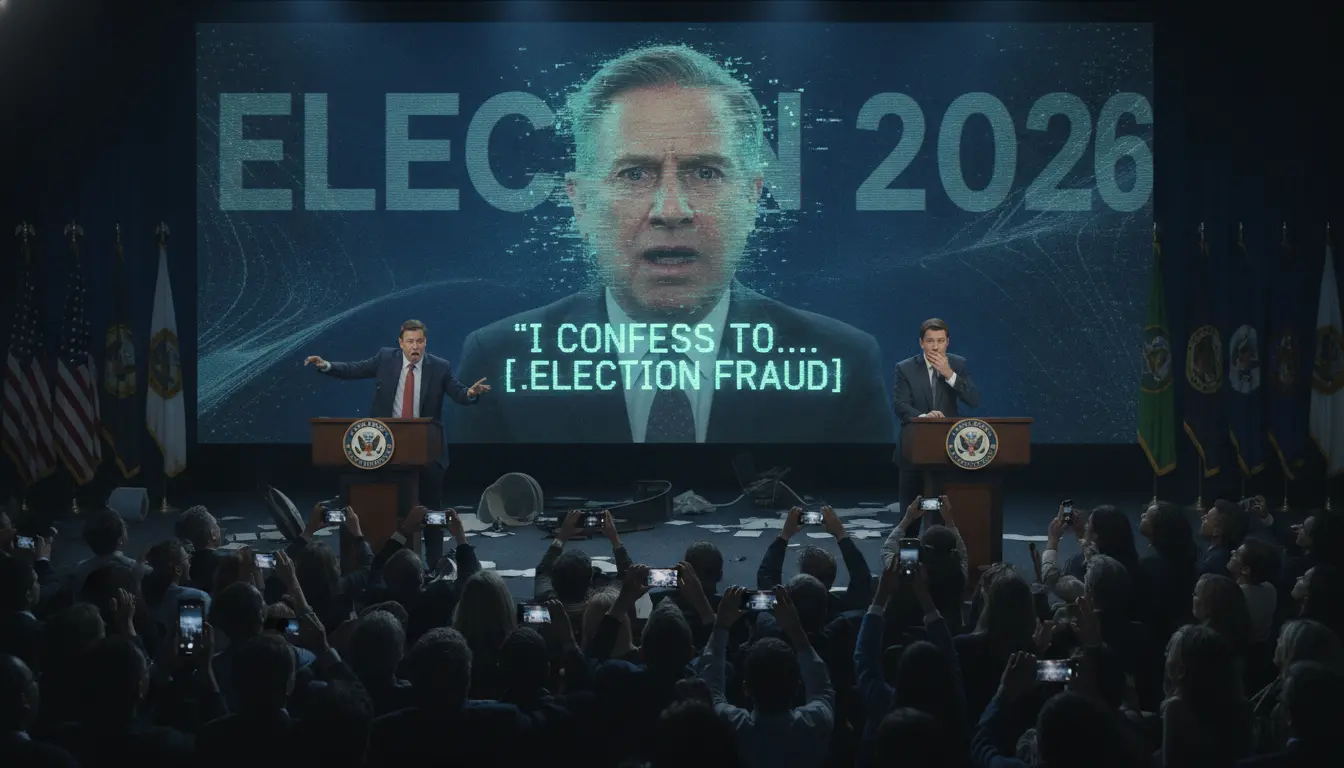
Will a verifiable AI-generated deepfake significantly impact the outcome of a US federal election in 2026?

US Government Grapples with National Security Implications of Advanced AI Development

Congress Introduces 'AI Kill Switch Act' Granting Executive Authority Over Rogue Systems Following Major Tech Incidents
Nvidia Set to Unveil Q2 FY27 Results Amid Soaring AI Chip Demand

US Lawmakers Intensify Push for Federal AI Regulation to Preempt State Laws