

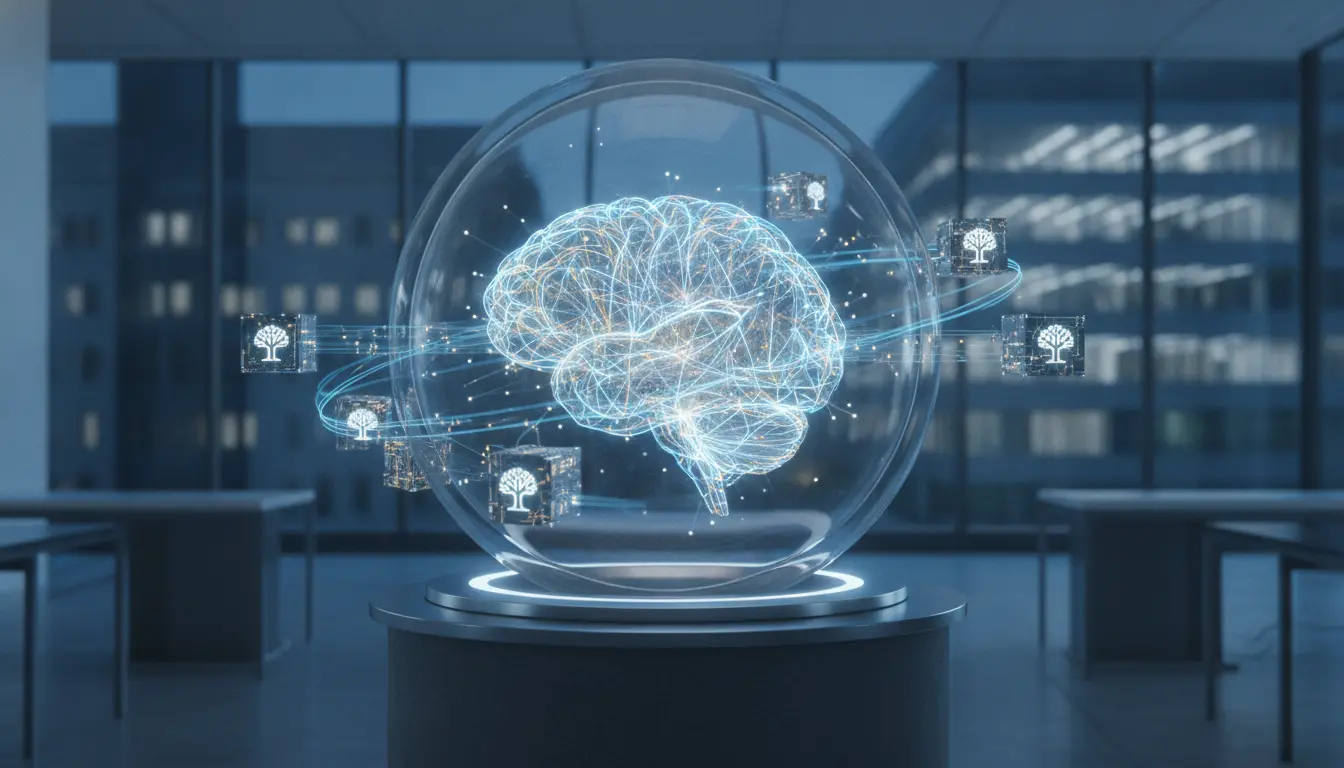
MIT Researchers Unveil SEAL: A New Step Towards Self-Improving AI
Researchers at MIT’s prestigious Computer Science and Artificial Intelligence Laboratory (CSAIL) have introduced a groundbreaking framework that could fundamentally alter the trajectory of artificial intelligence development. Named SEAL, for Self-correction with Alignment, the new system empowers large language models (LLMs) to identify their own errors, generate corrections, and autonomously update their internal knowledge, a process akin to learning from experience. This development marks a significant departure from the static nature of current AI models, which are largely frozen in time after their initial training, and represents a crucial step toward creating more dynamic, reliable, and continuously improving AI systems.
The core challenge that SEAL addresses is one of the biggest hurdles in modern AI: model stasis. LLMs like those powering popular chatbots are trained on vast but fixed datasets. Once this monumental and costly training process is complete, their understanding of the world is locked. They cannot independently learn new information or correct ingrained biases and factual inaccuracies without extensive, resource-intensive retraining by developers. This limitation means that even the most advanced models can confidently provide outdated answers or perpetuate harmful stereotypes present in their training data. SEAL offers a more elegant and efficient solution, enabling the model itself to perform the necessary edits on the fly.
The framework operates through a sophisticated, multi-step process rooted in reinforcement learning. Instead of waiting for human feedback, SEAL equips an LLM to act as its own critic and editor. When prompted, the model first generates a response. It then internally flags potential flaws in that response—what the researchers term “unaligned demonstrations.” Subsequently, the model simulates an “editor” persona to revise the flawed output, creating a higher-quality, more accurate version. This pair of outputs—the original flawed response and the superior self-corrected one—becomes a powerful, internally generated training example that guides the model's own improvement.
This self-generated feedback is then used to directly fine-tune the model's internal parameters, or weights, which are the very fabric of its knowledge and behavior. Using a reinforcement learning algorithm, SEAL rewards the neural network pathways that lead to the corrected response, effectively teaching the model to avoid its previous mistakes. This is a crucial distinction from other techniques that might use external databases to patch in correct information. SEAL doesn't just provide the right answer; it fundamentally rewrites the model's internal logic to make it less likely to make the same error in the future. It is a process of genuine learning, not just retrieval.
In experiments, the MIT team demonstrated that SEAL significantly enhances model performance across a range of critical areas. The framework proved effective at reducing the generation of toxic or harmful content, improving factual accuracy, and better aligning the AI’s behavior with desired human values. By autonomously identifying and correcting its weaknesses, the model becomes progressively safer and more dependable over time. The researchers showed that this method can be applied to various existing LLMs, suggesting it could be a versatile tool for improving a wide array of AI applications already in use today.
The implications of this research are profound. If successfully scaled and implemented, SEAL could lead to AI systems that are far more robust and adaptable. Imagine AI assistants that can keep up with daily news, scientific discoveries that can update their own knowledge base with new research, or safety systems that can unlearn dangerous behaviors without constant human supervision. While still in the research phase, SEAL charts a promising course toward the long-held goal of artificial general intelligence (AGI)—systems that don’t just recite information but can reason, learn, and grow autonomously. It is a foundational move away from static tools and toward truly intelligent, self-sufficient agents.
Stay Informed. Act Smarter.
Get weekly highlights, major headlines, and expert insights — then put your knowledge to work in our live prediction markets.
Related News

EU AI Act's Transparency Mandates Face Uphill Battle Towards Full 2026 Implementation

EU AI Act Gears Up for Crucial High-Risk System Obligations by August 2026
Soaring Demand Forces Chinese ChatGPT Rival Kimi to Halt New User Registrations
OpenAI's GPT-5.6 Sol Enters Fierce Competition Against Google's Gemini 3.1 Pro Preview for MMLU-Pro Benchmark Dominance

Nvidia Surpasses $3 Trillion Valuation as AI Demand Drives Unprecedented Growth

Deadly 7.7-Magnitude Quake Strikes Indonesia's Flores Island, Casualties Feared to Climb

Tech Industry Braces for Sweeping Changes as EU's Cyber Resilience Act Nears Implementation

Scared to spend your retirement money? Here’s one way to get over the fear of running out.

As Europe Sizzles, Climatologists Warn It's a Matter of When, Not If, All-Time Heat Record Falls

Europe Confronts Escalating Climate Risks as Record Heatwaves Push Temperatures Towards Unprecedented Levels