

AI
Jenna Ortega says it's very easy to be terrified of AI
MI
Michael Ross
7 months ago7 min read
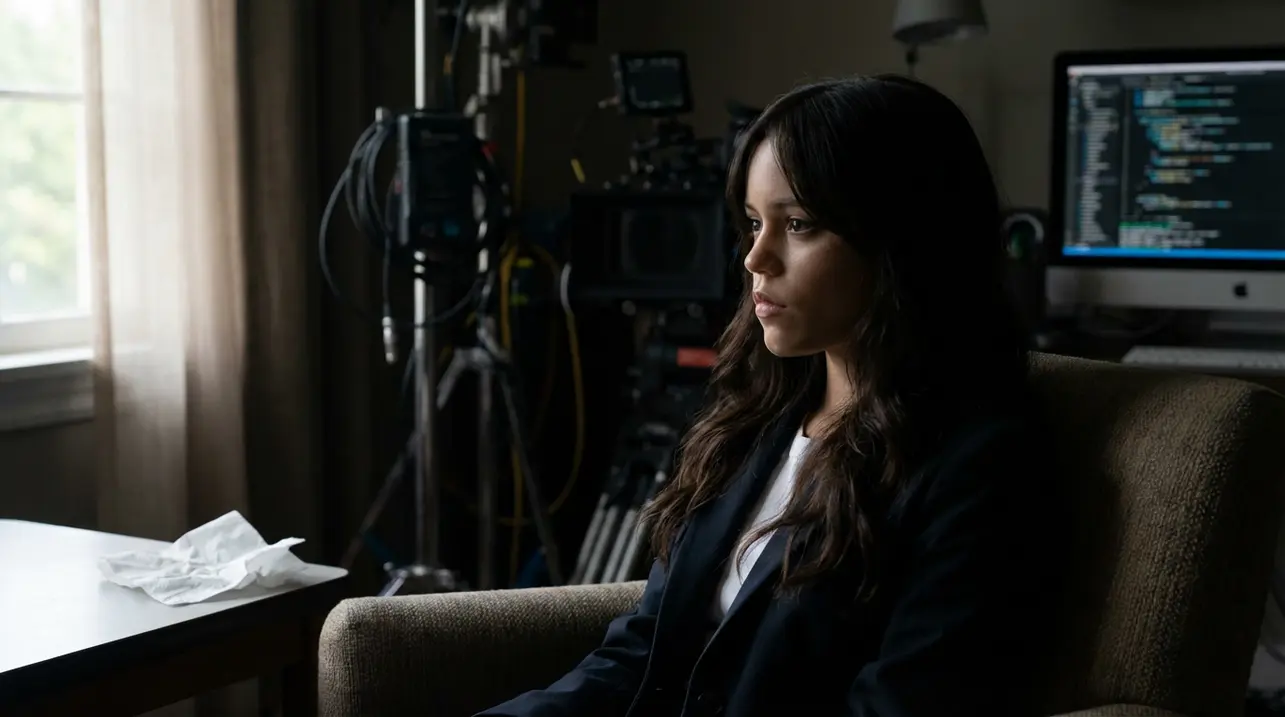
In a recent interview that cuts to the heart of a debate currently consuming Hollywood and beyond, actress Jenna Ortega voiced a sentiment many feel but few articulate with such clarity: it is, she said, “very easy to be terrified” of artificial intelligence. For Ortega, whose rise to fame is inextricably linked to the very human, nuanced performance as Wednesday Addams, the encroachment of AI into the creative sphere isn't just a technical discussion—it’s an existential one, akin to opening a Pandora’s box we may not know how to close.Her apprehension mirrors a broader, industry-wide anxiety that stretches from writers’ rooms in Los Angeles to editing suites in London, a fear that the soul of storytelling could be hollowed out by algorithms trained on the very human art they seek to replicate. This isn't mere Luddism; it’s a legitimate concern about agency, authenticity, and the economic displacement of artists, issues that formed the core of the historic 2023 WGA and SAG-AFTRA strikes where AI protections were a non-negotiable pillar.The technology in question, from generative scripts and deepfake performances to fully synthetic actors, advances at a pace that often outstrips both ethical frameworks and regulatory guardrails, creating a landscape where an actor’s likeness could be used in perpetuity without their consent, or a writer’s unique voice could be diluted into an endless stream of market-tested, AI-generated content. Proponents, often Silicon Valley visionaries and some forward-thinking producers, argue that AI is merely a tool, a new brush for the artist’s palette that can democratize creation, handle tedious tasks like rotoscoping or preliminary edits, and even spawn entirely new genres of interactive film.Yet, as ethicists like those at the AI Now Institute frequently warn, the central tension lies in the question of control and credit: who owns the output of a machine trained on millions of copyrighted works, and where does the human creator’s contribution begin and end? The specter of a future where studios lean on synthetic performers to cut costs and avoid the complexities of human collaboration is not science fiction; it’s a plausible business model being explored in boardrooms today. Ortega’s fear, therefore, is a canary in the coal mine, a reflection of the creative class’s vulnerability in an era of optimization.Historical precedents are scarce, but the unease echoes past technological disruptions in art, from the camera’s threat to painters to the digital revolution’s impact on practical effects artists—each wave rendered certain skills obsolete while birthing new forms of expression. The critical difference with AI is its potential not just to augment but to autonomously generate the core creative product itself.The consequences are profound: a potential erosion of cultural diversity as AI models homogenize output towards median trends, a devaluation of the apprenticeship and struggle that forge great artists, and a fundamental renegotiation of what we consider “art. ” For policymakers, the challenge is to craft legislation, perhaps inspired by the European Union’s pioneering AI Act, that protects creators’ rights and ensures transparency without stifling innovation. The path forward, as thinkers from Asimov to modern AI ethicists have pondered, requires a balanced, human-centric approach—one where tools serve artists, not replace them, ensuring that the box Ortega fears remains one from which hope, not just terror, can finally emerge.
#Jenna Ortega
#AI in filmmaking
#AI ethics
#actor concerns
#Pandora's box
#featured
Stay Informed. Act Smarter.
Get weekly highlights, major headlines, and expert insights — then put your knowledge to work in our live prediction markets.
Comments
It's quiet here...Start the conversation by leaving the first comment.