Otheraccidents & disastersExplosions and Fires
Mourners Tribute Hong Kong Fire Victims Amid Recovery.
EM
Emma Wilson
3 months ago7 min read
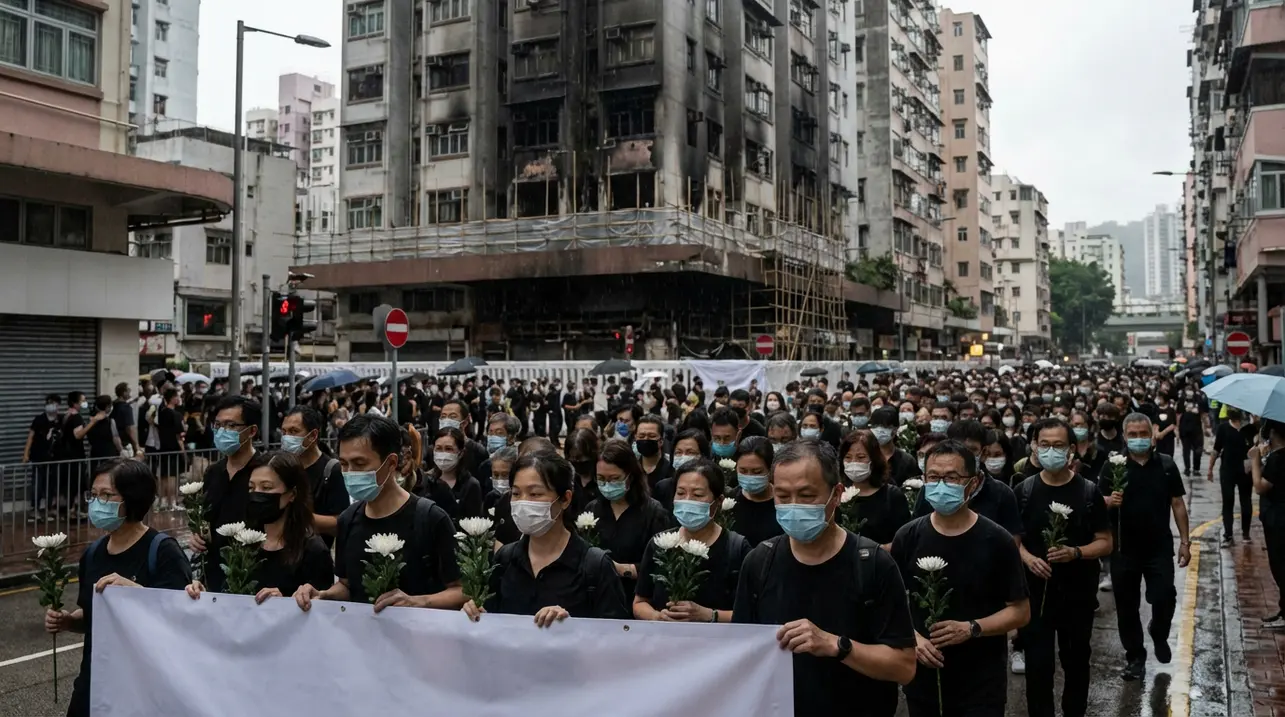
The grief was a physical presence in Tai Po on Sunday, a heavy, shared silence that spoke louder than any siren. Thousands of mourners, their faces etched with a loss too vast for words, flowed through the district’s streets in a solemn, unbroken procession.They were there to remember the 146 lives extinguished in last Wednesday’s catastrophic blaze at Wang Fuk Court—a tragedy now etched as Hong Kong’s deadliest fire in over seventy years. As the community gathered, a massive rescue and recovery operation continued its grim work in the background, sifting through the charred skeleton of the building where the Disaster Victim Identification Unit had just discovered 18 more bodies, a stark reminder that the final toll was still being written in the wreckage.From Beijing, calls for unity and healing echoed, a top-down message of solidarity that contrasted sharply with the raw, bottom-up anguish visible on the ground. This disaster transcends a simple news bulletin; it is a profound rupture in the social fabric of Hong Kong, a city already navigating complex political currents.The fire at Wang Fuk Court immediately raises urgent, uncomfortable questions about building safety standards, emergency response protocols in densely packed residential towers, and the living conditions in some of the territory’s older housing estates. Historically, Hong Kong has seen other devastating fires, like the 1996 Garley Building fire that killed 41, leading to stricter fire safety ordinances.Yet, this catastrophe, with a death toll more than triple that, suggests systemic failures that demand a forensic public inquiry. Experts in disaster management and urban safety will likely point to a combination of factors: potentially flammable cladding or interior materials, blocked escape routes, the speed of fire spread in a vertical community, and the challenges faced by first responders in such an intense, high-rise inferno.The psychological impact on survivors, witnesses, and the frontline emergency teams is immense, necessitating long-term mental health support that often lags behind the physical cleanup. Furthermore, the political dimension is inescapable.Beijing’s prompt call for unity is a standard playbook in crisis management, aiming to project stability and control, but it will be scrutinized against the local government’s tangible actions in the coming weeks—the compensation for families, the transparency of the investigation, and the concrete legislative changes enacted to prevent a repeat. The consequences ripple outward: a loss of public confidence in housing safety authorities, potential lawsuits, and a city collectively mourning not just individuals, but a sense of security itself.As the recovery shifts from rescue to identification and ultimately to rebuilding, the narrative will test the administration’s capacity for empathetic governance. The images of the mourning crowds are a powerful testament to communal resilience, but they also represent a silent demand for accountability. This fire is not just a tragic accident; it is a pivotal moment that will define Hong Kong’s approach to urban safety and social responsibility for a generation, a painful lesson written in ash and sorrow.
#featured
#Hong Kong
#fire
#victims
#mourning
#disaster
#recovery
#investigation
#Beijing
#unity
Comments

It's quiet here...Start the conversation by leaving the first comment.
© 2026 Outpoll Service LTD. All rights reserved.