Otheraccidents & disastersExplosions and Fires
Hong Kong relief fund hits HK$1.2 billion after deadly fire.
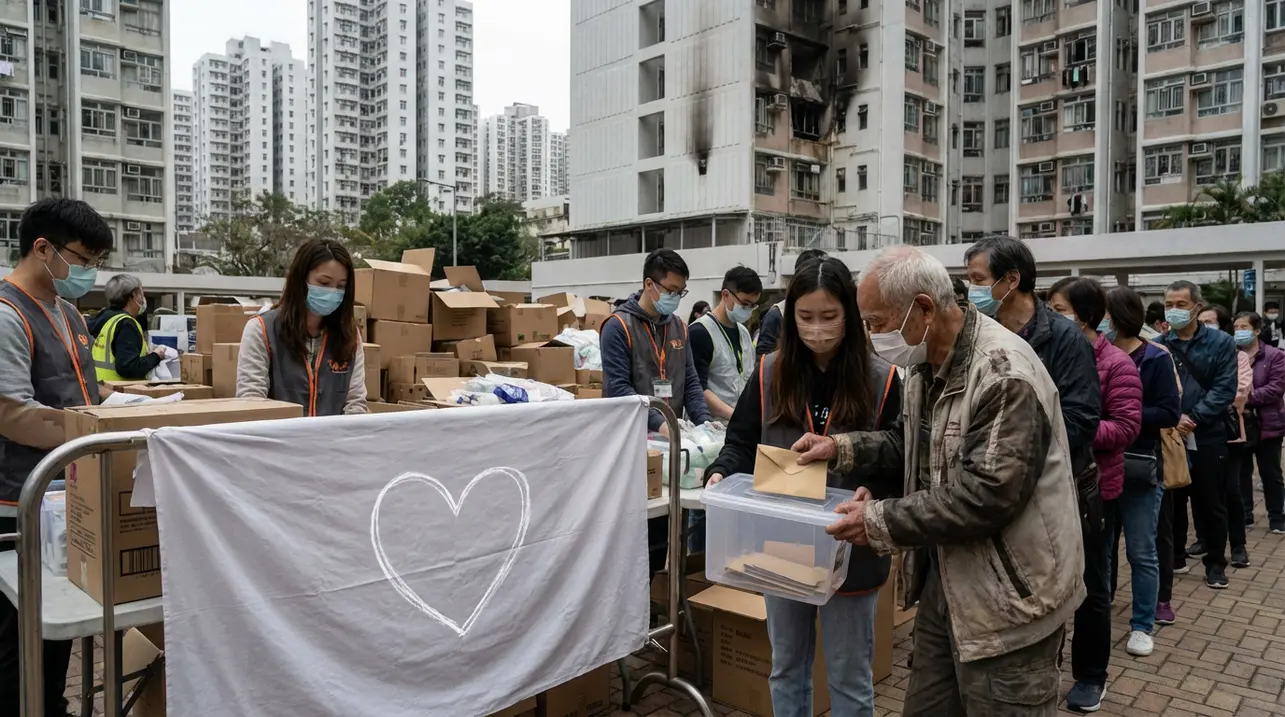
In the wake of the devastating fire that tore through a residential building in Hong Kong’s Tai Po district, a profound and rapid public response has unfolded, revealing a community’s raw capacity for compassion under duress. The government’s dedicated support fund, a critical lifeline for the victims' families and survivors, has swelled to an unprecedented HK$1.2 billion—a staggering figure that underscores both the scale of the tragedy and the collective will to mend. This sum, comprising HK$900 million in public donations and a HK$300 million government grant, was reached by noon on Sunday, a mere four days after flames first erupted.To grasp the magnitude of this civic mobilization, consider this: the total has already surpassed the amount raised in Hong Kong during the initial, globally resonant aftermath of the 2008 Sichuan earthquake, a disaster that claimed nearly 90,000 lives and triggered an international outpouring of aid. This comparison isn't merely statistical; it's a poignant reflection of a local catastrophe striking so deep that it has mobilized resources at a historic pace, channeling grief into tangible solidarity.The fire itself, details of which are still under intense investigation by authorities, has left a scar on the city, raising urgent questions about building safety standards, emergency response protocols in densely packed urban neighborhoods, and the social safety net for vulnerable residents. While the government fund provides an official channel, it's crucial to note that this HK$1.2 billion total does not encompass the parallel streams of generosity flowing to established non-governmental organisations and grassroots community groups, which are often first on the scene and deeply embedded in the affected communities. These groups work on the front lines, offering immediate shelter, psychological counseling, and logistical support, filling gaps that bureaucratic mechanisms can sometimes miss.The speed of the fundraising points to a society leveraging digital payment platforms and social media networks to bypass traditional, slower donation methods, a phenomenon observed in crises from the 2014 Hong Kong umbrella movement protests to the 2020 Beirut explosion. However, this rapid influx also brings challenges of coordination, transparency, and equitable distribution, issues that Hong Kong authorities and civil society must navigate carefully in the coming weeks to ensure the funds reach those most in need without delay or disparity.The tragedy arrives at a complex socio-political moment for Hong Kong, testing the fabric of a city still reconciling its identity amidst broader national integration. The response, therefore, is being watched not just for its humanitarian efficacy but as a barometer of social cohesion.
#Hong Kong
#fire
#relief fund
#donations
#Tai Po
#disaster
#public support
#emergency response
#featured
Comments
DI
DimSumDebater90d ago
only the real ones know how fast that fund filled up says more than any press conference ever could 😏 wild to see it beat the 2008 numbers tho, makes you think
0
© 2026 Outpoll Service LTD. All rights reserved.