

Sport
Why are so many World Cup goals being scored late?
EM
Emily Carter
4 days ago7 min read
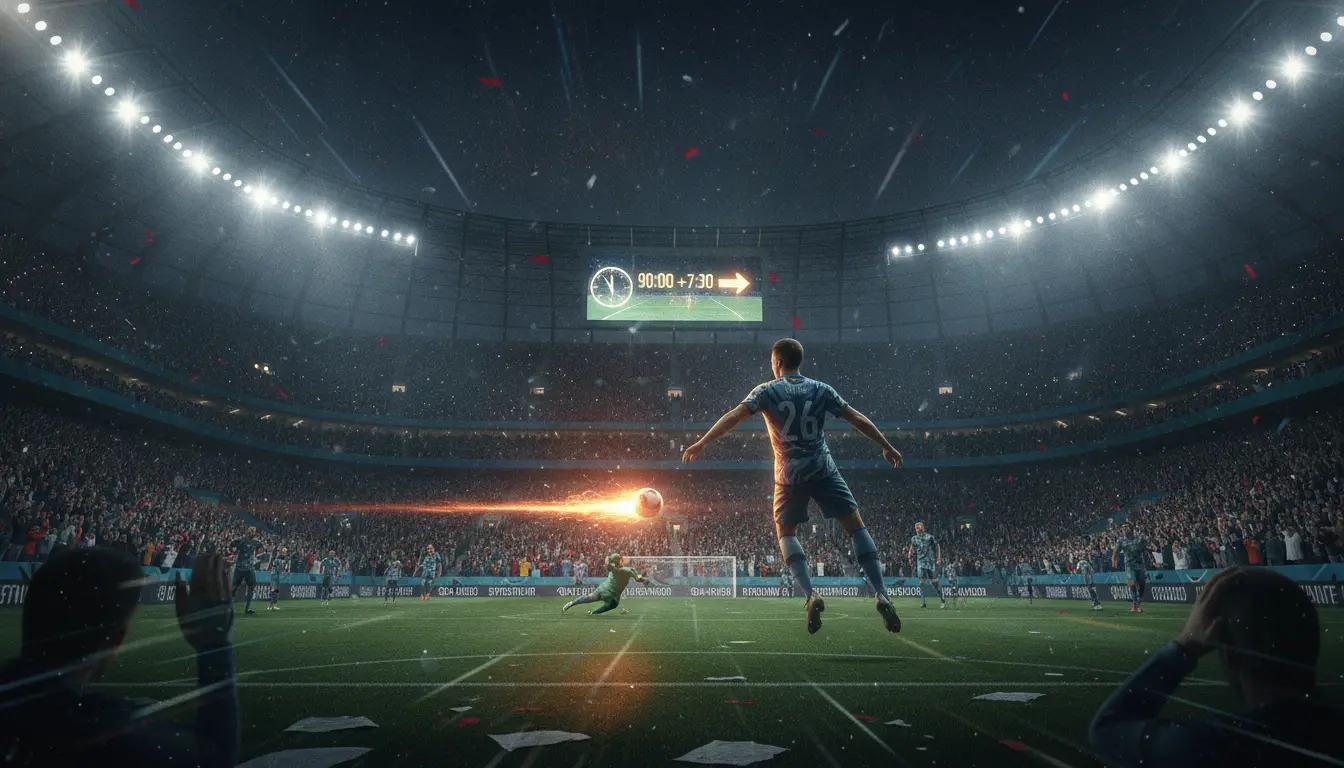
The spectacle of World Cup 2026 has been nothing short of riveting, but one particular trend is commanding attention and reshaping the very fabric of matches: an unprecedented surge in goals scored during the dying embers of regulation time and deep into stoppage periods. These late strikes are not just isolated incidents; they are becoming a defining characteristic of the tournament, injecting an extra layer of drama and unpredictability that leaves fans on the edge of their seats until the very last whistle.What might seem like a mere coincidence is, in fact, the result of a confluence of significant tactical, regulatory, and physiological factors that are collectively redefining the rhythm and conclusion of elite international football. This phenomenon didn't emerge from a vacuum.The roots of this trend can be traced back to a concerted effort by FIFA, notably emphasized after the 2022 Qatar World Cup, to ensure a more accurate reflection of actual playing time. Frustrated by matches where the ball was out of play for extended periods due to fouls, substitutions, injuries, and particularly VAR reviews, the governing body issued directives to referees to be far more diligent in adding back time lost.This shift aims to maximize the amount of 'effective playing time' within a 90-minute fixture, pushing the boundaries of what was traditionally considered the end of a match. At the forefront of these contributing factors is the significant increase in awarded stoppage time.No longer are an arbitrary two or three minutes tacked on; instead, referees are now meticulously accounting for every second lost. Goal celebrations, which can eat up a minute or more, are now added back.Lengthy VAR checks, which pause the game but are crucial for decision-making, are similarly compensated. Injuries, tactical substitutions, and the sheer volume of time the ball spends out of play for throw-ins, goal kicks, and free-kicks all contribute to extended periods where the game is theoretically still in play, often stretching matches to 100 minutes or beyond.This effectively creates a new, high-stakes phase of the game where fatigue is mounting, and concentration can waver. Another critical element driving late goals is the strategic deployment of tactical substitutions.Modern football permits teams up to five changes during a match, a privilege many managers are now expertly leveraging in the latter stages. Fresh legs introduced into an exhausted opponent's defence or midfield can be transformative.An attacker with renewed energy can exploit gaps that have opened up due to fatigue, or a defensive midfielder can be brought on to shore up a precarious lead. These substitutions not only provide an injection of quality or tactical nuance but also interrupt the flow of the game, allowing coaches to deliver last-minute instructions, further adding to the strategic complexity of the extended final minutes.Furthermore, hydration breaks, mandated in certain climates or conditions, play a subtle yet impactful role. While designed primarily for player welfare, these brief pauses break the game's momentum.They offer teams an unexpected opportunity for a quick tactical regroup, a mini-halftime within a half, allowing coaches to readjust strategies or inspire their players for the remaining — and often lengthened — period. Conversely, they also mean that the players, despite the momentary respite, are ultimately exerting themselves for an even longer duration overall, testing their physical and mental endurance to the limit.The cumulative effect of these factors creates a crucible where opportunities for late goals are simply more abundant. The confluence of these elements has profound implications for both players and coaches.For players, it demands an even higher level of fitness and mental fortitude to perform at peak intensity for an extended duration. For coaches, it necessitates a rethinking of game management strategies, from substitution timing to maintaining defensive shape for what could effectively be an additional ten to fifteen minutes of play.The psychological impact is also immense; teams can no longer afford to relax, even with a seemingly comfortable lead, knowing that ample time remains for a dramatic turnaround. The adage that a game isn't over until the final whistle has never felt more pertinent.Looking ahead, this trend is likely to continue shaping how World Cup matches are contested. The increased unpredictability and the potential for dramatic late swings undoubtedly amplify the excitement for fans, turning every moment into a potential match-deciding play.As teams and coaches adapt to these new realities, we can anticipate a continued evolution in tactical approaches, player conditioning, and mental preparation, all aimed at mastering the art of the extended football encounter. The World Cup 2026 is not just showcasing exceptional talent; it is demonstrating a fundamental shift in the very rhythm and conclusion of the beautiful game, with late goals becoming its most compelling narrative thread.
Stay Informed. Act Smarter.
Get weekly highlights, major headlines, and expert insights — then put your knowledge to work in our live prediction markets.
Related News

Comments
It's quiet here...Start the conversation by leaving the first comment.