

Sport
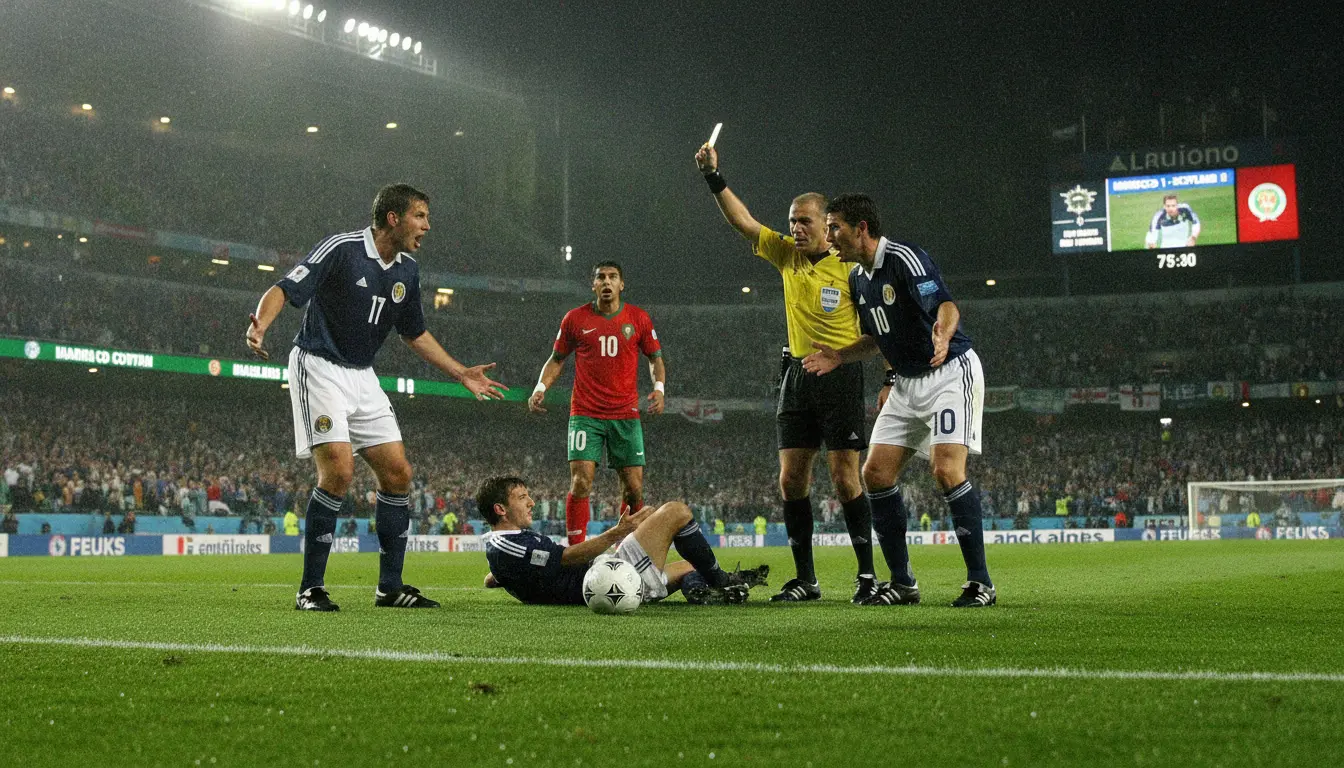
Should Scotland have had two penalties & been playing against 10 men?
JA
Jack Turner
4 days ago7 min read
Scotland’s second outing at the FIFA World Cup ended in a bitterly disputed 1-0 defeat to Morocco in Boston, leaving the Tartan Army fuming over a series of contentious refereeing decisions that, they argue, fundamentally altered the outcome. The narrow loss, which followed an encouraging opening performance, has reignited familiar debates about the consistency of officiating at major tournaments and whether smaller footballing nations receive fair treatment from match officials.For a Scotland side that had arrived in the United States with genuine hopes of progressing beyond the group stage, the sense of injustice is palpable — and the questions being asked in the aftermath are unlikely to fade quickly. The flashpoint arrived midway through the first half when Scotland forward Ryan Christie went down under a heavy challenge inside the Moroccan penalty area.Replays appeared to show clear contact from the defender’s trailing leg, yet the referee waved play on without consulting the VAR monitor. Moments later, a second incident involving striker Che Adams drew even louder appeals: Adams was tugged back as he shaped to shoot from close range, the Moroccan defender’s arm visibly wrapped around his shoulder.Again, no penalty was awarded. To compound Scottish frustration, Morocco’s captain, Romain Saïss, escaped a second yellow card for a cynical foul on John McGinn just before the interval — a decision that, had it been given, would have reduced the African side to ten men for the entire second half.These incidents did not occur in a vacuum. Scotland’s performance in Boston had been disciplined and tactically astute, with Steve Clarke’s side stifling Morocco’s creative midfielders and creating several half-chances of their own.The match was finely balanced until a moment of individual brilliance from Morocco’s Hakim Ziyech, who curled a free-kick beyond the reach of Angus Gunn in the 67th minute. Yet even that goal carried an element of controversy: replays suggested the free-kick was awarded for a foul that took place just outside the box, though the contact appeared minimal.For Scotland, it was the kind of night where every marginal call seemed to go against them — a pattern that has historically plagued teams perceived as underdogs in high-stakes international fixtures. The broader context of Scotland’s World Cup campaign adds weight to their grievances.Having drawn their opening match against a fancied European opponent, Clarke’s men knew that a result against Morocco was essential to keep their knockout-stage ambitions alive. The defeat leaves them with a mountain to climb in their final group fixture, and the manner of the loss — rather than the result itself — has become the dominant talking point.Former Scotland internationals and pundits have been vocal in their criticism of the officiating, with several pointing out that VAR was introduced precisely to correct clear errors of the kind that occurred in Boston. The fact that the technology was available but not deployed effectively has only deepened the sense of betrayal.From a tactical perspective, Scotland’s approach was sound. Clarke set his team up in a compact 3-4-2-1 shape designed to frustrate Morocco’s wide attackers while allowing Andrew Robertson and Aaron Hickey to push forward on the flanks.The plan worked for long stretches: Morocco managed only three shots on target across the ninety minutes, and Scotland’s midfield trio of McGinn, Callum McGregor, and Billy Gilmour controlled possession for significant periods. What Scotland lacked, however, was the cutting edge in the final third — a recurring issue that has dogged the national team for years.Even with the benefit of two penalties and a numerical advantage, there is no guarantee they would have converted those opportunities into goals, but the fact that they were denied the chance to try is what rankles most. Looking ahead, Scotland must now regroup for a decisive final group match against a side that has already secured qualification.The mathematics are straightforward: they need a win, and preferably by a margin that compensates for their current goal difference. Yet the psychological toll of the Morocco defeat should not be underestimated.Players who felt they were robbed of a fair result may struggle to summon the same intensity and belief. Clarke’s immediate task is to channel that anger into a focused, disciplined performance — one that leaves no room for officials to influence the outcome.The Scottish Football Association is also expected to raise the officiating concerns with FIFA, though history suggests such protests rarely lead to meaningful change. For Morocco, the victory was a statement of intent.They showed resilience in the face of Scottish pressure and clinical efficiency when it mattered most. But the narrative surrounding this match will be dominated by what might have been for Scotland.In a World Cup where every point is precious, the failure to award two clear penalties and the reluctance to issue a second yellow card to Saïss have left an indelible stain on an otherwise absorbing contest. Whether Scotland can overcome this injustice and write their own redemption story in the final group game remains to be seen, but one thing is certain: the debate over those decisions in Boston will echo long after the tournament ends.
#week's picks
#Scotland
#Morocco
#World Cup
#VAR controversy
#penalty decisions
Stay Informed. Act Smarter.
Get weekly highlights, major headlines, and expert insights — then put your knowledge to work in our live prediction markets.
Related News


Comments
It's quiet here...Start the conversation by leaving the first comment.