

Politics
US Senate Weighs Renewed Bid to Restrict Presidential War Powers on Iran
AN
Anna Wright
2 days ago7 min read
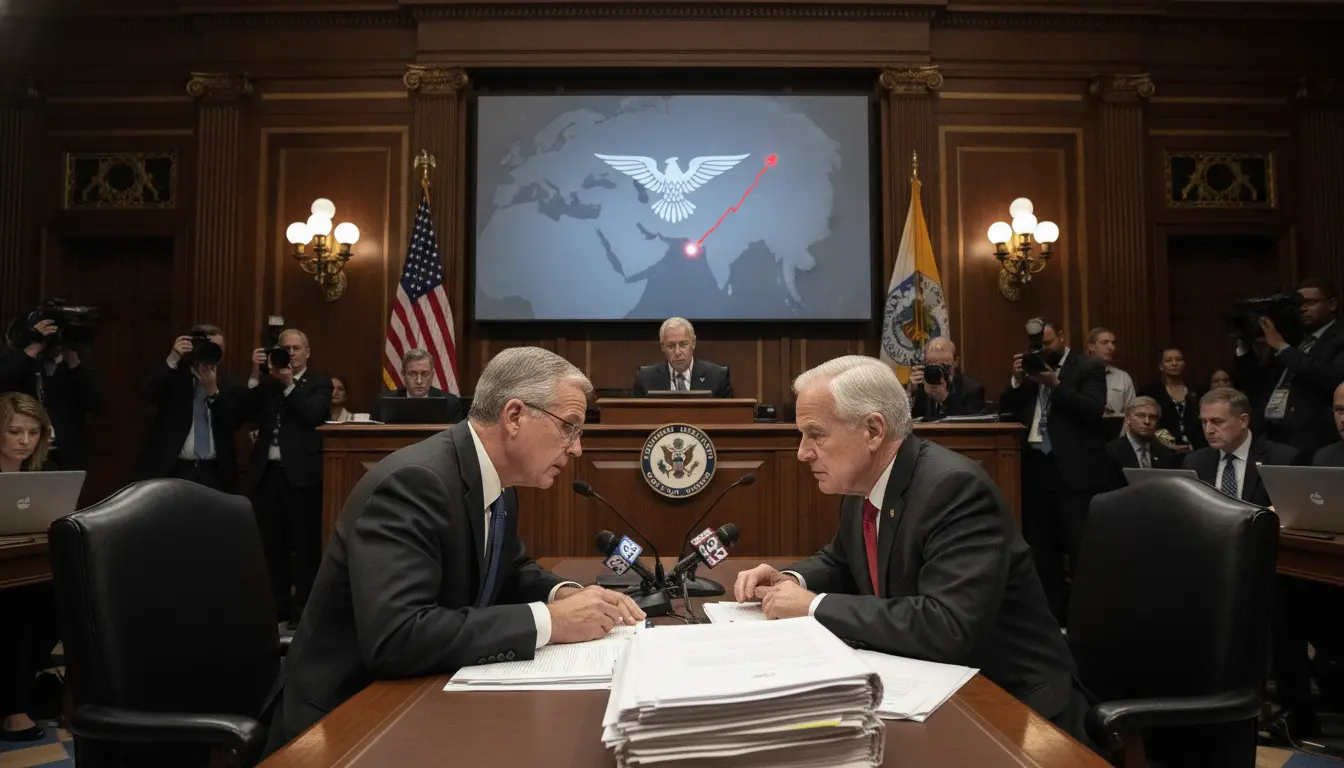
A persistent legislative effort to reassert congressional authority over military action against Iran is gaining renewed traction within the US Senate, signaling an ongoing debate about the balance of war-making powers between the executive and legislative branches. Despite previous attempts to constrain presidential actions that have met with rejection, a contingent of lawmakers continues to press for a standalone War Powers Resolution specifically targeting potential military engagement with Tehran, driven by concerns over unauthorized conflicts and the constitutional prerogative of Congress.At the heart of this enduring discussion is the War Powers Resolution of 1973, enacted in the shadow of the Vietnam War to ensure that presidents consult with Congress and obtain authorization before committing U. S.armed forces to hostilities. However, successive administrations, both Republican and Democratic, have often interpreted its provisions broadly or bypassed them, leading to a decades-long struggle over its practical application.The push for a new resolution underscores a deep-seated frustration among some senators who believe the executive branch has incrementally eroded Congress's constitutional role in declaring war and authorizing the use of military force, particularly in situations that do not involve an immediate national defense. Recent years have brought this tension to the forefront, especially during periods of heightened friction with Iran.Episodes involving maritime incidents, regional proxy conflicts, and the targeting of U. S.personnel or assets in the Middle East have repeatedly raised the specter of direct military confrontation. While the previous administration notably faced legislative challenges to its ability to initiate military action without explicit congressional approval, the underlying geopolitical realities and the potential for escalation with Iran persist.Lawmakers advocating for a new resolution argue that proactive legislative measures are essential to prevent any future president from unilaterally committing the nation to a costly and potentially destabilizing conflict in the Persian Gulf region. Proponents of such a resolution emphasize the importance of democratic accountability in decisions of war and peace.They contend that empowering Congress to explicitly authorize or reject military force ensures a more deliberative process, reflecting the will of the American people and preventing executive overreach. This perspective often highlights the human and financial costs of protracted military engagements, advocating for a return to what they view as the Founders' intent regarding war powers.However, opponents counter that overly restrictive legislation could hobble a president's ability to respond swiftly and decisively to rapidly evolving threats, potentially undermining national security interests and weakening the nation's deterrent posture against adversaries. They argue for executive flexibility, particularly in a volatile region where real-time decision-making can be critical.Navigating the legislative path for a standalone Iran War Powers Resolution presents significant challenges. Such measures frequently face an uphill battle, encountering resistance from within both parties due to differing views on executive authority, foreign policy strategy, and the specific dynamics of U.S. -Iran relations.Even if passed by the Senate, it would require passage in the House of Representatives and then presidential assent, which is often withheld for measures perceived as encroaching on executive power. The debate is less about the necessity of engaging Iran militarily and more about who holds the constitutional reins to make that momentous decision.Ultimately, the ongoing Senate deliberations reflect a broader, fundamental constitutional question: how to balance the need for effective presidential leadership in foreign policy with Congress's vital role as a check on executive power. The outcome of these renewed efforts will not only shape U.S. policy toward Iran but could also set precedents for future executive-legislative dynamics in matters of war and peace, impacting American foreign policy for years to come amid a complex global security landscape.
#editorial picks
#US Senate
#Iran War Powers
#Congressional Oversight
#Presidential Authority
#Foreign Policy
#National Security
Stay Informed. Act Smarter.
Get weekly highlights, major headlines, and expert insights — then put your knowledge to work in our live prediction markets.
Related News

Comments
It's quiet here...Start the conversation by leaving the first comment.