

Politics
US Senate Renews Efforts to Rein in Presidential War Powers on Iran
OL
Oliver Scott
3 days ago7 min read
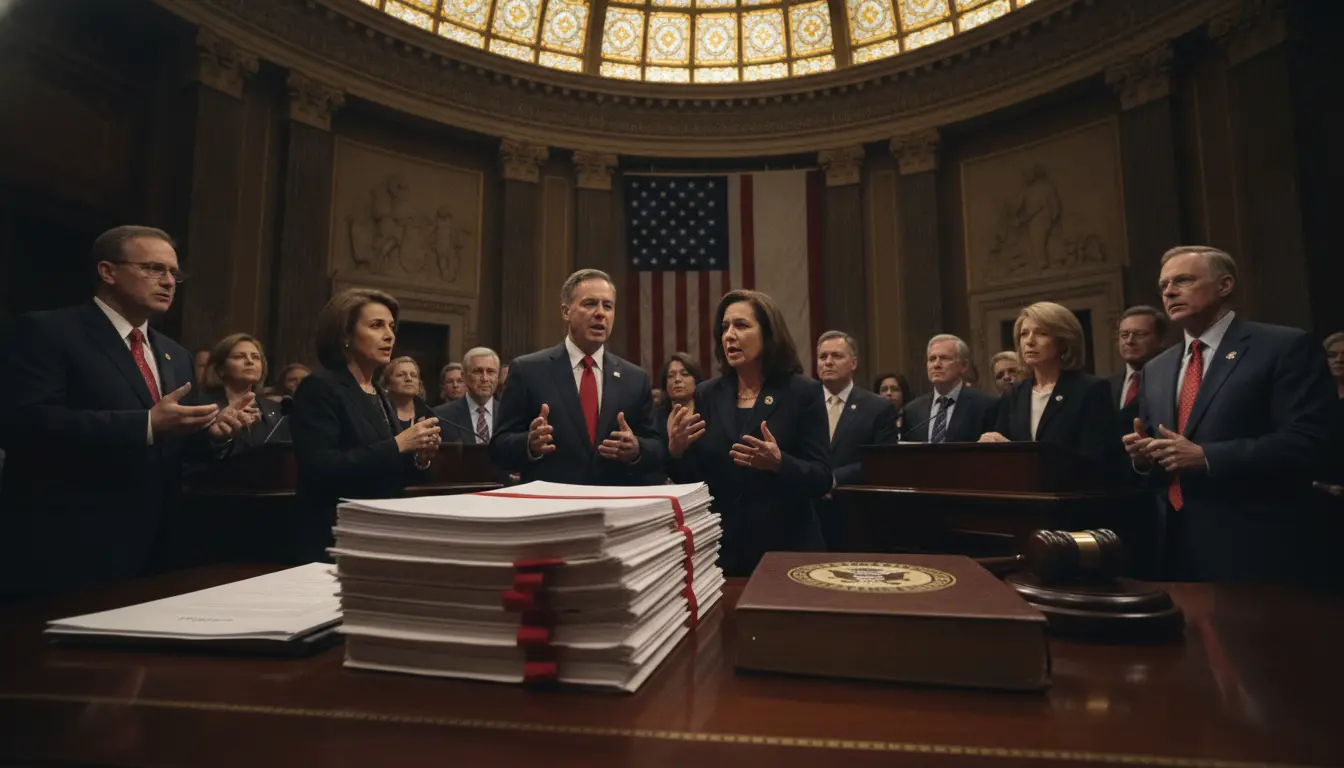
A persistent legislative battle is unfolding within the United States Senate as lawmakers intensify efforts to pass a new standalone War Powers Resolution specifically targeting military action against Iran. This renewed push underscores a fundamental and enduring constitutional tension between Congress and the Executive branch over the authority to commit the nation to armed conflict, a debate that has spanned decades and gained particular urgency amidst fluctuating geopolitical dynamics in the Middle East.The genesis of this legislative drive traces back to the 1973 War Powers Resolution, enacted in the wake of the Vietnam War to reclaim congressional authority over military engagements. This landmark legislation sought to ensure that any significant deployment of U.S. forces abroad would require explicit authorization from Capitol Hill or face a time limit.However, successive administrations, irrespective of party affiliation, have often challenged its constitutionality or interpreted its provisions broadly, leading to numerous instances where presidents have initiated military actions without direct congressional approval. The ongoing debate concerning Iran highlights this friction, as lawmakers seek to prevent what they perceive as potential unauthorized military interventions that could escalate regional tensions or draw the U.S. into a broader conflict without proper democratic oversight.The recent past offers clear precedents for the current legislative climate. During the previous administration, attempts to restrict the president's ability to wage war against Iran, particularly following heightened tensions and specific military incidents, were met with strong executive resistance and ultimately failed to pass both chambers of Congress.A notable instance involved a Senate measure aiming to prohibit the use of military force against Iran without congressional authorization, which, despite bipartisan support, faced a presidential veto threat and ultimately did not become law. These past failures, however, have not dampened the resolve of a bipartisan group of senators who maintain that congressional authorization for any potential military action against Iran is not only a constitutional imperative but also a prudential safeguard against miscalculation and unintended escalation.Proponents of a new War Powers Resolution argue that it is crucial for upholding the system of checks and balances envisioned by the Constitution. They contend that ceding such significant authority to the executive branch on matters of war and peace erodes democratic accountability and risks entangling the U.S. in costly and protracted conflicts.Lawmakers such as Senator Tim Kaine, a consistent advocate for reclaiming congressional war powers, often emphasize the legislative branch's constitutional duty to declare war and provide explicit authorization for military force. They highlight the volatile nature of the Middle East and the potential for any incident involving Iran to rapidly spiral into a larger confrontation, stressing that a formal debate and vote by elected representatives are essential before such a grave step is taken.Conversely, opponents of these legislative efforts, often aligned with the Executive branch, frequently argue that such resolutions can unduly constrain a president's ability to respond swiftly and decisively to national security threats. They assert that in an increasingly complex and dangerous global environment, the executive needs flexibility and agility, particularly when dealing with adversaries like Iran, whose actions might necessitate rapid military or deterrent responses.Concerns are also raised that such legislation could signal weakness or indecision to hostile actors, emboldening them or complicating diplomatic efforts by tying the president's hands. The argument often centers on the idea that the commander-in-chief needs broad discretion to protect U.S. interests and personnel abroad.At stake in this legislative tussle is not only the constitutional balance of power but also the trajectory of U. S.foreign policy in the Middle East. A clear congressional stance could significantly alter the diplomatic and military calculus for both Washington and Tehran, potentially de-escalating tensions by signaling a commitment to non-military solutions or, conversely, being perceived as a constraint that weakens deterrence.The debate also reflects broader anxieties within the U. S.over its role in global conflicts, the human and economic costs of military engagement, and the desire for a more deliberative process before committing the nation to war. As the August 2026 timeframe approaches, the political landscape will undoubtedly continue to shift, but the underlying push for congressional oversight on presidential war powers concerning Iran is expected to remain a prominent feature of legislative activity, irrespective of which party controls the White House or Congress.The pathway for any such resolution to become law remains fraught with challenges. Even with bipartisan support in the Senate, securing passage in the House of Representatives and overcoming potential presidential objections would require significant political will and strategic maneuvering.The timing of legislative action, often influenced by ongoing international developments and domestic political priorities, will play a critical role. Yet, the persistent advocacy for a new Iran War Powers Resolution underscores a deeply ingrained institutional desire within Congress to reassert its constitutional prerogatives, ensuring that decisions of war and peace are not made unilaterally, but through a collective and accountable democratic process.
#editorial picks
#US Senate
#War Powers Resolution
#Iran
#Presidential Authority
#Foreign Policy
#National Security
#Congress
#Legislative Debate
#Middle East
Stay Informed. Act Smarter.
Get weekly highlights, major headlines, and expert insights — then put your knowledge to work in our live prediction markets.
Related News

Comments
It's quiet here...Start the conversation by leaving the first comment.