

- News
- Politics
- US-Iran De-escalation Accord Faces Precarious Future Amid Renewed Hostilities and Strait of Hormuz Tensions
Politics
US-Iran De-escalation Accord Faces Precarious Future Amid Renewed Hostilities and Strait of Hormuz Tensions
AN
Anna Wright
15 hours ago7 min read
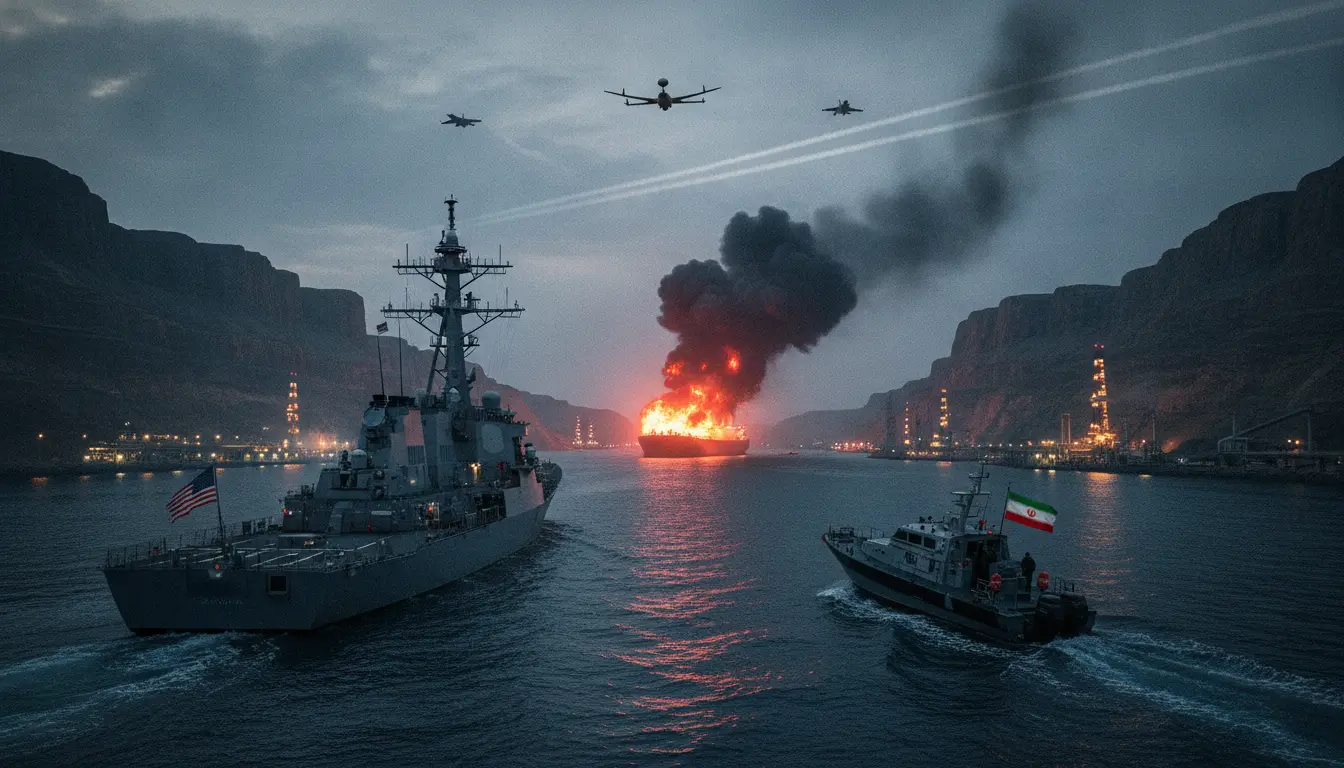
A fragile understanding between the United States and Iran, aimed at de-escalation, is now hanging by a thread following a series of aggressive actions and accusations. Recent US military strikes targeting Iranian-linked assets and counter-accusations of ceasefire violations in the strategically vital Strait of Hormuz have pushed an already strained relationship to the brink, raising fears of a broader regional conflagration.Despite reports of an active hotline between Washington and Tehran, the underlying Memorandum of Understanding (MoU) appears increasingly vulnerable to the escalating tensions. The de-escalation MoU, the specifics of which have largely remained confidential, has long served as a crucial, if often tested, framework for managing kinetic actions and preventing miscalculation in a highly volatile region.Its existence underscores a tacit recognition by both powers of the catastrophic consequences of direct conflict. Historically, relations between the two nations have been characterized by cycles of confrontation and cautious dialogue, particularly since the 1979 Iranian Revolution.Prior attempts at establishing channels for communication, even amidst deep ideological divides and proxy conflicts, highlight a persistent, albeit often failing, effort to contain hostility. The immediate catalysts for the current heightened anxiety are multifold.The US confirmed recent strikes against targets perceived to be linked to Iran's Islamic Revolutionary Guard Corps (IRGC) or its proxies, framed as retaliatory measures for regional attacks on American personnel or interests. Simultaneously, Iranian forces have been accused of aggressive maneuvers and violations of established maritime protocols within the Strait of Hormuz, a critical chokepoint through which a significant portion of the world's oil supply transits.These incidents not only underscore a dangerous game of tit-for-tat but also test the very boundaries of the de-escalation framework, pushing each side closer to a red line. For the United States, maintaining regional stability, protecting its allies, and ensuring the free flow of commerce through international waterways are paramount objectives.The Biden administration has sought a delicate balance: deterring Iranian aggression while avoiding a full-scale war. On the Iranian side, the ruling establishment views US military presence and sanctions as existential threats, often leveraging its proxy network and naval capabilities in the Gulf to assert its influence and push back against perceived foreign encroachment.Domestic political pressures in both countries further complicate diplomatic efforts, with hardliners on either side often advocating for more confrontational stances. An unravelling of the existing de-escalation MoU would have profound implications.It would eliminate a critical, if informal, safety valve, leaving fewer mechanisms to prevent isolated incidents from spiraling into wider conflict. The Strait of Hormuz, already a flashpoint, could become significantly more perilous, threatening global energy markets and supply chains.Moreover, it could embolden regional actors and further destabilize an already tumultuous Middle East, potentially drawing in other global powers. The absence of a recognized de-escalation pathway could also complicate ongoing efforts related to Iran's nuclear program, removing any subtle bridges that might facilitate future diplomatic engagement.The current climate demands urgent attention from international observers and policymakers. The delicate dance between deterrence and de-escalation requires consistent communication, even if indirect, and a clear understanding of each party's intentions and limitations.Failure to uphold the tenets of the MoU, or to replace it with an equally robust understanding, risks plunging the region into an unpredictable and potentially devastating period of open hostility. The future of US-Iran relations, and indeed broader regional stability, hinges precariously on the ability of both nations to navigate this perilous moment without completely abandoning the frameworks designed to prevent war.
#featured
#US-Iran relations
#Diplomacy
#Geopolitics
#Strait of Hormuz
#Middle East conflict
#De-escalation
Stay Informed. Act Smarter.
Get weekly highlights, major headlines, and expert insights — then put your knowledge to work in our live prediction markets.
Related News

Comments
It's quiet here...Start the conversation by leaving the first comment.