

Hottest
Politics
US Bolsters Presence in Strait of Hormuz Amid Escalating Tensions with Iran
AN
Anna Wright
5 hours ago7 min read
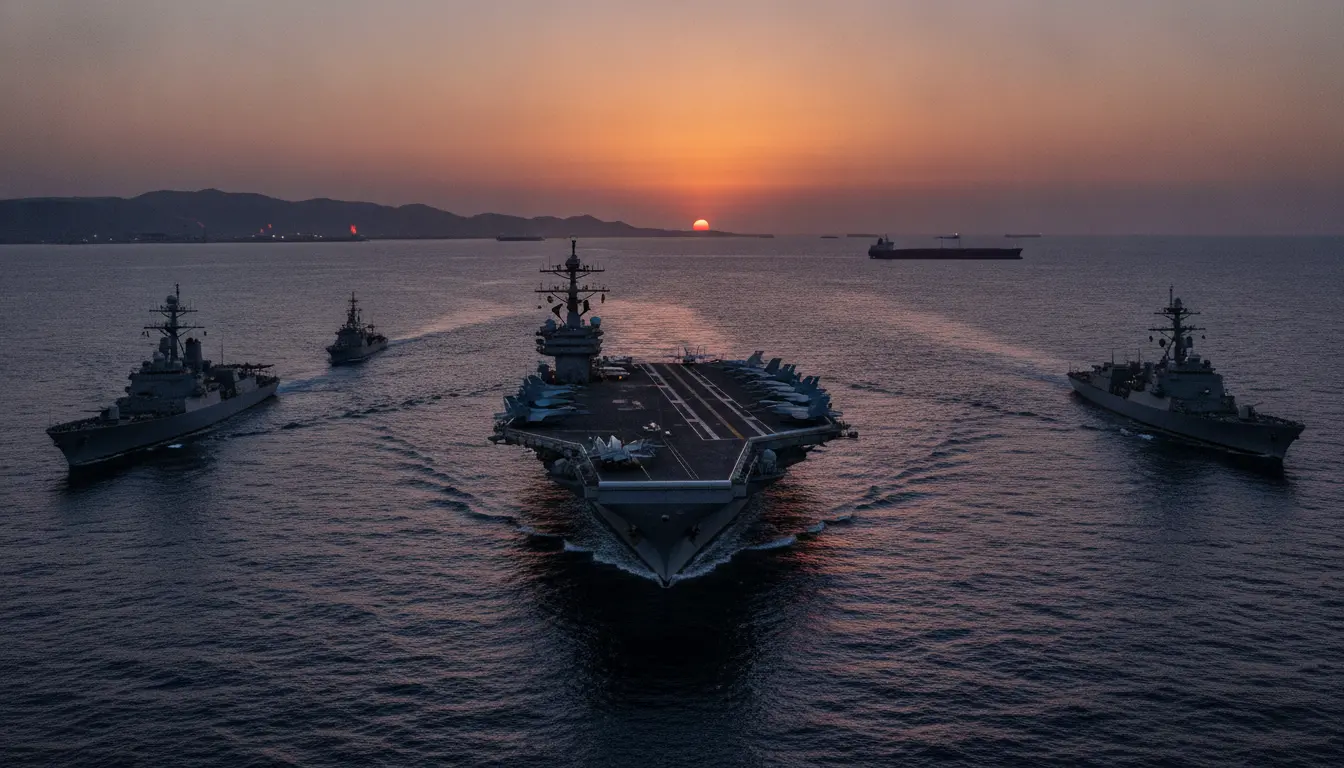
The strategic waters of the Strait of Hormuz remain a critical flashpoint in the enduring standoff between the United States and Iran, characterized by a persistent cycle of provocations and retaliatory actions. Recent years have seen a significant escalation in maritime incidents, including attacks on commercial shipping and tanker seizures, which have consistently drawn robust responses from the US military.This volatile environment underscores the immense geopolitical stakes tied to this vital waterway, a narrow choke point through which a substantial portion of the world's oil supply transits daily, directly impacting global energy security and international trade. The historical animosity between Washington and Tehran has often played out in the Persian Gulf, but the intensity has heightened following the US withdrawal from the Iran nuclear deal (JCPOA) in 2018 and the subsequent re-imposition of stringent sanctions.This period coincided with a notable increase in maritime hostilities, including sophisticated drone and missile attacks attributed to Iran-backed forces or Iran itself, targeting vessels in or near the Strait. The US and its allies have consistently condemned these actions as threats to navigational freedom and international law, often responding with increased naval patrols, intelligence gathering, and, in several instances, direct military action aimed at deterring further aggression or penalizing perceived perpetrators.Washington's military posture in the region is anchored by the US Fifth Fleet, headquartered in Bahrain, which maintains a formidable presence to safeguard international waters and protect shipping lanes. In response to specific Iranian actions or threats, the US has periodically augmented its forces with additional aircraft carriers, destroyers, and air assets, signaling a readiness to defend its interests and those of its partners.These deployments are often accompanied by strong rhetoric from US officials, emphasizing a commitment to regional stability and a warning against any attempts to disrupt global commerce. Past administrations, including under former President Donald Trump, have notably issued stern warnings, with some threats of decisive action to “complete the job” of neutralizing threats, highlighting the sustained hawkish stance that underpins US policy in the Gulf.The stakes in the Strait of Hormuz extend far beyond the immediate region. Any major disruption to shipping through this waterway could trigger a global energy crisis, sending oil prices skyrocketing and impacting economies worldwide.For Iran, its ability to exert pressure in the Strait serves as a significant lever against international sanctions and a demonstration of its regional power. Tehran views the US military presence as an occupation force and a threat to its sovereignty, leading to a complex dynamic where each side's defensive actions are perceived as aggressive by the other, perpetually fueling the cycle of tension.Looking ahead, the potential for further significant military engagements remains a tangible concern for regional and international observers. The inherent dangers of miscalculation are ever-present in such a highly militarized and politically charged environment.While diplomatic channels exist, their effectiveness is often overshadowed by the ongoing pattern of confrontation. The international community, including major trading nations dependent on the Strait’s stability, consistently calls for de-escalation, yet the fundamental disagreements between the US and Iran over security, nuclear ambitions, and regional influence continue to drive a perilous dance on the edge of wider conflict, ensuring that the Strait of Hormuz will likely remain a crucial geopolitical barometer for years to come.The long-term strategy for both nations appears to involve a delicate balance of deterrence and limited engagement, punctuated by periods of heightened alert. For the US, this means maintaining a robust military capability while seeking to enforce international norms and pressure Iran through sanctions.For Iran, it means asserting its regional influence and resisting what it perceives as foreign intervention, often through asymmetric tactics. The continuous interplay of these strategies means that any perceived violation or aggressive move by either side carries the inherent risk of a rapid and potentially substantial military response, perpetuating the high-stakes environment in one of the world's most critical maritime corridors.
#hottest news
#USA
#Iran
#Strait of Hormuz
#Persian Gulf
#Military Operations
#Geopolitics
#International Relations
#Commercial Shipping
#Naval Warfare
Stay Informed. Act Smarter.
Get weekly highlights, major headlines, and expert insights — then put your knowledge to work in our live prediction markets.
Related News

Comments
It's quiet here...Start the conversation by leaving the first comment.