

- News
- Politics
- U.S. Supreme Court Poised to Revisit State Abortion Restrictions Amidst Mounting Legal Challenges
Politics
U.S. Supreme Court Poised to Revisit State Abortion Restrictions Amidst Mounting Legal Challenges
AN
Anna Wright
3 days ago7 min read
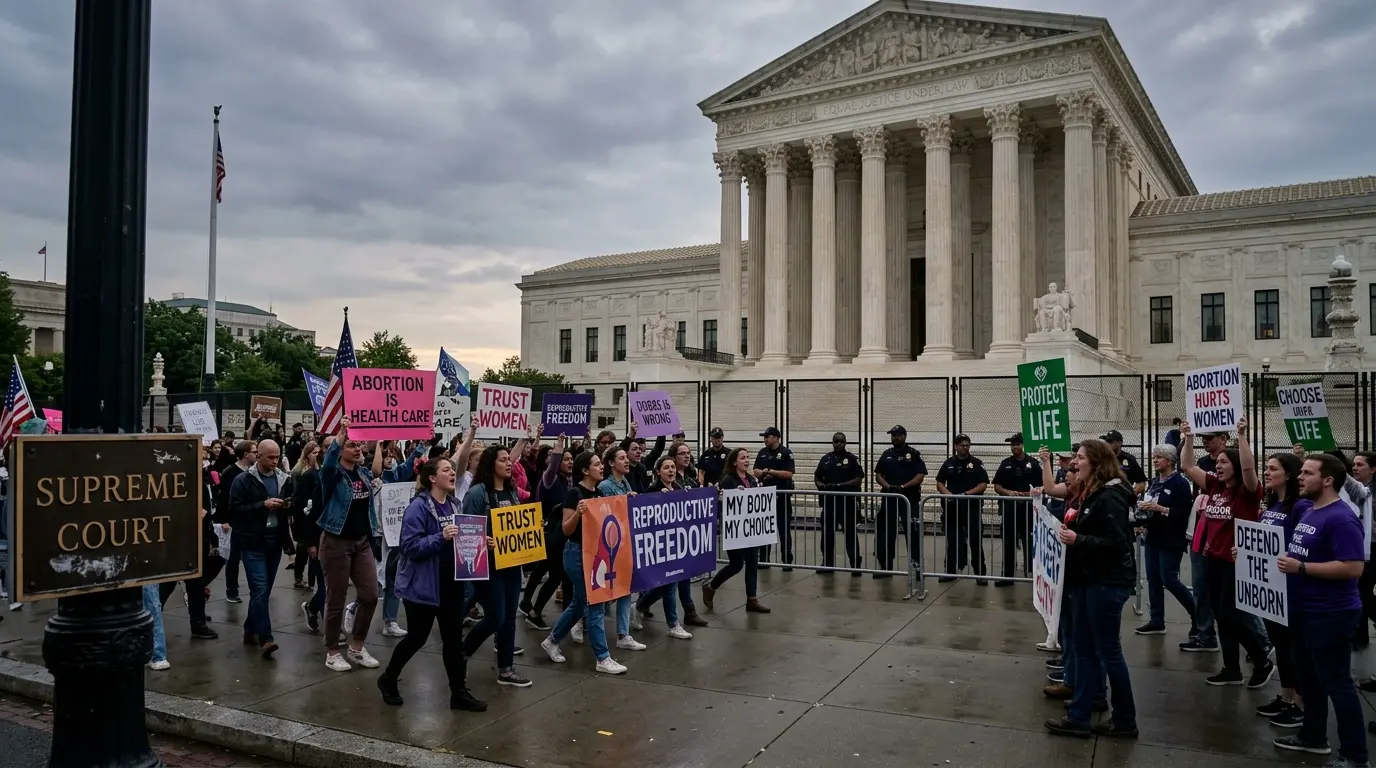
The U. S.Supreme Court is on a collision course with the complex legal landscape created by state-level abortion bans, nearly four years after its landmark Dobbs v. Jackson Women's Health Organization decision.The impending 2026-2027 term is anticipated to bring fresh challenges that could significantly alter the patchwork of reproductive rights across the nation, potentially leading to rulings that either uphold or overturn existing state-level prohibitions. This ongoing legal battle represents a critical frontier in American jurisprudence and public health policy, with profound implications for millions.The seismic shift occurred in June 2022 when the Court, in Dobbs, reversed Roe v. Wade and Planned Parenthood v.Casey, eliminating the constitutional right to abortion and returning authority to regulate or ban the procedure to individual states. This created immediate and profound consequences, as numerous states swiftly enacted "trigger laws" or new legislation imposing near-total bans, gestational limits, or severe restrictions.The legal uncertainty and varying access to care have since transformed reproductive healthcare into a geographic lottery, forcing many individuals to travel across state lines for essential services, a situation that has exacerbated existing health disparities and created logistical nightmares for patients and providers alike. The next wave of cases reaching the high court is expected to focus on a variety of issues stemming from this fragmented legal environment.Key among these are challenges to medication abortion, particularly involving federal regulations for drugs like mifepristone. Lower court decisions have already created significant uncertainty around access to these widely used medications, raising questions about the Food and Drug Administration's authority to regulate pharmaceuticals and the implications for interstate commerce.Beyond medication, other potential cases could target specific state laws that impose severe criminal penalties on providers, mandate medically unnecessary waiting periods, define personhood in ways that impact fertility treatments or contraception, or restrict access to care for minors. The Court's conservative supermajority, responsible for the Dobbs decision, remains a central factor in how these cases will be adjudicated.Its prior rulings have indicated a willingness to reinterpret long-standing precedents and to grant states greater latitude in social policy. However, public opinion on abortion rights remains deeply divided, and the issue continues to be a potent force in both federal and state elections.Activist groups on both sides are diligently working to shape future legal arguments, with reproductive rights advocates seeking avenues to restore access and anti-abortion organizations pushing for further restrictions, potentially even a national ban. The interplay between judicial philosophy, the political ramifications of these decisions, and the public's perception of the Court's legitimacy will be intensely scrutinized.The stakes for millions of Americans are immensely high. A ruling that overturns an existing state-level ban could provide a crucial lifeline for reproductive access in a specific state or set a precedent for future challenges, potentially influencing the legal landscape in other jurisdictions.Conversely, a ruling upholding a ban would further solidify the restrictive environment, deepening the chasm between states where abortion is largely accessible and those where it is nearly impossible to obtain. The judiciary's continued engagement with this issue underscores the absence of a settled national consensus. As the Court prepares for its upcoming terms, the decisions it renders will not only define the future of abortion access but also profoundly shape the balance of power between federal and state authorities, influencing healthcare, individual liberties, and the very fabric of American society for decades to come.
#editorial picks
#Supreme Court
#Abortion Rights
#Dobbs Decision
#Reproductive Rights
#State Bans
#Medication Abortion
#Judiciary
#United States
Stay Informed. Act Smarter.
Get weekly highlights, major headlines, and expert insights — then put your knowledge to work in our live prediction markets.
Related News
Comments
It's quiet here...Start the conversation by leaving the first comment.