

Politics
U.S. Senate Set for Renewed Push on Iran War Powers Legislation
RO
Robert Hayes
2 days ago7 min read
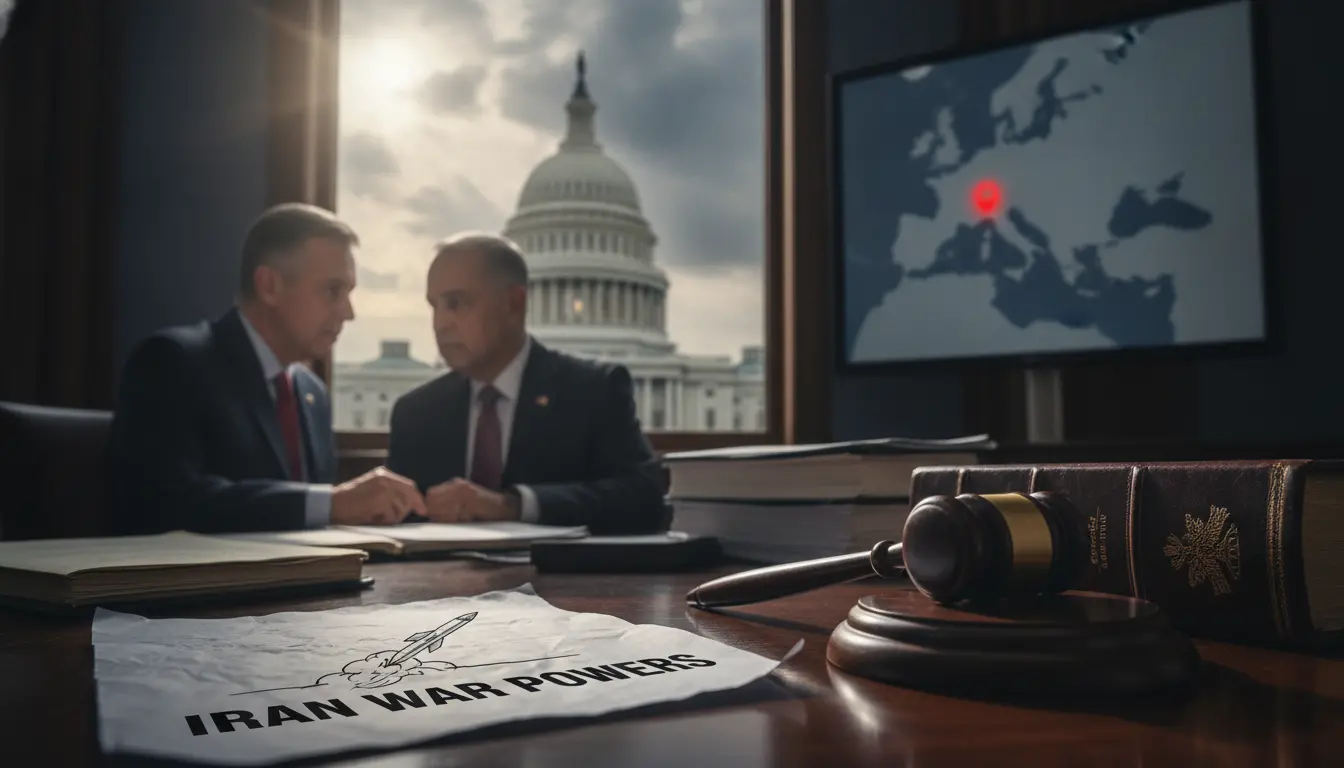
WASHINGTON – The U. S.Senate is gearing up for another potentially contentious debate surrounding congressional authority over military action, specifically concerning Iran. Despite a recent rejection of a measure aimed at restricting presidential war powers related to the Islamic Republic, a determined faction of lawmakers continues to advocate for a new, standalone War Powers Resolution.This ongoing legislative push underscores a persistent tension between the executive and legislative branches over who holds the ultimate say in committing American forces to conflict, a constitutional question that has frequently surfaced in modern U. S.foreign policy. The renewed effort comes against a backdrop of enduring high tensions between Washington and Tehran.The relationship remains fraught with flashpoints, ranging from Iran's advancing nuclear program and ballistic missile development to its expansive network of regional proxies and their destabilizing activities across the Middle East. Incidents in the Persian Gulf, including attacks on shipping and U.S. interests, consistently fuel calls for a more clearly defined framework for military engagement.Proponents of a new resolution argue that such a measure is vital not only to reassert Congress’s constitutional prerogative to declare war but also to prevent potential escalations that could inadvertently drag the U. S.into a broader regional conflict without explicit legislative approval. The constitutional framework for war powers is rooted in Article I, Section 8 of the U.S. Constitution, which grants Congress the power to declare war, raise and support armies, and provide and maintain a navy.However, Article II designates the president as Commander-in-Chief. This inherent tension has been exacerbated by decades of evolving national security challenges, leading to situations where presidents have taken military action under interpretations of existing authorizations, such as the 2001 Authorization for Use of Military Force (AUMF) against terrorists, or their inherent executive authority.Lawmakers pushing for a new Iran-specific resolution contend that the current legal landscape provides too much latitude to the executive, risking unauthorized or unchecked military confrontations that could have severe geopolitical repercussions. Historical precedents loom large in this debate.From Vietnam to more recent interventions in the Middle East, the question of presidential versus congressional authority has been a recurring theme. The 1973 War Powers Resolution, enacted over President Nixon’s veto, was Congress’s attempt to reassert its role by requiring presidents to notify Congress within 48 hours of military action and to withdraw forces within 60 days unless Congress authorizes a longer deployment.However, its effectiveness has often been debated, with many administrations viewing it as an infringement on executive power. A new resolution targeting Iran specifically aims to carve out a clearer line, potentially preventing a president from initiating military action without a specific, time-bound authorization from Capitol Hill.Key players in the Senate, often spanning both sides of the political aisle, have expressed varying degrees of support or skepticism. While some senators believe that greater congressional oversight is a necessary check on executive power and a safeguard against rash decisions, others worry that such resolutions could hobble a president's ability to respond swiftly to national security threats or project strength in volatile regions.The political calculus is complex, requiring careful navigation of bipartisan interests, the current geopolitical climate, and the timing of any proposed legislation, especially given the significant foreign policy implications involved. Should a new War Powers Resolution regarding Iran gain traction and ultimately pass both chambers, it would represent a significant rebalancing of authority between Congress and the White House.Such a legislative act would not only redefine the parameters for potential U. S.military engagement with Iran but also set a precedent for future executive actions in other theaters. The stakes are high, touching upon fundamental questions of democratic governance, constitutional checks and balances, and the future trajectory of U.S. foreign policy in a critical region of the world.The ongoing legislative efforts reflect a deep-seated desire among some lawmakers to ensure that any decision to commit American forces to war is made with the full consent and deliberation of the people's representatives. As the debate unfolds, the prospects of a standalone Iran War Powers Resolution passing through the Senate remain subject to intense political negotiation and the evolving landscape of U.S. -Iran relations. The persistent push by some members of Congress signifies a continuing commitment to reclaim legislative authority on matters of war and peace, ensuring that any future military action against Iran is not just constitutionally sound but also reflects a broader national consensus.
#editorial picks
#US Senate
#Iran
#War Powers Resolution
#Congressional Authority
#Foreign Policy
#National Security
#Presidential Powers
Stay Informed. Act Smarter.
Get weekly highlights, major headlines, and expert insights — then put your knowledge to work in our live prediction markets.
Related News

Comments
It's quiet here...Start the conversation by leaving the first comment.