

- News
- Politics
- Trump's 'Project 2025' Puts Kennedy Center and Other Cultural Institutions in Crosshairs
Politics
Trump's 'Project 2025' Puts Kennedy Center and Other Cultural Institutions in Crosshairs
AN
Anna Wright
3 days ago7 min read
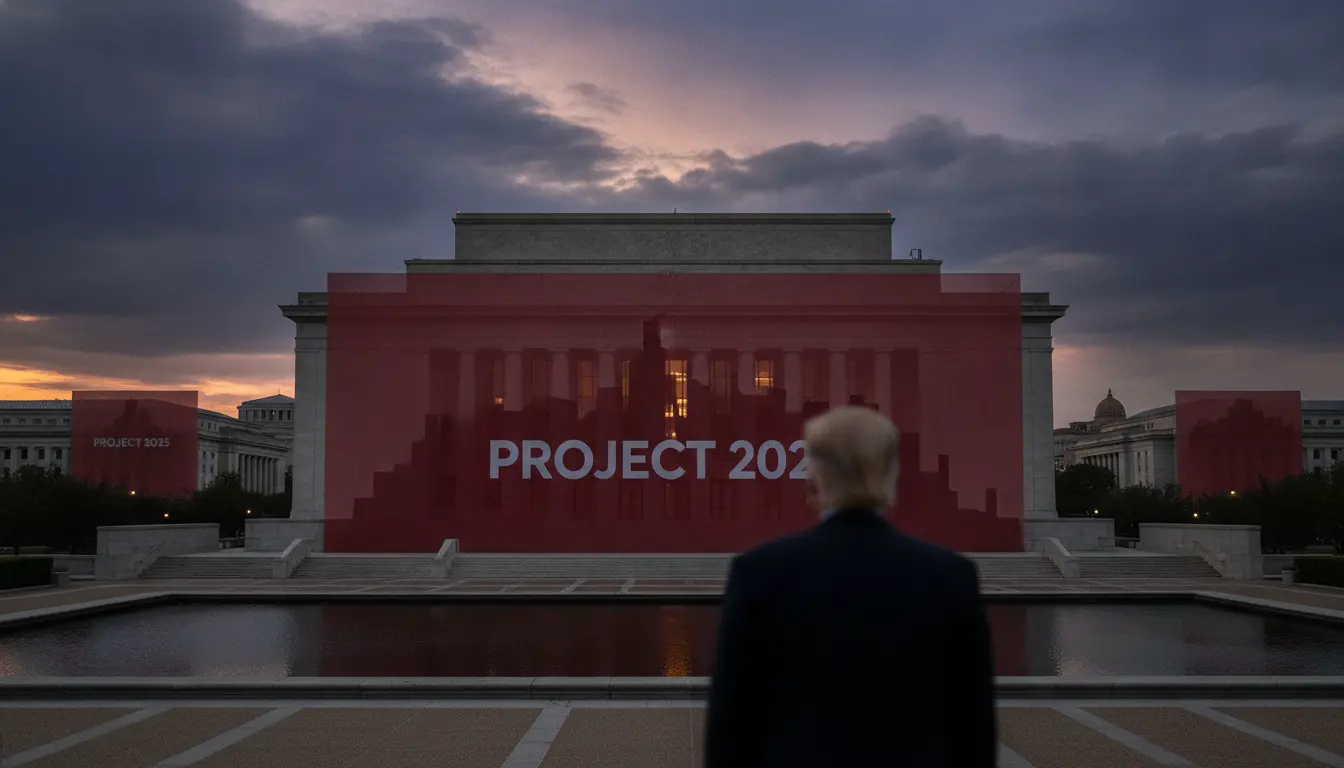
WASHINGTON — As the nation looks toward a potential second term for Donald Trump, a detailed and ambitious blueprint crafted by conservative allies is sending tremors through federal agencies and cultural institutions. The plan, known as Project 2025, outlines a sweeping overhaul of the executive branch, and among its potential targets is one of the capital's most revered landmarks: the John F.Kennedy Center for the Performing Arts. The prospect of an administration actively seeking to curtail or reshape the mission of such bodies is sparking a fierce debate about the future of public arts and the separation of culture and politics.At the heart of the issue is the Heritage Foundation's "Mandate for Leadership," the central text of Project 2025. The nearly 1,000-page document serves as a transition plan intended to allow a new Republican administration to seize control of the federal bureaucracy on day one.It calls for dismantling or re-staffing agencies with ideological loyalists and reasserting presidential power over what its authors see as an entrenched "administrative state. " While specific directives targeting the Kennedy Center are not explicitly detailed, the project's broad philosophy of challenging established norms and reducing federal footprints in areas like the arts and humanities places institutions that receive federal funding squarely in its sights.Proponents argue this is a necessary correction to rein in government overreach, while critics see it as a prelude to a politically motivated purge of cultural and scientific bodies. The Kennedy Center occupies a unique and potentially vulnerable position.Established by Congress in 1958 as a "living memorial" to President John F. Kennedy, it operates as a public-private partnership.The federal government, through the National Park Service, funds the maintenance and operation of the physical building, while the Center's artistic programming is funded almost entirely through private donations and ticket sales. This hybrid model has historically insulated it from the most extreme political pressures.However, an administration determined to exert influence could use its control over the building's operational budget as powerful leverage, potentially engineering a "partial closure" by withholding funds for essential services, capital repairs, or security under a new interpretation of its mandate. Beyond budgetary maneuvering, a future administration could seek to reshape the institution from within.The Kennedy Center is governed by a Board of Trustees, which includes government officials and 50 members appointed by the President of the United States. While these appointments are typically non-partisan and staggered, a concerted effort to fill vacancies with ideological allies could fundamentally alter the Center's artistic direction and community engagement over time.Such moves would represent a significant departure from the tradition of treating cultural leadership roles as largely apolitical appointments, transforming the Center into another battlefield in the nation's ongoing culture wars. Any attempt to dramatically alter the Kennedy Center's operations would likely face formidable legal and political headwinds.The Center's founding legislation sets out its purpose, and any executive action seen as subverting that congressional mandate would almost certainly be met with swift legal challenges that could reach the Supreme Court. Such a scenario could precipitate a constitutional clash between the executive and judicial branches, particularly if an administration were to defy or ignore a court order blocking its directives.Furthermore, members of Congress from both parties, alongside a powerful network of donors and artists, would likely mount a vigorous defense of the institution's independence, highlighting its economic impact and its role as a beacon of American artistic expression. Ultimately, the discussions surrounding the Kennedy Center's future are emblematic of a larger, more profound struggle over the role of government and the nature of public life in a deeply polarized America.For decades, institutions like the National Endowment for the Arts (NEA) and the National Endowment for the Humanities (NEH) have been political footballs, but the systematic and pre-emptive strategy laid out in Project 2025 suggests a more organized and determined campaign. The very threat of such administrative action, regardless of whether it materializes, could create a chilling effect, influencing programming decisions and forcing cultural leaders to navigate an increasingly treacherous political landscape. As the election cycle progresses, the fate of the Kennedy Center serves as a powerful symbol of what is at stake for the nation's cultural fabric.
#featured
#Project 2025
#Kennedy Center
#US Politics
#Culture Wars
#Donald Trump
#Heritage Foundation
Stay Informed. Act Smarter.
Get weekly highlights, major headlines, and expert insights — then put your knowledge to work in our live prediction markets.
Related News
Comments
It's quiet here...Start the conversation by leaving the first comment.