

Politics
Trump Vows 100% Tariffs on Europe Over Digital Taxes, Threatening New Trade War
RO
Robert Hayes
15 hours ago7 min read
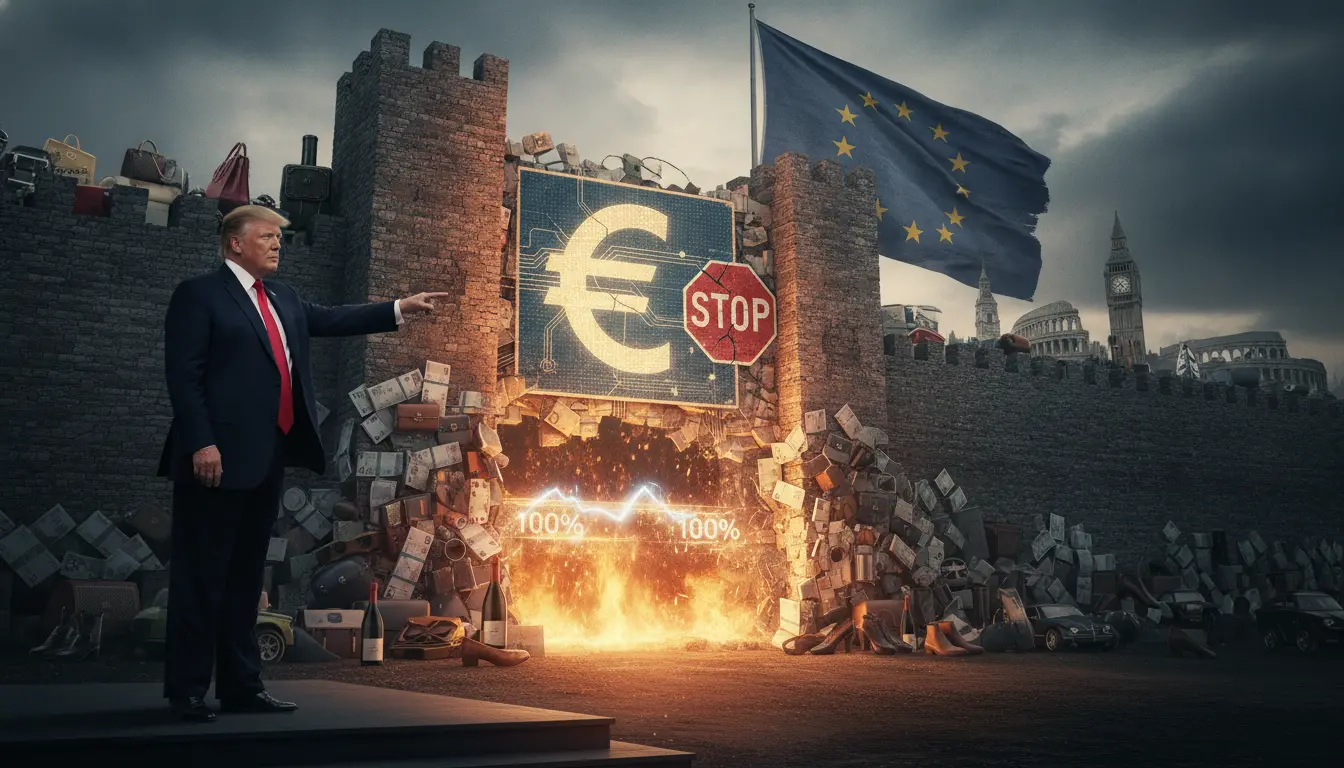
A simmering transatlantic dispute over how to tax technology giants is threatening to boil over, as former President Donald Trump has renewed his vow to impose crippling 100% tariffs on European goods in retaliation for digital services taxes. This hardline stance, a centerpiece of his potential economic policy, sets the stage for a dramatic escalation in trade tensions and could unravel years of delicate negotiations aimed at finding a global consensus.The core of the conflict lies in Digital Services Taxes (DSTs) enacted by several European nations, including France, Spain, Italy, and the United Kingdom. These measures typically impose a levy of 2% to 3% on the revenues generated within their borders by large digital companies.European governments argue that tech behemoths like Google, Amazon, and Meta have profited immensely from their markets while legally booking profits in low-tax jurisdictions like Ireland, thus avoiding significant tax contributions. From their perspective, DSTs are a necessary, if imperfect, stopgap to ensure tax fairness until a comprehensive global framework is implemented.The United States, however, has consistently viewed these taxes as discriminatory, arguing they are specifically designed to target and penalize American firms, which dominate the global tech landscape. This is not a new battlefront.During his presidency, Trump repeatedly threatened retaliatory tariffs against France and other countries over their DST plans. The U.S. Trade Representative's office conducted investigations and concluded the taxes were indeed discriminatory, preparing lists of European products—from French wine and cheese to Italian handbags—that would be targeted.However, the implementation of these tariffs was repeatedly put on hold in favor of a multilateral approach brokered by the Organisation for Economic Co-operation and Development (OECD). This effort culminated in a landmark 2021 agreement, backed by over 140 countries, including the Biden administration, which proposed a two-pillar solution: one to reallocate taxing rights for the largest multinationals and another to establish a global minimum corporate tax rate.The OECD deal was hailed as a breakthrough designed to supersede unilateral measures like DSTs. Yet, its implementation has proven sluggish and fraught with political hurdles.The U. S.Congress has not ratified the key components of the agreement, and progress has stalled globally, leaving the very DSTs the deal was meant to replace still in effect. This implementation vacuum has created an opening for populist and protectionist rhetoric to resurface.European nations have been reluctant to repeal their DSTs without a fully functional alternative, while American policymakers, particularly in the Republican party, have grown impatient with what they see as an unfair fiscal attack on a vital American industry. With the U.S. presidential election approaching, the issue has gained renewed urgency.Trump and his advisors have signaled that if he returns to office, the era of negotiation will be over, and punitive economic action will be swift. A 100% tariff would effectively double the price of targeted European goods, a move that could devastate specific industries and invite immediate, tit-for-tat retaliation from the European Union.The EU, a formidable trade bloc in its own right, would likely respond with its own tariffs on American products, potentially igniting a broader and more damaging trade war than the one seen during Trump's first term. The stakes extend far beyond digital tax policy.A full-blown tariff conflict would disrupt global supply chains, increase consumer prices on both sides of the Atlantic, and inject a massive dose of uncertainty into a world economy already grappling with inflation and geopolitical instability. While the Biden administration has also opposed DSTs, it has favored diplomatic pressure and the OECD framework.A shift toward Trump's confrontational tariff strategy would mark a radical departure, prioritizing direct economic leverage over international cooperation and risking a deep fracture in the Western alliance. The future of transatlantic trade may hinge on whether the fragile global tax consensus can be salvaged or if it will be shattered by the blunt instrument of tariffs.
#featured
#Donald Trump
#Trade War
#Digital Services Tax
#European Union
#Tariffs
#US Politics
#OECD
#Big Tech
Stay Informed. Act Smarter.
Get weekly highlights, major headlines, and expert insights — then put your knowledge to work in our live prediction markets.
Related News

Comments
It's quiet here...Start the conversation by leaving the first comment.