

- News
- Politics
- Trump Administration Gains Authority for Potential Deportations as Supreme Court Ends TPS Protections
Hottest
Politics
Trump Administration Gains Authority for Potential Deportations as Supreme Court Ends TPS Protections
EM
Emma Wilson
2 days ago7 min read
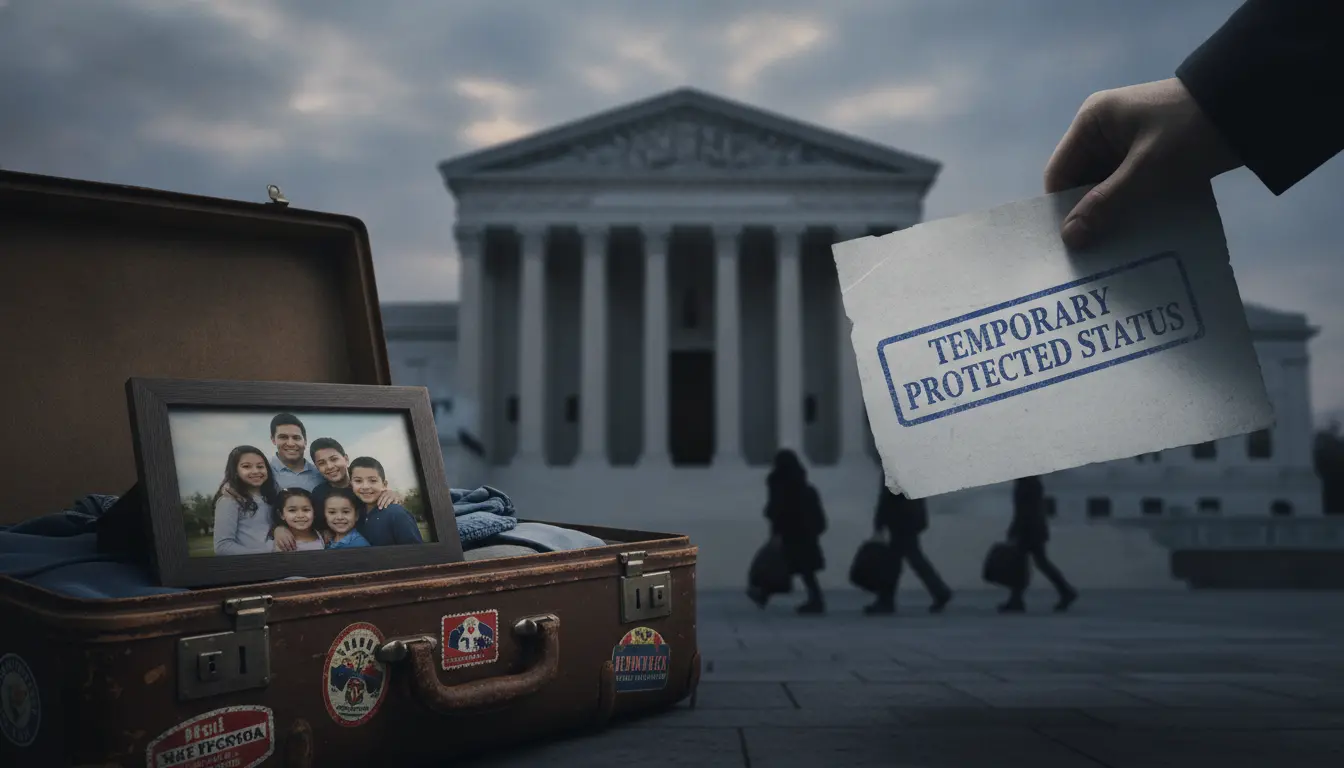
The United States Supreme Court has cleared the way for the Trump administration to move forward with plans to terminate Temporary Protected Status (TPS) for hundreds of thousands of individuals from Haiti and Syria. This landmark decision effectively removes the final significant legal barrier that had prevented the administration from ending a humanitarian program crucial to the lives of long-term U.S. residents, paving the path for potential formal deportations of these populations.The ruling concludes a protracted legal battle, placing the fate of entire communities, many of whom have built lives and families in the U. S.over decades, in immediate jeopardy. Temporary Protected Status is a humanitarian immigration program established by Congress in 1990, designed to grant temporary legal residency and work authorization to foreign nationals in the U.S. whose home countries are deemed unsafe for return due to armed conflict, natural disasters, or other extraordinary and temporary conditions.Haiti was designated for TPS following the devastating 2010 earthquake, while Syria received the status due to its ongoing civil war. Over the years, these protections have been repeatedly extended, allowing recipients to work legally, pay taxes, and raise U.S. -citizen children, deeply integrating into American society.The recent court decision impacts an estimated 50,000 Haitians and approximately 7,000 Syrians, though broader estimates suggest a total of nearly 400,000 individuals from various countries could be affected by the administration's policy shifts. The Trump administration initiated efforts to end TPS for several countries, including Haiti and Syria, shortly after taking office, arguing that the conditions that initially warranted the status were no longer temporary.These decisions faced immediate legal challenges from immigrants' rights advocates and affected individuals, who argued that terminating TPS would expose hundreds of thousands to violence and instability in their home countries, and would unlawfully separate families. Lower courts had largely sided with the plaintiffs, issuing injunctions that temporarily blocked the terminations.However, the Supreme Court’s latest ruling effectively overturns these injunctions, concluding that the Executive Branch has broad discretion in immigration matters and specifically regarding the termination of TPS designations. The implications of this ruling are profound and far-reaching.Without TPS, individuals who have legally resided and worked in the U. S.for years, in some cases over a decade, will revert to undocumented status. This loss of legal protection means they will no longer be eligible for work permits, making employment extremely difficult, and will face the constant threat of arrest and deportation.Many TPS holders have established families in the U. S., with a significant number being parents to U. S.-citizen children. Their deportation would inevitably lead to painful family separations or force children to relocate to countries they may have never known, often facing dire conditions.Advocacy groups have swiftly condemned the Supreme Court's decision, emphasizing the humanitarian crisis it could unleash and the severe economic and social disruption it would cause. They argue that the U.S. economy benefits significantly from TPS holders, who contribute billions in taxes and labor.The logistical challenges of deporting tens of thousands of individuals, especially to countries still grappling with instability or post-disaster recovery, are also immense. Critics point out that returning individuals to fragile states could exacerbate existing humanitarian issues and potentially destabilize regions, running counter to broader U.S. foreign policy interests.With the legal avenues seemingly exhausted, the focus now shifts to the administration’s next steps. While the Supreme Court has granted the authority, the timing and extent of any formal deportation proceedings remain subject to executive discretion and operational capacity.The political landscape, particularly with a looming presidential election, could also influence the administration's approach, potentially leading to varied enforcement strategies or further policy pronouncements. For the affected Haitian and Syrian communities, the future is now more uncertain than ever, as they brace for a potential new reality without the protections they have long relied upon.
#hottest news
#Trump administration
#Temporary Protected Status
#TPS
#Supreme Court
#Immigration policy
#Deportations
#Haiti
#Syria
#Human rights
Stay Informed. Act Smarter.
Get weekly highlights, major headlines, and expert insights — then put your knowledge to work in our live prediction markets.
Related News

Comments
It's quiet here...Start the conversation by leaving the first comment.