

Hottest
Politics
Supreme Court Rulings Stoke Concerns Over Expanding Executive Immigration Powers
AN
Anna Wright
14 hours ago7 min read
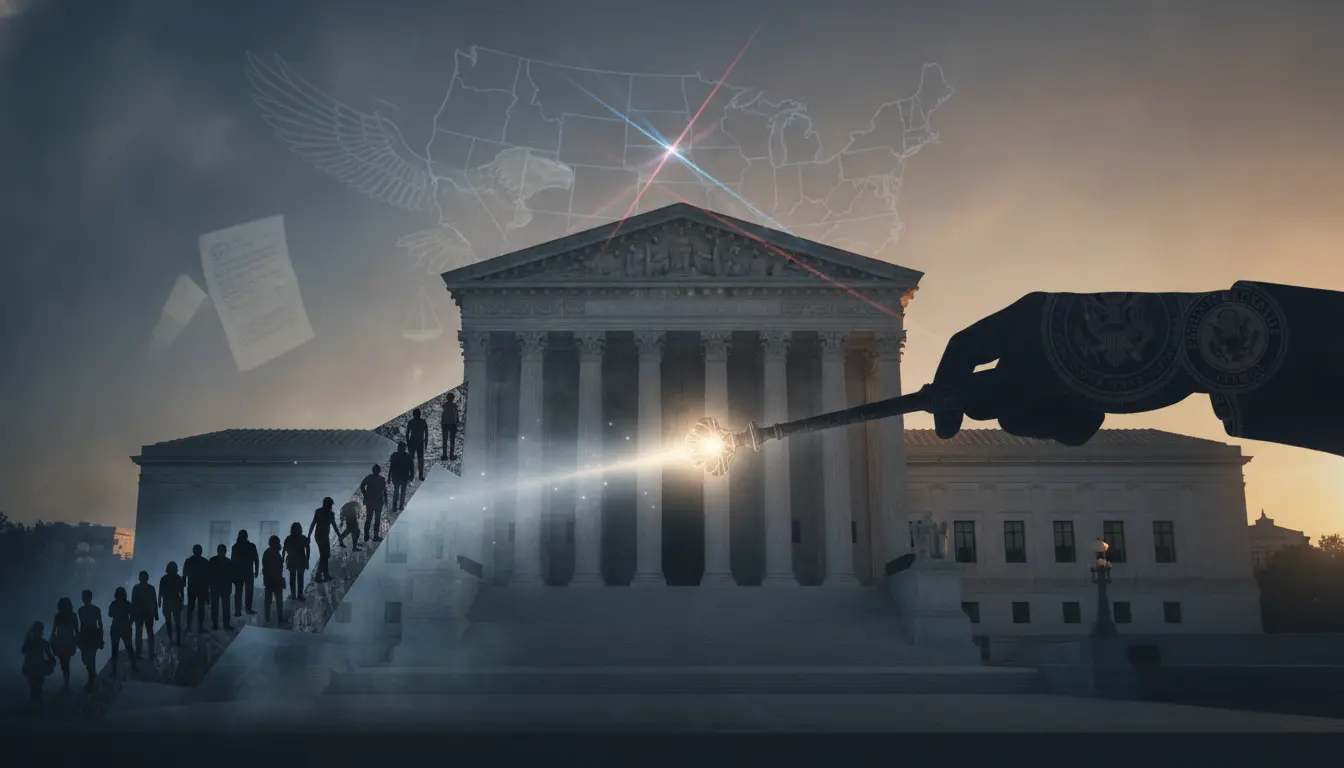
Recent decisions by the U. S.Supreme Court have intensified a long-standing debate over the extent of presidential authority in shaping immigration policy, with legal experts and advocacy groups expressing alarm over a potential long-term trend of expanding executive power. These rulings, particularly those that have granted significant deference to the executive branch's discretion, are seen by many as fundamentally reshaping the landscape of immigration enforcement and administration, potentially leading to profound demographic and societal shifts within the United States.The implications extend beyond immediate policy impacts, touching on the delicate balance of power between the branches of government and the very definition of who can enter and reside in the country. Historically, immigration policy has been a complex interplay between Congress, which sets the statutory framework, and the executive branch, which implements and enforces those laws.However, over recent decades, presidents from both parties have increasingly relied on executive orders, memoranda, and agency directives to enact significant changes, often citing national security or humanitarian crises. This trend has often been met with legal challenges, with courts frequently stepping in to delineate the boundaries of executive action.The current Supreme Court, however, appears to be adopting a more expansive view of presidential authority in this domain, interpreting statutes broadly to afford greater latitude to the executive in areas ranging from border enforcement to asylum procedures. This approach contrasts with periods where the judiciary adopted a more skeptical stance, particularly when executive actions appeared to circumvent clear legislative intent.One of the most notable aspects of these recent judicial pronouncements is the increased deference given to the executive's claims regarding national security and foreign policy prerogatives. When the executive branch frames immigration actions within these contexts, the Court has demonstrated a willingness to grant substantial leeway, often citing the President's unique position in foreign affairs.This judicial posture has significant ramifications, as it allows for swift and broad policy changes without necessarily requiring the slower, more deliberative process of legislative consensus. Critics argue that such deference risks eroding the principle of separation of powers, effectively empowering the presidency to unilaterally dictate significant portions of immigration law without sufficient checks and balances from Congress or rigorous judicial review.The argument posits that while national security concerns are legitimate, they should not become a blanket justification for bypassing democratic legislative processes. Legal scholars and immigration advocates have pointed to specific instances where the Court's decisions have validated or enabled executive policies that restrict entry, alter asylum processes, or expedite deportations.These rulings have often focused on procedural rather than substantive challenges, allowing policies to stand based on the executive branch's administrative capacity or stated rationale, even if the underlying policy has significant human rights implications or departs sharply from prior norms. The concern is that each such ruling sets a precedent, incrementally chipping away at avenues for judicial challenge and consolidating executive control over a policy area that profoundly affects millions of lives and the national character.This incremental accumulation of power could lead to a highly centralized and less accountable immigration system. Beyond the legal and constitutional implications, these judicial trends carry significant practical consequences.Experts have warned that continued expansion of executive power to restrict immigration could exacerbate existing challenges related to demographic trends, including a potential steep decline in U. S.population growth. Immigration has historically been a crucial driver of population increase and economic vitality in the United States, offsetting low birth rates and providing a continuous supply of labor and innovation.Policies that severely curtail legal immigration, especially without congressional input, could have long-term impacts on the nation's workforce, social security system, and global competitiveness. The broader stakes involve not just individual rights and legal interpretations, but the very economic and social fabric of the country.The trajectory signaled by the Supreme Court’s recent immigration decisions suggests a period of heightened presidential influence in this critical policy area. As the nation grapples with complex issues surrounding border security, labor shortages, and international relations, the balance between presidential prerogative, congressional authority, and judicial oversight will remain a focal point.Advocacy groups are preparing for ongoing legal battles, while lawmakers face renewed pressure to craft bipartisan immigration reform that can withstand judicial scrutiny and provide more stable, predictable pathways for both enforcement and legal migration. The coming years will undoubtedly test the limits of these expanded executive powers and reveal their full impact on American society and its legal framework.
#hottest news
#Supreme Court
#Immigration Policy
#Executive Power
#US Politics
#Judicial Review
#Separation of Powers
#Legal Analysis
Stay Informed. Act Smarter.
Get weekly highlights, major headlines, and expert insights — then put your knowledge to work in our live prediction markets.
Related News

Comments
It's quiet here...Start the conversation by leaving the first comment.