

Politics
NATO Members Weigh Explicit 'Adversary' Label for Russia Ahead of 2026 Summit
AN
Anna Wright
16 hours ago7 min read
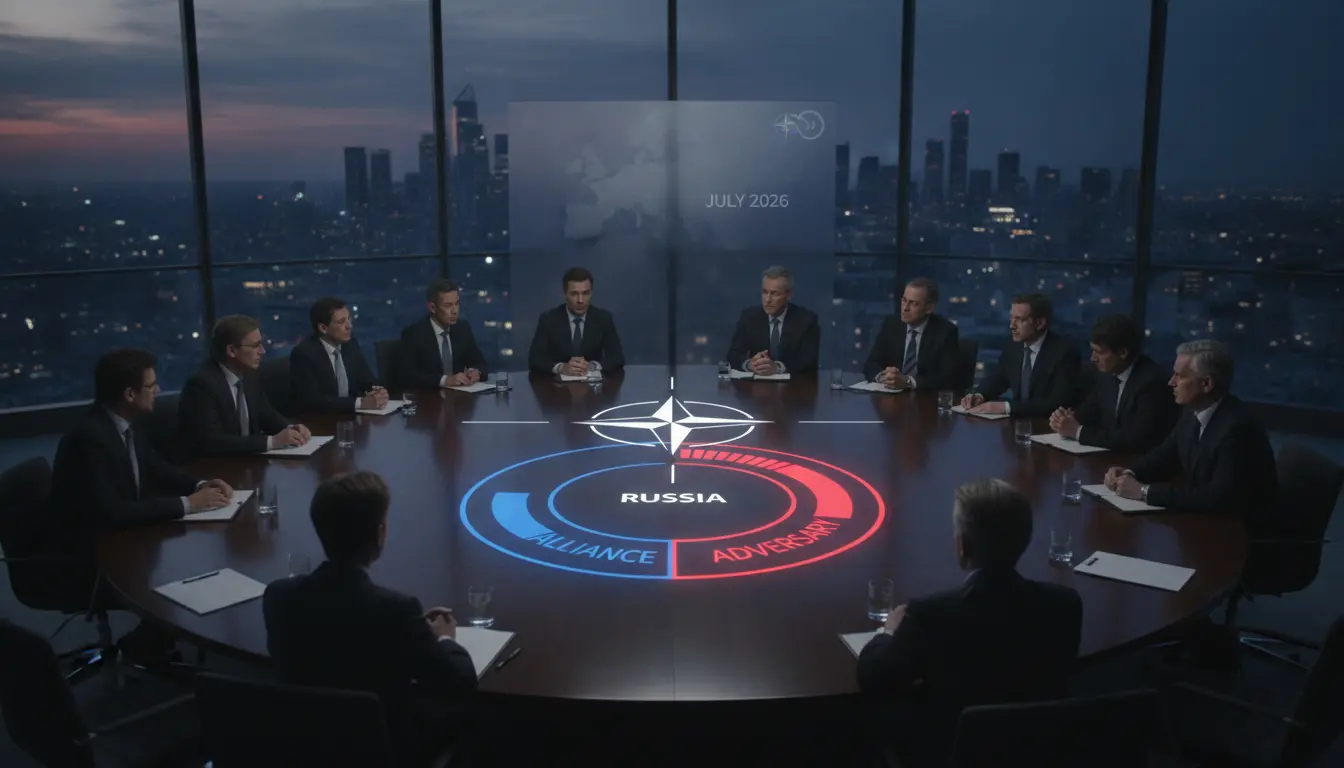
As the North Atlantic Treaty Organization prepares for its pivotal summit in Turkey in July 2026, member states are facing critical decisions regarding the alliance's official posture toward Russia. At the forefront of these deliberations is the potential for the joint declaration to explicitly name Russia as an “adversary” or “threat” to all NATO member states.This linguistic shift, if adopted, would signify a profound and widely unified hardening of the alliance's strategic communication, reflecting the escalating security landscape in Europe and beyond. The language ultimately chosen will not only shape NATO's internal defense planning and resource allocation but also send an unequivocal signal to Moscow about the alliance's collective resolve and threat perception.The discussions come against a backdrop of deeply deteriorated relations between NATO and Russia, a trajectory accelerated dramatically by Russia's full-scale invasion of Ukraine in February 2022. While NATO’s 2022 Strategic Concept already designated Russia as the “most significant and direct threat to Allies’ security, peace, and stability in the Euro-Atlantic area,” the upcoming summit's challenge lies in translating that assessment into a unified, explicit, and actionable declaration.The distinction between a “threat” and an “adversary” is subtle yet significant in diplomatic language, with the latter often implying a more direct and intentional confrontational stance, necessitating a recalibration of military and political strategies across all member states. Historically, NATO’s approach to Russia has evolved from a post-Cold War pursuit of partnership and cooperation to increasing confrontation.The annexation of Crimea in 2014 and subsequent destabilization of eastern Ukraine marked a turning point, prompting NATO to enhance its forward presence in Eastern Europe. However, the comprehensive nature of Russia’s aggression in 2022 has compelled the alliance to fundamentally reassess its long-term strategic framework.Member states on the alliance's eastern flank, particularly Poland and the Baltic states, have consistently advocated for the strongest possible language, drawing on their immediate proximity to Russia and their historical experiences. Their calls for unambiguous declarations aim to reinforce deterrence and solidify collective defense commitments.Other key players, including the United States, have largely aligned with this more assertive stance, pushing for greater unity and clarity within the alliance. However, achieving full consensus among 32 diverse nations, each with its own geopolitical considerations and economic ties, remains a complex diplomatic endeavor.Nations like Turkey, the summit host, maintain a nuanced relationship with Russia, engaging in cooperation on certain fronts while remaining a NATO member. This dual role could influence negotiations over the precise wording of the declaration, though alliance unity on core security matters is paramount.The internal dynamics will involve extensive negotiations and potential compromises, reflecting the careful balance NATO seeks to strike between strong deterrence and avoiding unintended escalation. An explicit designation of Russia as an “adversary” would carry substantial implications.It would solidify a long-term strategic posture, guiding defense spending, military exercises, and intelligence sharing for years to come. Such a declaration would underscore the collective belief that Russia's actions fundamentally undermine European security and the rules-based international order, necessitating a coordinated and robust response from the alliance.It would also further rationalize sustained military and financial support for Ukraine, positioning the conflict as a direct challenge to the security interests of all NATO members. The stakes for the 2026 summit in Turkey are exceptionally high.The final language of the joint declaration will serve as a crucial barometer of NATO’s collective will and its strategic direction in an increasingly volatile global security environment. Whether the alliance can achieve consensus on such a direct and explicit condemnation of Russia will not only define its future relationship with Moscow but also profoundly impact the security architecture of the Euro-Atlantic region.The outcome will demonstrate the extent to which NATO members are prepared to stand united in facing what they perceive as their most pressing geopolitical challenge. Beyond the immediate implications for Russia, the declaration will also have ramifications for other global actors observing NATO's resolve.The strength and clarity of the alliance's stance could influence the strategic calculations of countries like China and other revisionist powers. For NATO, projecting an image of unwavering unity and clear strategic purpose is essential for maintaining its credibility and effectiveness as the cornerstone of Euro-Atlantic security. The summit is poised to be a defining moment, setting the tone for the next chapter of collective defense and international relations.
#editorial picks
#NATO
#Russia
#Turkey
#Geopolitics
#International Relations
#Defense
#Summit
#Alliance
#Ukraine War
Stay Informed. Act Smarter.
Get weekly highlights, major headlines, and expert insights — then put your knowledge to work in our live prediction markets.
Related News


Comments
It's quiet here...Start the conversation by leaving the first comment.