

- News
- Politics
- Iran Prepares for Unavoidable Transition as Focus Shifts to Next Supreme Leader's Selection
Hottest
Politics
Iran Prepares for Unavoidable Transition as Focus Shifts to Next Supreme Leader's Selection
AN
Anna Wright
1 day ago7 min read
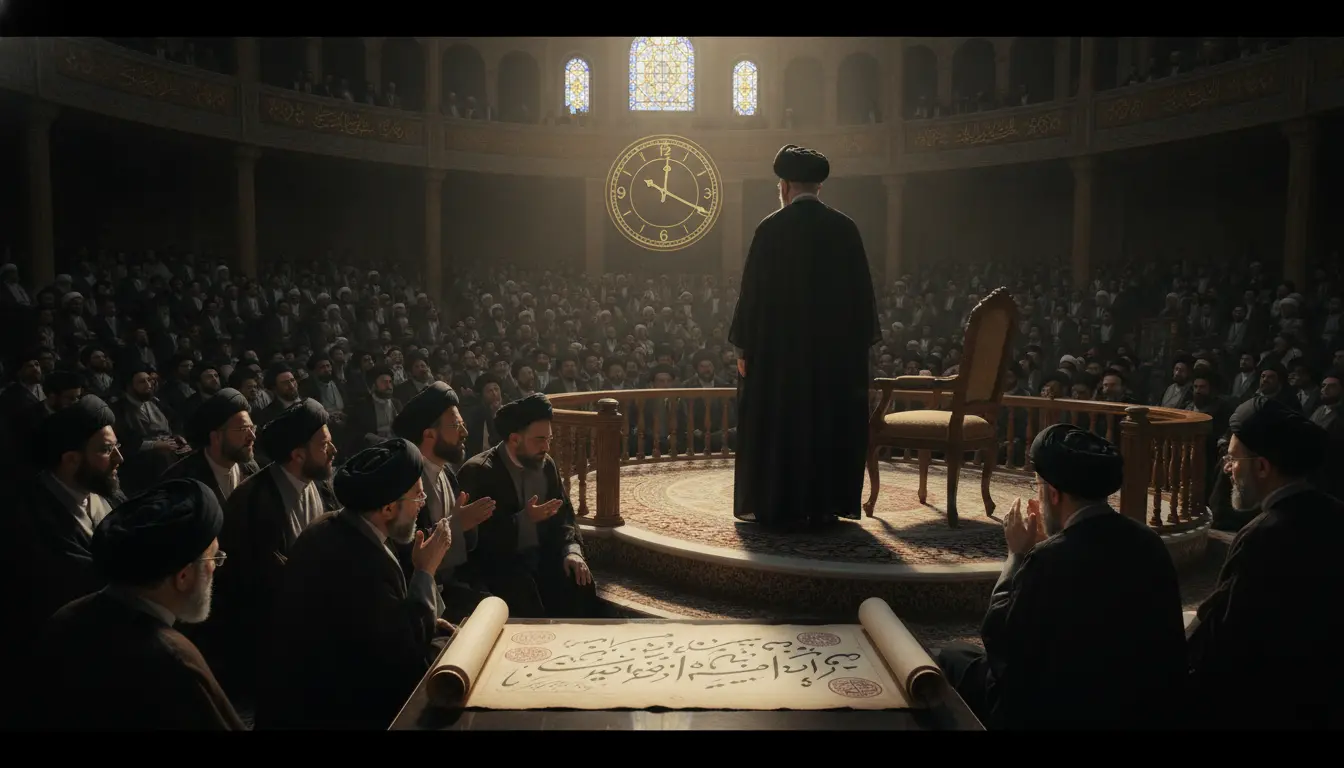
In the Islamic Republic of Iran, a profoundly significant, albeit largely unstated, discussion continually shapes the nation's political landscape: the eventual succession of its Supreme Leader, Ayatollah Ali Khamenei. At 85, and having led the country for over three decades, Khamenei's advanced age and periodic health concerns keep the delicate machinery of power transition a constant, underlying factor in Tehran's corridors of power.Unlike parliamentary democracies with fixed electoral cycles, the process of selecting Iran's next spiritual and political guide is shrouded in discretion, dictated by a unique constitutional framework, and carries monumental implications for both domestic policy and international relations. The Supreme Leader holds ultimate authority in Iran, presiding over all major state affairs, including the military, judiciary, and media.He sets the overall direction for both domestic and foreign policy, making his eventual successor the most powerful individual in the country. The selection process officially falls to the Assembly of Experts, an 88-member body of high-ranking clerics elected by popular vote every eight years.This Assembly is constitutionally tasked with choosing, supervising, and, if necessary, dismissing the Supreme Leader. Its members are rigorously vetted by the Guardian Council, another powerful unelected body, ensuring that only those aligned with the clerical establishment's vision can participate.This intricate system is designed to preserve the principles of the Islamic Revolution and the velayat-e faqih (guardianship of the Islamic jurist) that underpins Iran's unique governance structure. While the Assembly of Experts is the formal body, the real power brokers in the selection are typically a small, influential circle of senior clerics and military commanders, who will likely converge on a candidate long before any official vote.Historically, the selection process is more about consensus-building among the clerical elite than a transparent democratic exercise. Ayatollah Khamenei himself was chosen in 1989 by the Assembly of Experts following the death of Ayatollah Ruhollah Khomeini, a decision that elevated a cleric of relatively lesser seniority at the time to the highest office, demonstrating the fluid and often unpredictable nature of the transition.The critical challenge for the Assembly and the broader establishment is to find a figure who commands sufficient religious authority, political acumen, and loyalty from key institutions, particularly the Islamic Revolutionary Guard Corps (IRGC), to maintain stability. Over the years, several prominent figures have been considered potential successors.Ebrahim Raisi, before his tragic death in a helicopter crash in May 2024, was widely seen as a strong contender, having served as President and head of the judiciary, positions that provided him significant political visibility and power. His unexpected demise has undeniably reshaped the landscape, removing a formidable figure from the succession equation and potentially opening pathways for others.Another name frequently mentioned is Mojtaba Khamenei, the Supreme Leader's second son. While his critics argue against dynastic succession in a system that prides itself on meritocracy, his close proximity to his father and deep ties within the clerical and security establishments grant him considerable influence.Other senior clerics within the Assembly of Experts or holding significant religious posts are also likely to be considered, though often with less public speculation. The stakes of this transition are immense, both internally and externally.Domestically, the next Supreme Leader will determine the trajectory of Iran's social freedoms, economic policies, and the balance of power between hardliners and any potential reformist currents. Externally, the new leader will inherit the complex challenges of Iran's nuclear program, its contentious regional role, and its strained relations with Western powers.A shift in leadership could either cement current hardline stances or, less likely but still possible, open new avenues for diplomatic engagement. The ultimate choice will reflect the prevailing power dynamics within Iran's opaque political system and will undoubtedly reverberate across the Middle East and beyond, shaping geopolitical alignments for decades to come.As the nation navigates this implicit period of anticipation, the various factions within Iran's intricate power structure are undoubtedly positioning themselves, subtly maneuvering to influence the eventual outcome. The transition, whenever it occurs, will be a defining moment for the Islamic Republic, testing the resilience of its unique governance model and determining its future direction on the world stage. The selection will not merely be a change in personnel but a potential re-calibration of Iran's ideological and strategic compass, under intense scrutiny from both its citizens and the international community.
#hottest news
#Iran
#Supreme Leader
#Ayatollah Ali Khamenei
#Succession
#Assembly of Experts
#Iranian Politics
#Clerical Leadership
#Ebrahim Raisi
#Mojtaba Khamenei
Stay Informed. Act Smarter.
Get weekly highlights, major headlines, and expert insights — then put your knowledge to work in our live prediction markets.
Related News
Comments
It's quiet here...Start the conversation by leaving the first comment.