

Hottest
Politics
Iran Mobilizes for Crucial Succession as Ayatollah Khamenei's Era Concludes
AN
Anna Wright
1 day ago7 min read
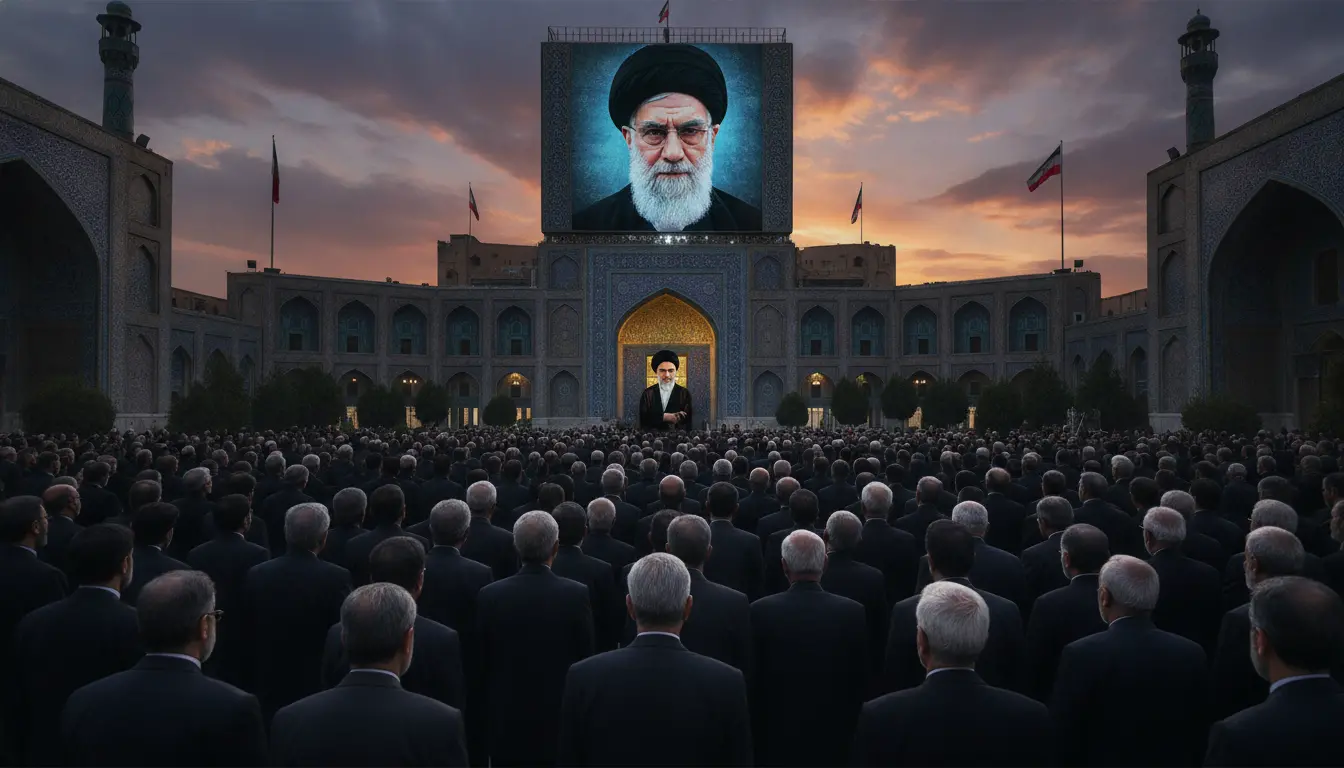
With the passing of Ayatollah Ali Khamenei, Iran has entered a profound period of political transition, marking the end of an era that spanned over three decades. The Supreme Leader, who held ultimate authority over all state matters, leaves behind a complex legacy and a nation poised at a critical juncture.His demise triggers a meticulously designed, albeit often opaque, succession process that will determine the future trajectory of the Islamic Republic, both domestically and on the volatile global stage. The eyes of the world, particularly regional powers and Western nations, are now fixed on Tehran as its clerical establishment prepares to select the nation’s next spiritual and political guide.The system for selecting the Supreme Leader is enshrined in Iran’s constitution, vesting the power in the Assembly of Experts, an 88-member body of high-ranking clerics. Elected every eight years, this assembly is tasked with identifying, vetting, and ultimately appointing the new leader.The qualifications are stringent: the successor must be a qualified jurist (faqih) capable of issuing religious edicts, possessing political and social acumen, and demonstrating leadership qualities. While the constitutional framework exists, the process often involves intricate backroom negotiations and power plays among influential clerical factions, the Revolutionary Guard Corps (IRGC), and other powerful institutions.The speed and consensus surrounding the selection will be crucial indicators of the stability within the Iranian political system. The immediate aftermath of Khamenei’s passing is expected to see a period of official mourning, followed swiftly by the convening of the Assembly of Experts.Historically, such transitions have been managed with a degree of urgency to prevent any perceived power vacuum or instability. For instance, following the death of Ayatollah Ruhollah Khomeini in 1989, Ali Khamenei was chosen within hours, a testament to the behind-the-scenes preparations and the imperative to maintain continuity.This time, however, the landscape is different. Khamenei’s long tenure allowed him to consolidate power and shape the political and military establishment to his preferences, but also means there is no obvious, universally accepted successor waiting in the wings.Several names have been floated in various circles as potential candidates, though official pronouncements are rare and guarded. Among the frequently discussed figures is Mojtaba Khamenei, the late Supreme Leader’s son, whose proximity to power and influence within key institutions make him a formidable, albeit controversial, contender.Other potential candidates include prominent members of the judiciary or powerful figures within the Assembly of Experts itself, such as Sadegh Larijani, a former head of the judiciary, or Ahmad Khatami, a vocal conservative cleric. The selection is unlikely to be solely based on religious scholarship; political allegiance, loyalty to the founding principles of the revolution, and the ability to command the respect of both the clerical establishment and the powerful IRGC will undoubtedly play significant roles.The stakes of this succession are immense. Domestically, the new Supreme Leader will inherit a country grappling with economic hardship, widespread social unrest, and a disillusioned youth population.The direction chosen by the successor—whether to maintain the staunch conservative trajectory or to permit subtle shifts towards reform—will have profound implications for civil liberties, economic policies, and the overall governance of the nation. Internationally, the leader’s stance on Iran's nuclear program, its intricate network of regional proxies, and its fraught relations with the United States and Israel will be closely scrutinized.A change in leadership could either entrench existing foreign policy postures or, less likely but still possible, open avenues for renegotiation and de-escalation. Ultimately, the selection of Iran’s next Supreme Leader is not merely a ceremonial transfer of power but a definitive moment that will shape the country’s future for decades to come.It will test the resilience of the Islamic Republic’s unique governance structure and provide a clearer picture of the internal dynamics and priorities of its powerful institutions. As the nation navigates this profound transition, the world watches on, aware that the choices made in Tehran will reverberate far beyond its borders, influencing regional stability and international geopolitics.
#hottest news
#Iran
#Ayatollah Ali Khamenei
#Supreme Leader
#Succession
#Assembly of Experts
#Iranian Politics
#Mojtaba Khamenei
#Middle East
Stay Informed. Act Smarter.
Get weekly highlights, major headlines, and expert insights — then put your knowledge to work in our live prediction markets.
Related News

Comments
It's quiet here...Start the conversation by leaving the first comment.