

- News
- Politics
- Campaign Spending for 2026 US Midterm Elections Poised to Exceed $18 Billion Following Judicial Shifts
Hottest
Politics
Campaign Spending for 2026 US Midterm Elections Poised to Exceed $18 Billion Following Judicial Shifts
JO
John Parker
4 days ago7 min read
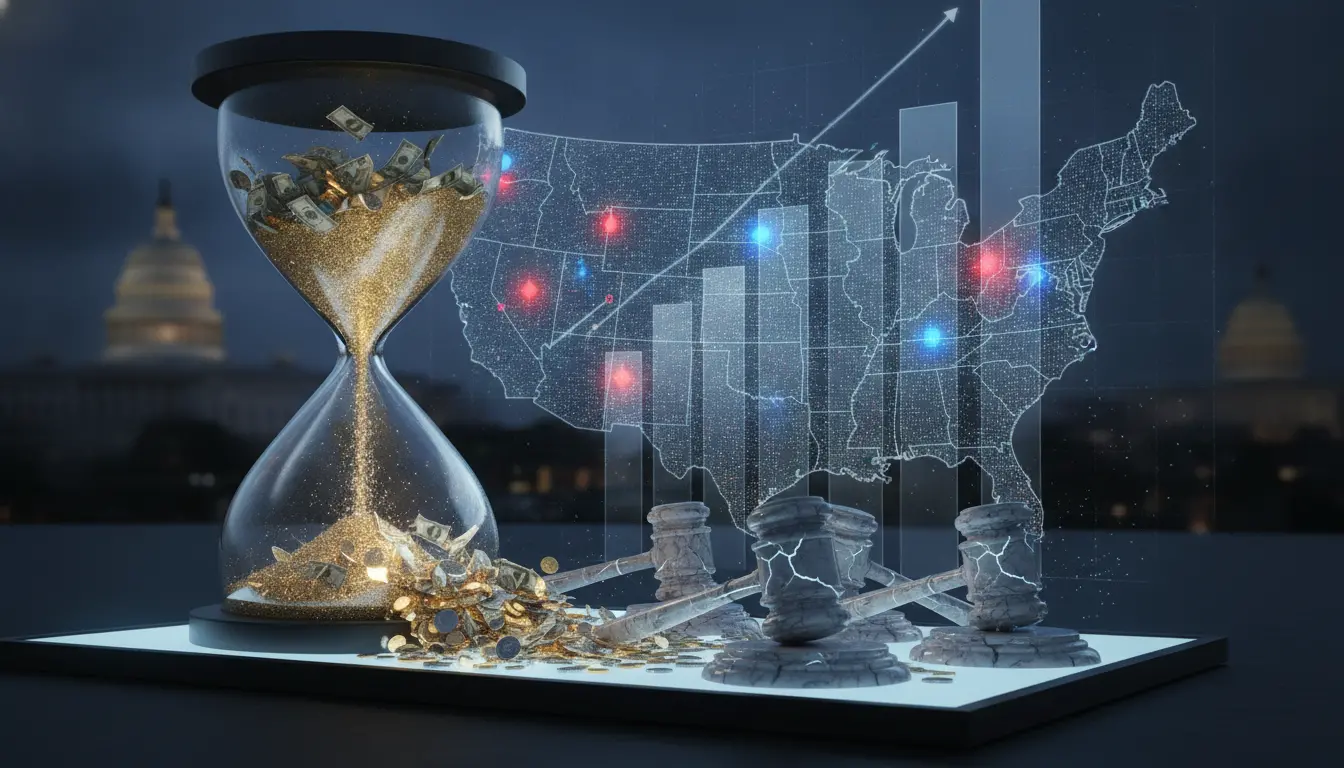
The United States is on track for an unprecedented surge in political spending during the 2026 midterm elections, with projections indicating total expenditures could eclipse $18 billion. This significant increase, building upon the already record-breaking $16.7 billion spent in the 2022 midterms, is largely attributed to a series of recent judicial decisions that have progressively loosened campaign finance regulations, opening new avenues for contributions and independent expenditures. As the political landscape grows increasingly polarized and the stakes for congressional control remain exceptionally high, the influx of capital is set to redefine how candidates and parties compete for power across the nation.Historical trends have consistently shown an upward trajectory in election costs, driven by evolving campaign strategies, the proliferation of digital advertising, and the intensified nationalization of local races. The 2022 midterms, which saw a battle for control of a narrowly divided Congress, demonstrated the immense financial commitment required to sway voters in a highly contested environment.That cycle’s spending not only set new records but also highlighted the expanding role of large individual donors, Super PACs, and politically active non-profit groups in shaping election outcomes. The upcoming 2026 cycle is expected to amplify these dynamics, pushing the financial envelope even further as both major parties gear up for critical contests.A pivotal factor in this anticipated financial escalation is the Supreme Court's ongoing posture toward campaign finance. While specific recent rulings might not always grab headlines like landmark cases of the past, the cumulative effect of the Court's interpretations and applications of existing law has steadily chipped away at restrictions on political donations and spending.Decisions expanding the definition of free speech to encompass monetary contributions have empowered individuals and organizations to spend more freely to advocate for their chosen candidates and causes. This judicial shift has emboldened well-funded groups and wealthy donors, providing broader discretion in how they channel resources into electoral contests, often with minimal transparency.The mechanics of this increased spending are multifaceted. Super PACs and 'dark money' groups, which can raise and spend unlimited amounts of money without direct coordination with campaigns, are expected to play an even more dominant role.These entities frequently engage in sophisticated voter outreach, extensive media campaigns, and grassroots mobilization efforts, all of which require substantial financial backing. Furthermore, the rising cost of digital advertising, data analytics, and micro-targeting strategies contributes significantly to campaign budgets.Candidates themselves face escalating demands to raise funds to remain competitive, creating a continuous fundraising cycle that starts earlier and intensifies more rapidly than in previous cycles. The implications of a projected $18 billion midterm cycle are profound for American democracy.Critics argue that such vast sums disproportionately amplify the voices of the wealthy and special interests, potentially drowning out ordinary citizens and grassroots movements. The concern is that candidates may become more beholden to their donors, influencing policy decisions and legislative priorities.This financial arms race also raises barriers for challengers, making it increasingly difficult for candidates without access to significant financial networks to mount competitive campaigns, thereby entrenching incumbents and established political figures. Moreover, the lack of transparency in much of this spending, particularly from non-profit advocacy groups, remains a contentious issue.Voters often struggle to identify the ultimate sources of funding behind political advertisements and campaigns, obscuring potential conflicts of interest and the true motivations of influential actors. Efforts to enact further campaign finance reforms have largely stalled in a divided Congress, leaving the existing framework, shaped by judicial interpretation, largely intact and ripe for maximum exploitation by those with deep pockets.As the 2026 midterms approach, the trajectory of campaign finance promises to be a central, if often understated, narrative. The projected $18 billion expenditure underscores a political system increasingly defined by financial might, challenging traditional notions of electoral fairness and representation. Observers will be keenly watching not only the final tallies but also the strategies employed by campaigns and external groups, as they navigate an environment where financial resources are seemingly limitless, and the influence of money in politics continues its expansive, undisputed ascent.
#hottest news
#US Midterm Elections
#Campaign Finance
#Supreme Court
#Political Spending
#Electoral Reform
#Super PACs
#American Politics
Stay Informed. Act Smarter.
Get weekly highlights, major headlines, and expert insights — then put your knowledge to work in our live prediction markets.
Related News

Comments
It's quiet here...Start the conversation by leaving the first comment.