

Entertainment
Alan Greenspan Dies: Longtime Federal Reserve Chairman Was 100
ET
Ethan Brown
2 days ago7 min read
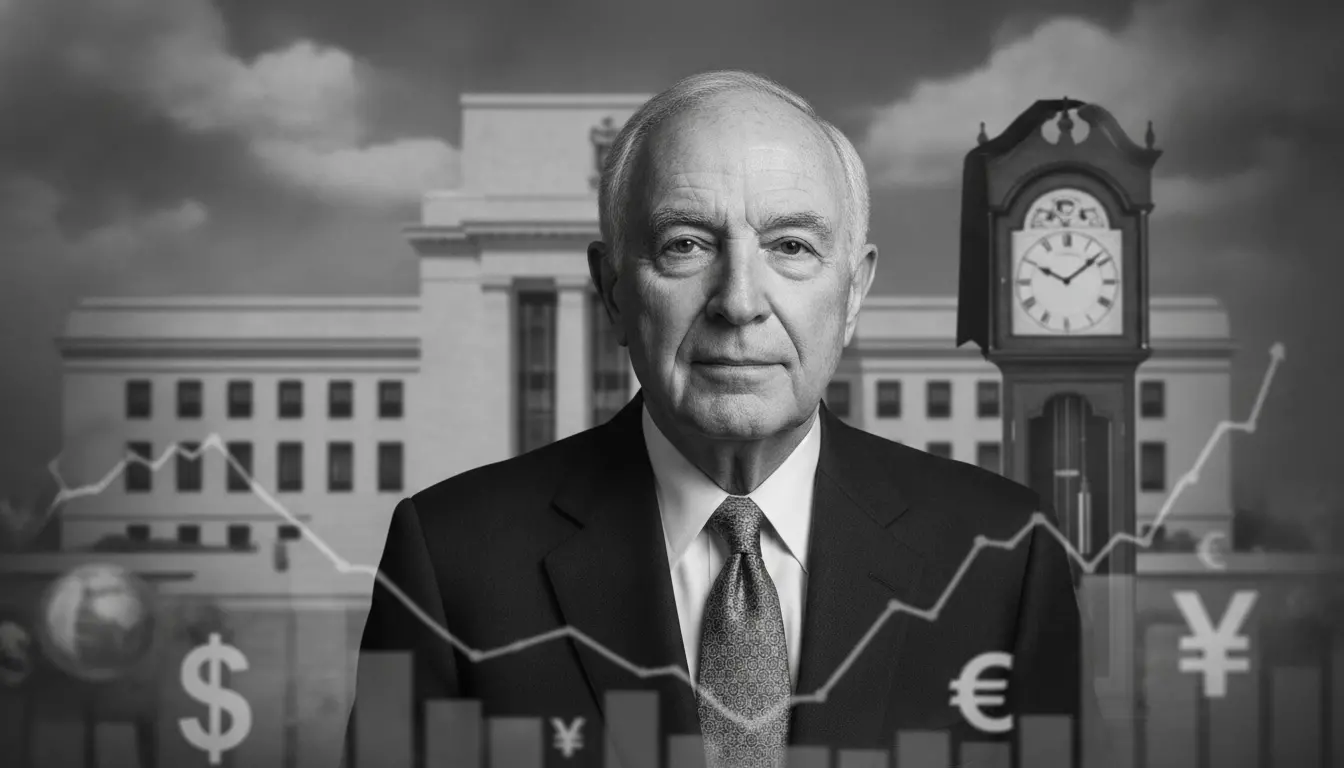
Alan Greenspan, the towering and enigmatic figure who helmed the U. S.Federal Reserve for nearly two decades, shaping the global economy with Delphic pronouncements that could move markets, has died. He was 100.His death was confirmed by his wife, Andrea Mitchell, the chief Washington and foreign affairs correspondent for NBC News, who stated he passed away at their home on Monday morning from complications related to Parkinson’s disease. Greenspan’s tenure, which spanned four presidential administrations, from the conservative optimism of Ronald Reagan to the turbulent post-9/11 years of George W.Bush, was a period of both unprecedented prosperity and the sowing of seeds for a devastating financial crisis, cementing a legacy that remains one of the most debated in modern economic history. Appointed by President Reagan in 1987, Greenspan took the reins of the world's most powerful central bank just months before the “Black Monday” stock market crash.His decisive action to flood the system with liquidity and assure financial markets of the Fed’s support was widely credited with preventing a deeper economic catastrophe, and it established his reputation as a calm, authoritative steward. For much of the 1990s, he was revered as “The Maestro,” an economic oracle who presided over the “Great Moderation”—a long spell of sustained, non-inflationary growth.He was a disciple of Ayn Rand’s objectivist philosophy, a firm believer in the power of free markets, and his approach favored minimal government intervention, a stance that defined his policy-making for years to come. Greenspan’s influence was perhaps never more palpable than during the dot-com boom of the late 1990s.In a now-famous 1996 speech, he posed a rhetorical question about whether “irrational exuberance” had inflated asset values, a phrase that immediately entered the financial lexicon and caused a brief market shudder. Yet despite his warning, he largely allowed the technology bubble to run its course, believing the central bank was ill-equipped to identify and prick asset bubbles without causing undue harm to the broader economy.His preference was to manage the aftermath, a strategy he deployed by aggressively cutting interest rates after the bubble burst in 2000, an action many believe helped the economy avoid a severe recession at the time. However, it was this very approach that would later tarnish his celebrated legacy.Critics contend that by holding interest rates at historic lows for a prolonged period in the early 2000s, the Greenspan-led Fed fueled the housing bubble that would ultimately trigger the 2008 global financial crisis. His long-standing advocacy for deregulation, particularly his opposition to regulating complex financial instruments like credit default swaps, was identified as a key factor that allowed systemic risk to build, unchecked, within the financial system.The crisis forced a painful reassessment of his career, culminating in a dramatic 2008 congressional hearing where a humbled Greenspan admitted to being in a state of “shocked disbelief” and acknowledged a “flaw” in his ideological belief that self-interest and rational market participants would be sufficient to protect society from financial excess. In the years after leaving the Fed in 2006, Greenspan remained a public figure, writing books and offering commentary on the economy he had so profoundly shaped.His life story is one of immense influence, intellectual certitude, and, ultimately, a public reckoning with the unintended consequences of his policies. He guided the American economy through the end of the Cold War, the rise of the internet, and the shock of a major terrorist attack, becoming one of the most powerful unelected officials in Washington’s history.For some, he will be remembered as the brilliant architect of a golden age of prosperity. For others, his name will forever be linked to the regulatory failures that led to the worst economic downturn since the Great Depression. At the age of 100, the passing of Alan Greenspan closes a major chapter in the history of American and global finance, leaving behind a complex and deeply controversial legacy for future generations to dissect.
#editorial picks
#Alan Greenspan
#Federal Reserve
#US Economy
#Obituary
#Finance
Stay Informed. Act Smarter.
Get weekly highlights, major headlines, and expert insights — then put your knowledge to work in our live prediction markets.
Related News

Comments
It's quiet here...Start the conversation by leaving the first comment.