ScienceneuroscienceBrain Mapping
Study Finds Teamwork Synchronizes Human Brain Activity
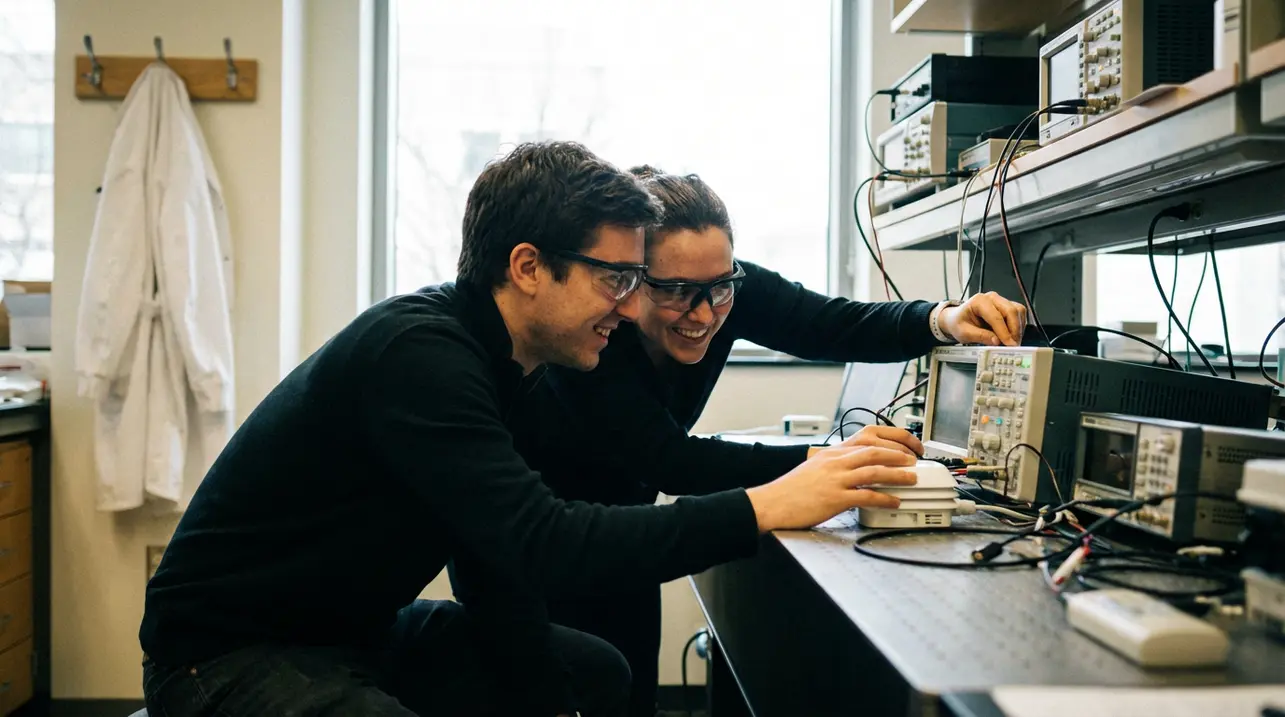
If you’ve ever worked with someone and felt like the two of you were sharing a single hive mind, finishing each other’s sentences, anticipating decisions, possibly achieving telepathic levels of perfection that annoy coworkers who have yet to find such a compatible work partner, it turns out that sensation isn’t just the stuff of a good partnership story—it’s a measurable, biological reality. A fascinating new study has found that teamwork literally synchronizes human brain activity, providing a neuroscientific basis for that elusive feeling of being ‘in sync.’ This research, which I find utterly compelling not just for its data but for the human connection it illuminates, used advanced neuroimaging techniques to observe pairs of people working together on tasks. The results showed that when collaboration was smooth and effective, the brainwave patterns of the two individuals began to align in remarkable harmony, particularly in regions associated with social cognition and attention.It’s a beautiful validation of what we intuitively know from our own lives: that profound human connection isn't just emotional or psychological, but is etched into the very electrical rhythms of our minds. I’ve spoken to psychologists and team coaches over the years who describe the ‘flow state’ of a great team, but to see it mapped onto a brain scan adds a profound layer of understanding.It makes me think of the countless interviews I’ve done with people about their daily collaborations, from surgeons in an operating theatre to musicians in a jazz quartet; they often struggle to articulate that magic, calling it ‘chemistry’ or ‘wavelength. ’ Now, science gives us a language for it.This neural coupling, as the researchers term it, goes beyond mere mimicry. It suggests a shared cognitive workspace is being built, where predictions and understandings are aligned so closely that it reduces the mental load for both parties.The implications are vast, stretching from optimizing workplace environments and educational settings to deepening our grasp of social bonds and even therapeutic practices. Consider how this might reshape remote work, where digital tools strive to replicate the cohesion of in-person teams but often fall short—could future tech be designed to foster this neural synchrony? Or think about conflict resolution, where understanding the breakdown of this brain alignment could offer new pathways to mediation.The study also hints at why some teams, despite having individually brilliant members, never quite gel; the cognitive symphony isn’t playing in tune. It’s a reminder that our brains are profoundly social organs, wired not for isolation but for intricate, resonant connection. As we navigate a world that often feels fragmented, this research underscores a fundamental truth: we are at our most intelligent, our most effective, and perhaps our most human, when our minds are not just alongside each other, but truly with one another.
#brain synchronization
#teamwork
#neuroscience research
#cognitive science
#featured
#human interaction
#hive mind